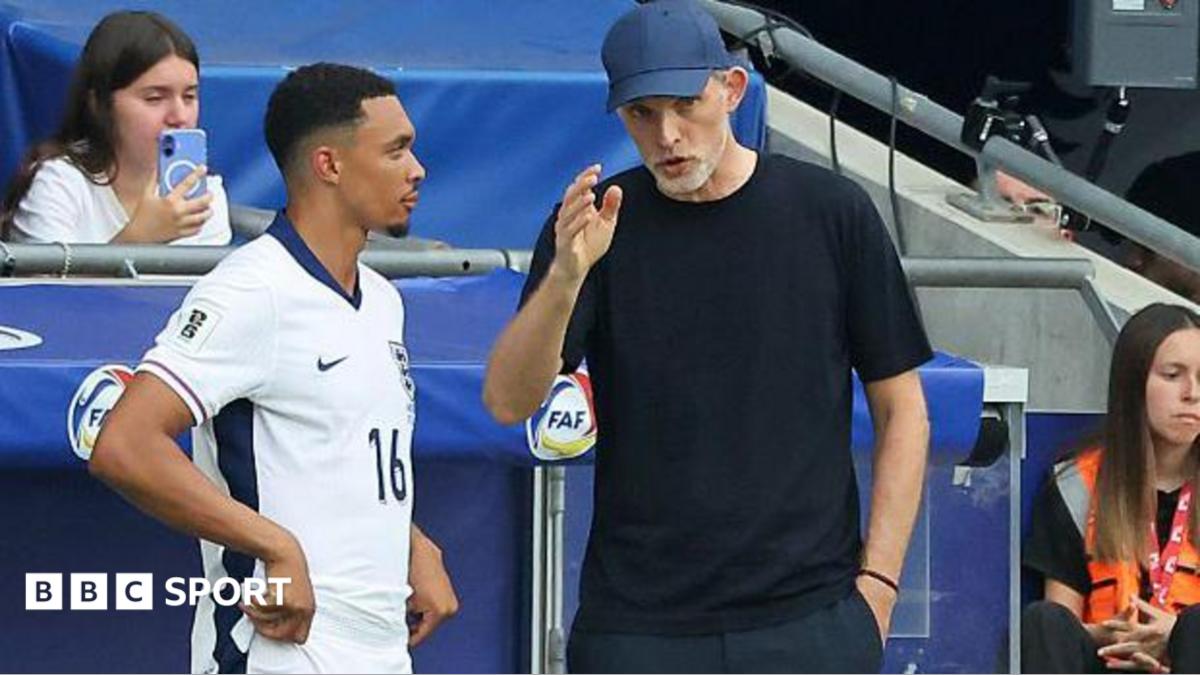
Tino Livramento’s exit from England’s World Cup squad has done more than remove one option from Thomas Tuchel’s defensive pool. It has reopened a wider debate about how much risk England are prepared to carry in the full-back positions, and whether the head coach is building a squad around flexibility or exposing himself to avoidable uncertainty.
The BBC’s framing of the issue is telling: this is not simply about one player missing out, but about the balance of Tuchel’s defensive selection and the possible weak points that come with it. In tournament football, those margins matter. A squad can look strong on paper and still be vulnerable if the defensive structure lacks natural cover, specialist depth or clear role definition.
What Livramento’s omission reveals
Livramento’s departure matters because it narrows England’s options. When a squad loses a defender with his profile, the knock-on effect is not just numerical. It changes how the coaching staff can manage injuries, suspensions and tactical switches across a long competition. That is especially relevant in a World Cup environment, where one selection call can shape the entire route through the tournament.
For supporters, the concern is straightforward: if Tuchel is willing to trim defensive depth this early, he is effectively betting that his remaining choices can withstand the pressure of elite knockout football. That is a bold approach, but it can also be a fragile one if the team is forced into unexpected reshuffles.
Why Alexander-Arnold remains central to the discussion
The Alexander-Arnold angle is what gives the story its broader significance. Any conversation about England’s defensive gambles inevitably circles back to the Liverpool full-back, whose qualities have long prompted debate about how best to use him at international level. His inclusion or exclusion is rarely just about one position; it speaks to how England want to control matches, progress the ball and protect themselves without it.
That is why Tuchel’s decisions are being read so closely. If the head coach is leaning toward a more conservative defensive structure, it may suggest a preference for security over creativity in wide areas. If he is willing to keep more expansive options in play, then England may be aiming to use full-backs as attacking weapons rather than purely defensive specialists.
The bigger picture for England
At this stage, the key takeaway is not that England have made a definitive mistake, but that Tuchel’s choices have created a live tactical question. Tournament squads are judged not only by their strongest XI, but by how well they cope when the plan changes. Livramento’s exit has made that test more visible.
For England fans, that means the debate around Alexander-Arnold is unlikely to fade. Instead, it now sits within a larger discussion about how Tuchel wants his team to defend, build attacks and manage the demands of a World Cup campaign. The answers to those questions may tell us as much about England’s ceiling as any single squad announcement.
Source note: This article was prepared using publicly available information from BBC Sport and expanded with editorial context.
Share this content: