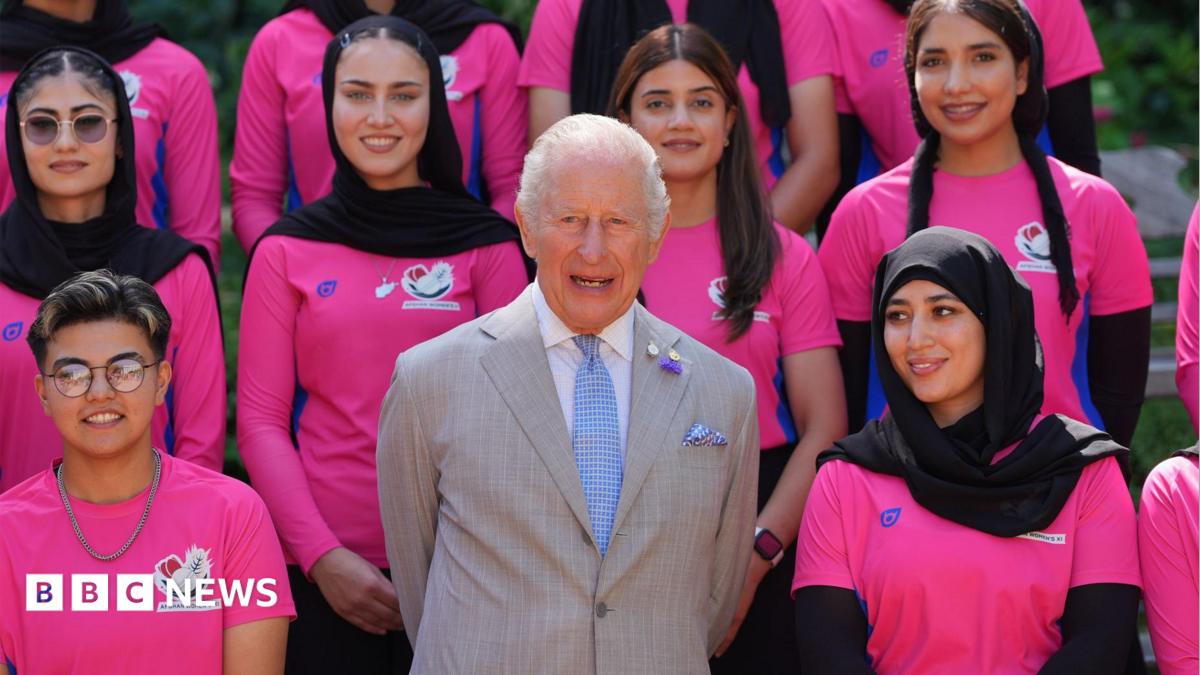
King Charles has offered a symbolic public gesture of support to the Afghan women’s cricket team, a side whose very existence has been forced out of the sporting mainstream by the Taliban’s ban on women’s sport. The meeting matters far beyond ceremony: for players in exile, recognition from a global figure is one of the few visible forms of backing available while they remain unable to represent Afghanistan.
A team in exile, and a sport denied at home
The BBC reports that the Afghan women’s cricket team is now in exile and is not allowed to play for its country because of the Taliban regime’s restrictions on women’s sport. That context gives the King’s meeting a clear political and human dimension. It is not a transfer story in the conventional football sense, but it sits squarely in the wider sporting conversation about access, identity and the right to compete.
For supporters of women’s sport, the story is a reminder that international recognition can still matter even when official pathways are blocked. A symbolic meeting does not change policy, but it can keep attention on athletes who have been pushed out of the system and help preserve the visibility of a team that would otherwise risk being forgotten.
Why the gesture matters in sporting terms
In elite sport, representation is often tied to institutions, federations and national structures. When those structures collapse or exclude players, the consequences are immediate: no fixtures, no development pathway and no chance to build momentum on the field. That is what makes the Afghan women’s cricket team’s exile so significant. Their situation is not about form, tactics or selection in the usual sense; it is about survival, recognition and the possibility of future participation.
For readers following the broader game, the story also underlines how women’s sport remains vulnerable to political decisions outside the pitch. The team’s inability to represent Afghanistan is not a sporting failure, but a rights issue with sporting consequences. Any high-profile acknowledgement, especially from the monarchy, can help keep that reality in the public eye.
BBC News says the meeting was a symbolic show of support, and that is the key point. The gesture does not alter the team’s status, but it does reinforce the idea that their exclusion should not become normalised. For the players, that kind of visibility can be as important as any result, because it signals that their cause is being seen at the highest levels.
For supporters, the wider implication is clear: football and cricket alike are shaped not only by results, but by the conditions that allow teams to exist at all. In this case, the story is less about a match than about the right to have one.
Source: BBC News
Source note: This article was prepared using publicly available information from BBC Sport and expanded with editorial context.
Share this content: