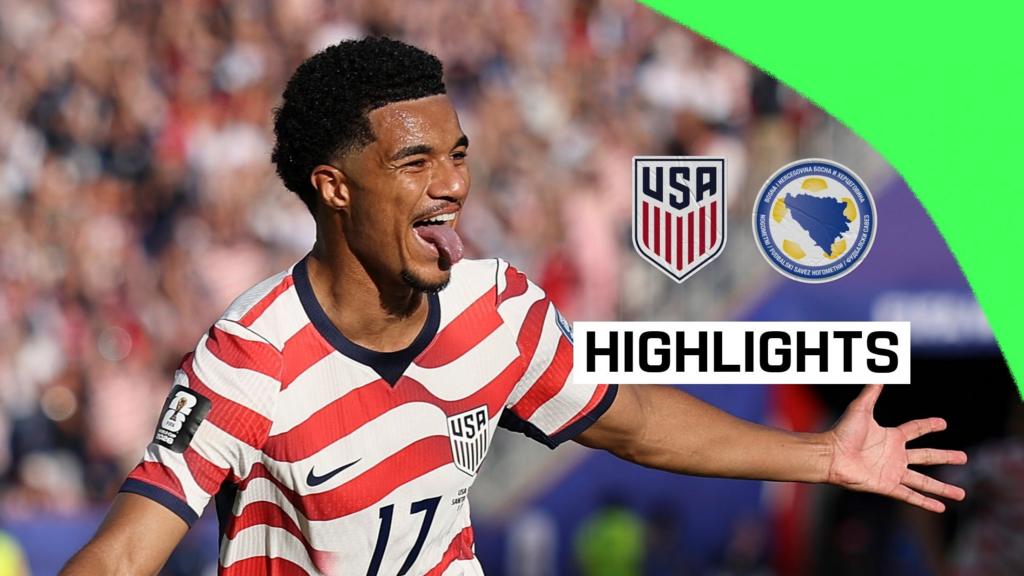
The United States took another step through the World Cup with a win over Bosnia-Herzegovina in Santa Clara, but the night was defined by both Folarin Balogun’s goal and his later dismissal. For supporters, it was the kind of mixed outcome that can leave a team feeling both encouraged and slightly uneasy: the result mattered, yet the performance also carried reminders that knockout football rarely allows much room for error.
Balogun’s contribution underlined why he has become such an important attacking figure for the US. A goal in a tournament setting always sharpens the spotlight, especially for a forward whose role is to provide the decisive edge in tight games. At the same time, the red card changes the conversation. Goals win matches, but discipline can shape what comes next, and the United States will now have to manage the consequences of losing a key player after the final whistle has already turned positive.
USA progress, but the performance leaves questions
The BBC’s report described Bosnia-Herzegovina as lacklustre, which suggests the United States were able to control enough of the contest to secure progression without needing a dramatic late rescue. That is valuable in tournament football, where efficiency often matters more than style. Still, a straightforward win over a limited opponent does not always tell the full story. Coaches and supporters alike will want to know whether the US were genuinely in command or simply efficient enough to take advantage of a subdued Bosnia side.
For the Americans, reaching the last 16 is the main headline. Tournament progression is the first objective, and doing so before the pressure intensifies is a sign of a side that has handled the group stage demands. Yet the red card is a warning sign. In a longer competition, suspensions and emotional lapses can quickly become costly, particularly when the opposition level rises and margins narrow.
What Balogun’s night means for the US
Balogun’s evening captures the dual nature of modern international football: a player can be decisive and problematic in the same match. His goal strengthens his case as a central attacking option, but his sending-off will force the United States to think carefully about selection and discipline going forward. If they are to turn this progress into something deeper, they will need both his finishing and greater control from the team around him.
For supporters, the takeaway is simple. The result keeps the campaign moving, and Balogun’s scoring touch is a positive sign. But the dismissal tempers the celebration and adds a layer of uncertainty ahead of the next round. In tournament football, that balance between momentum and caution often decides how far a team can go.
Source note: This article was prepared using publicly available information from BBC Sport and expanded with editorial context.
Share this content: