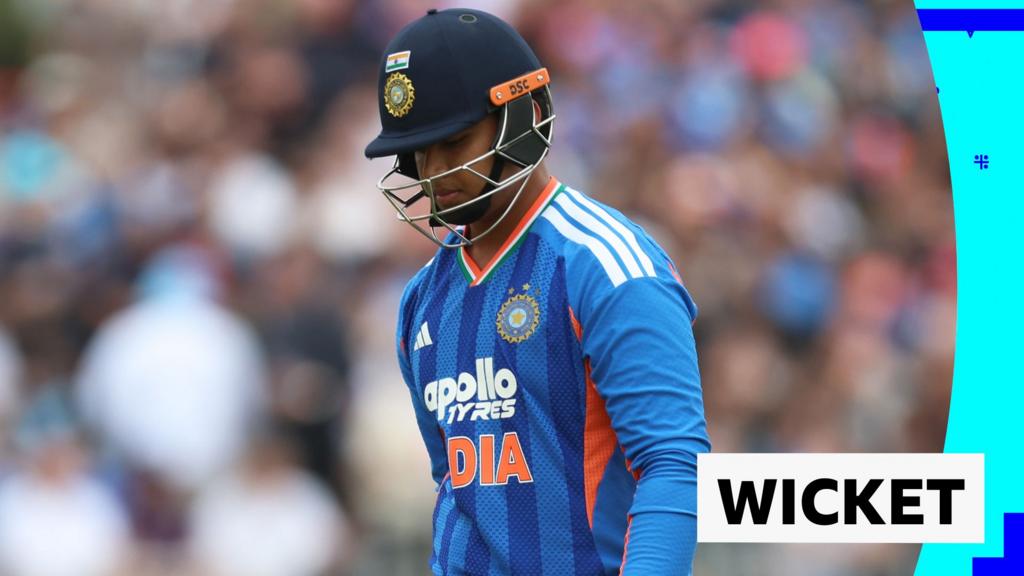
England’s early success in the second T20 against India came through a moment that immediately underlined both the promise and the pressure of international cricket. Fifteen-year-old Vaibhav Sooryavanshi, making his debut, showed enough attacking intent to hint at why he is being talked about so highly, but his innings ended on 14 when Will Jacks induced the chance and Jos Buttler completed the stumping.
The dismissal mattered not only because it removed a new face, but because it came after Sooryavanshi had already landed a couple of big sixes. For India, that brief burst of aggression would have been encouraging, especially in a format where momentum can change quickly. For England, the wicket was a reminder that even when a young batter starts brightly, disciplined bowling and sharp work behind the stumps can quickly restore control.
What the wicket means in the match
India were 50-1 at the point reported, which suggests the visitors had made a steady enough start despite losing the debutant. In T20 cricket, that sort of platform can still be valuable, but the loss of an early wicket after a positive cameo can alter the rhythm of an innings. It also places more responsibility on India’s established batters to convert the start into something more substantial.
From England’s perspective, the breakthrough will have been especially satisfying because it came against a player whose age and profile naturally draw attention. Young batters can unsettle attacks with fearless strokeplay, but the challenge at this level is sustaining that intent against bowlers who quickly adjust lengths and field settings. Jacks’ wicket, backed by Buttler’s keeping, showed England responding well to that challenge.
Why Sooryavanshi’s debut drew attention
Any international debut at 15 is notable, and Sooryavanshi’s first appearance will be judged not only by the scorecard but by the way he handled the occasion. The fact that he cleared the ropes twice before falling suggests India saw enough in him to trust his attacking game on a big stage. Even in a short innings, that kind of impact can shape how supporters view his long-term potential.
For India fans, the key takeaway is that the debutant did not look overawed. For England supporters, the positive is that their side found a way through after an early burst of aggression. In a series where every small passage of play can influence the wider contest, this was the sort of moment that can matter beyond the immediate wicket.
The broader significance is simple: India have introduced a teenager with obvious upside, while England have shown they can still manage danger quickly when a young opponent starts fast. That tension between promise and control is often what makes T20 cricket so compelling.
Source note: This article was prepared using publicly available information from BBC Sport and expanded with editorial context.
Share this content: