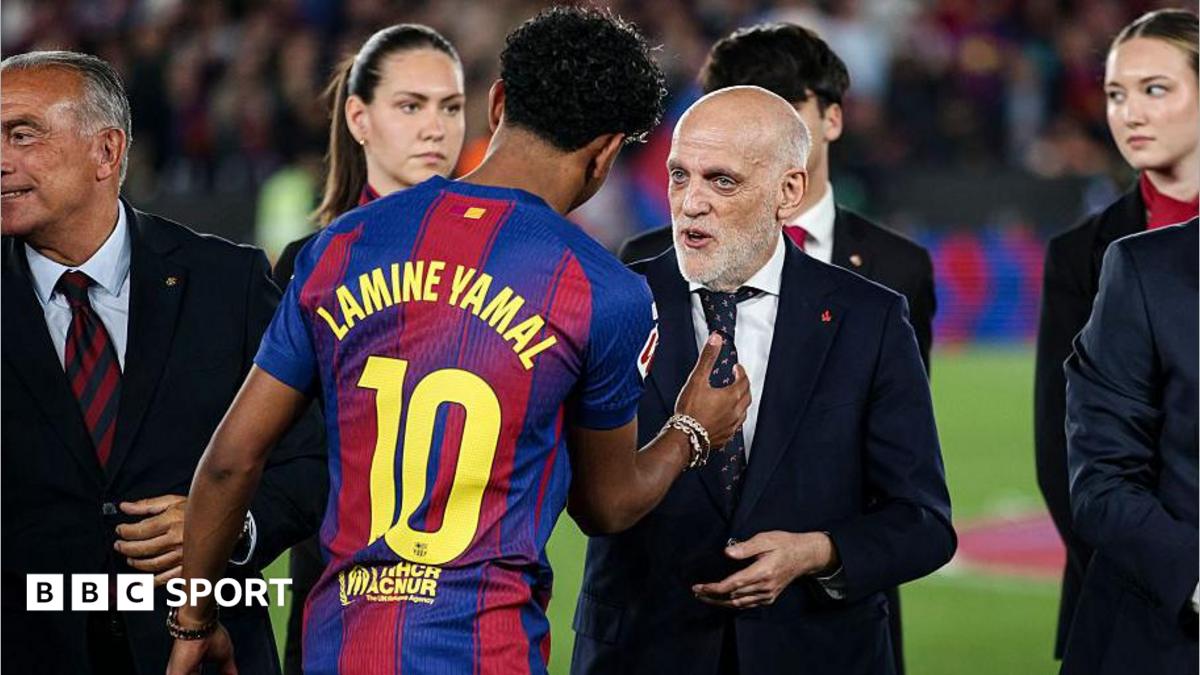
La Liga president Javier Tebas has taken aim at FIFA, accusing football’s global governing body of operating amid a “complicit silence” after United States striker Folarin Balogun was controversially spared from suspension at the 2026 World Cup. The remarks add another layer to the long-running tension between Spain’s top-flight leadership and the sport’s international administrators, especially when disciplinary decisions become a flashpoint.
Why Tebas’ criticism matters
Even without the full disciplinary detail in the source, the reaction itself is significant. Tebas is one of the most outspoken figures in European football governance, and his comments are likely to resonate beyond this specific case because they tap into a familiar complaint: that FIFA’s decision-making can appear opaque when major tournament rulings are involved. For supporters, that matters because consistency and transparency are central to trust in tournament discipline, particularly at a World Cup where every suspension can alter the competitive balance.
Balogun’s situation is the immediate trigger, but the broader issue is the perception of fairness. When a player is spared a ban in a high-stakes competition, the debate often moves quickly from the individual case to the standards being applied across the tournament. That is where Tebas’ intervention lands: not simply as criticism of one ruling, but as a challenge to the culture around how such decisions are explained and defended.
What it means for FIFA and the World Cup
For FIFA, public criticism from a senior domestic league president is rarely ideal, particularly when the organisation is trying to project authority and consistency ahead of a World Cup. The 2026 tournament will be watched closely for officiating and disciplinary standards, and any suggestion that rulings are being handled unevenly risks becoming part of the wider narrative around the competition.
For the United States, Balogun’s availability is obviously important. As a striker with a growing profile, his presence can influence how the team approaches matches, especially if the squad is relying on pace, movement and direct attacking threat. A suspension would have changed that picture; being cleared to continue keeps him available for selection and preserves continuity for the team.
From a La Liga perspective, Tebas’ comments also underline how domestic league leaders increasingly see themselves as stakeholders in the global game, not just observers. When World Cup decisions are viewed as inconsistent, the fallout is felt well beyond the tournament itself, feeding into broader arguments about governance, transparency and the credibility of football’s institutions.
The BBC report does not provide the full disciplinary background, but it does establish the key point: Tebas has publicly challenged FIFA over a ruling involving Balogun, and the language he used suggests the dispute is as much about principle as it is about one player. For supporters, that means the story is not only about who plays and who misses a match, but about whether the game’s biggest authority can convincingly explain the decisions that shape its biggest stage.
Source note: This article was prepared using publicly available information from BBC Sport and expanded with editorial context.
Share this content: