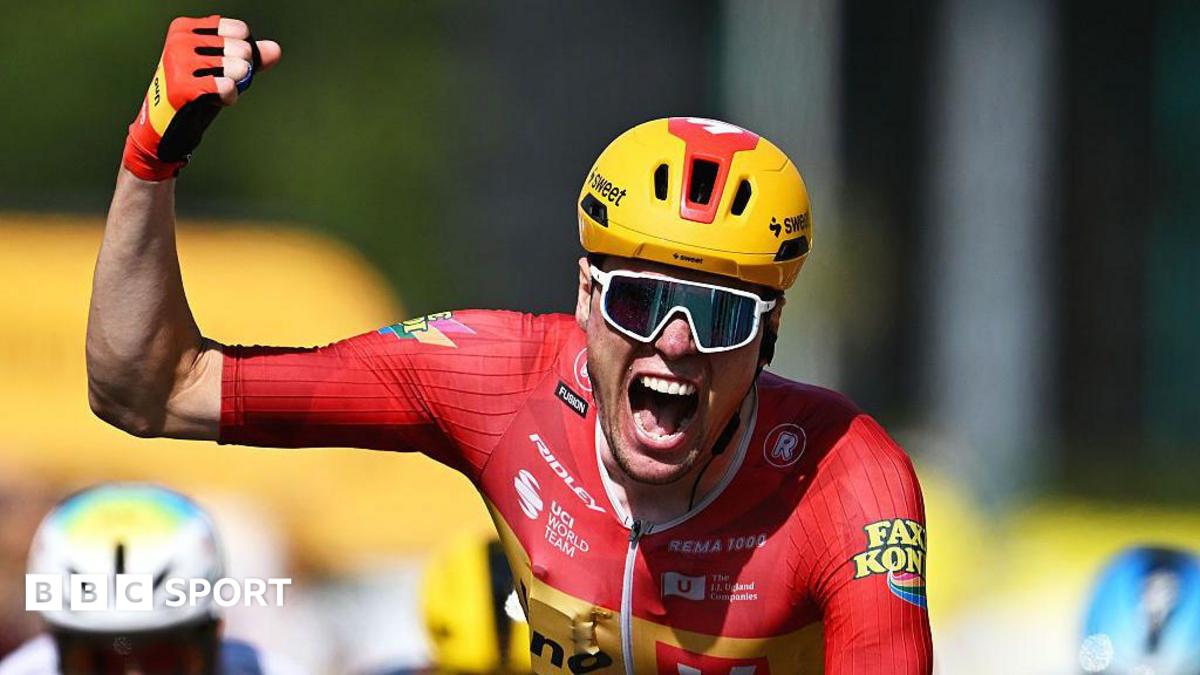
Soren Waerenskjold delivered the kind of result that can reshape a rider’s reputation in a single afternoon, taking a maiden win in the fastest-ever stage of the Tour de France. The Norwegian’s long-range sprint caught the big names off guard and turned what should have been a controlled finale into a race of reaction, timing and nerve.
For supporters following the Tour, the result is a reminder that even in the modern era of highly organised sprint trains, the biggest races still leave room for instinct and opportunism. When the pace is as high as it was in this stage, the margin for error narrows dramatically. A rider who commits early, reads the road better than the rest, and trusts his legs can still beat the more established finishers.
A breakthrough built on timing and surprise
Waerenskjold’s victory matters because maiden wins at this level are rarely just about one good kick. They often reflect a rider’s growing confidence, the right race situation, and the ability to stay calm when the favourites begin to organise behind. In a stage billed as the fastest ever in Tour de France history, the speed itself became part of the story: the harder the race was ridden, the more difficult it became for sprint teams to fully control the closing kilometres.
That context makes the win especially significant. The Tour de France is not only about the yellow jersey battle; it is also the stage where lesser-known riders can announce themselves to a global audience. A result like this can change how rivals approach Waerenskjold in future bunch finishes, because a rider who wins once in this environment is no longer simply an outsider.
What it means for the sprint battle
For the bigger sprint names, the outcome will be frustrating. When a stage is expected to end in a conventional dash to the line, the teams responsible for setting up their fast men usually want a predictable final kilometre. Waerenskjold’s move disrupted that script, showing how quickly a race can slip away when the timing is just slightly off.
For fans, the appeal is obvious. The Tour de France remains compelling not only because of the overall standings, but because of moments like this: a rider seizing the chance, the favourites being forced to react too late, and a stage ending with a surprise winner. Waerenskjold’s breakthrough gives the race another talking point and adds a fresh name to the list of riders capable of upsetting the established order.
Source note: This article was prepared using publicly available information from BBC Sport and expanded with editorial context.
Share this content: