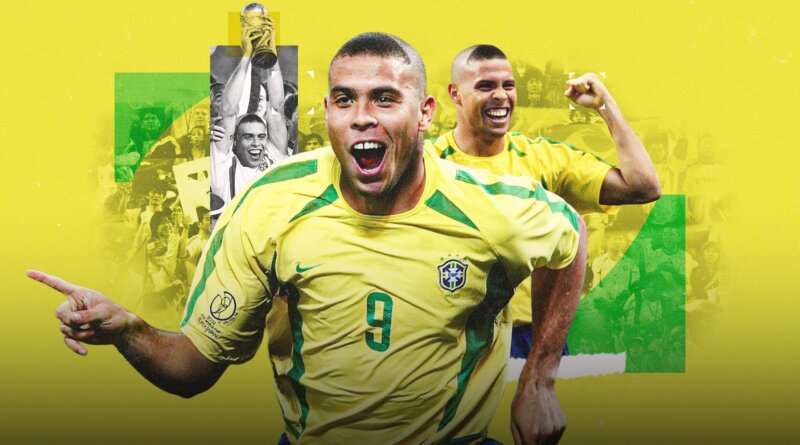
Ronaldo’s Cascao Haircut Sparked Brazil’s 2002 World Cup Glory
Ronaldo haircut was more than a style statement at the 2002 World Cup; it became the unforgettable symbol of his redemption and Brazil’s journey to footballing immortality.
How Ronaldo’s Haircut Became an Icon
Few moments in World Cup history are as instantly recognizable as Ronaldo’s “Cascao” haircut—a bizarre tuft at the front with the rest of the head shaved. While it began as an offhand attempt to distract attention from a lingering thigh injury, the haircut quickly took on a life of its own, capturing the imagination of fans and the media worldwide.
Ronaldo, already a superstar who dazzled at Cruzeiro, PSV, Barcelona, and Inter Milan, arrived at the 2002 World Cup under immense pressure. Injuries had plagued his career, including devastating knee problems that left many doubting if he’d ever reach his previous heights. Yet, Brazil’s number 9 was determined to write a new chapter.
ICONS: The Ronaldo Haircut and World Cup Triumph
The 2002 World Cup was not just a test of Ronaldo’s physical resilience; it was a battle of spirit. After Brazil’s dramatic 2-1 quarter-final win over England, Ronaldo’s thigh injury cast a shadow over the squad. Manager Luiz Felipe Scolari and the medical team worked around the clock to get him fit for the semi-final against Turkey. Amid this uncertainty, Ronaldo made a choice that would change everything.
He left a small patch of hair at the front—later dubbed the “Cascao” after a beloved Brazilian cartoon character—while shaving the rest of his head. Teammates laughed, coach Scolari fumed, but the plan worked: the media stopped talking about his injury and started talking about the haircut.
From Injury Doubt to Heroics
Despite pain and doubts, Ronaldo started the semi-final. Brazil struggled in the first half, and many called for him to be substituted. But great players find their moment. Early in the second half, Ronaldo seized a loose ball and, unable to strike with the inside of his foot, improvised a magical toe-poke goal—his sixth of the tournament.
“The haircut distracted everyone from my injury,” Ronaldo later revealed. “It brought a bit of joy when we most needed it.”
Redemption in the Final: Brazil’s Fifth Star
The final against Germany was the stage for Ronaldo’s ultimate comeback. With his notorious haircut and a calm resolve, he scored both goals in a 2-0 victory, erasing the pain of his 1998 World Cup heartbreak and leading Brazil to their fifth world title. He finished as the tournament’s top scorer with eight goals, forever linking his image—and his haircut—to one of football’s greatest achievements.
For months, Ronaldo kept the Cascao style, with children everywhere copying the look. The haircut transcended sport; it became a pop culture phenomenon, forever associated with resilience, humor, and triumph under pressure.
Legacy of the Ronaldo Haircut
Looking back, the Ronaldo haircut at the 2002 World Cup stands as a testament to the psychological battles athletes face. What began as a joke in the face of adversity became a masterstroke in media management, team spirit, and self-belief.
In Brazil, the image of Ronaldo with his yellow jersey and strange fringe is as iconic as any trophy lift. For millions, it represents the power of individuality and the ability to turn weakness into strength.
Opinion: More Than Just a Haircut
The Ronaldo haircut in 2002 wasn’t just a fashion statement—it became a symbol of overcoming adversity. It’s a reminder that sometimes, the smallest changes can have the biggest impact, shifting focus, lifting spirits, and inspiring a team and a nation on the world’s biggest stage. For those who witnessed it, Ronaldo’s Cascao haircut remains a legendary chapter in football history.
Visit for more news on unforgettable football moments and icons.
Your global gateway to nonstop football coverage:
News Goal
Share this content: