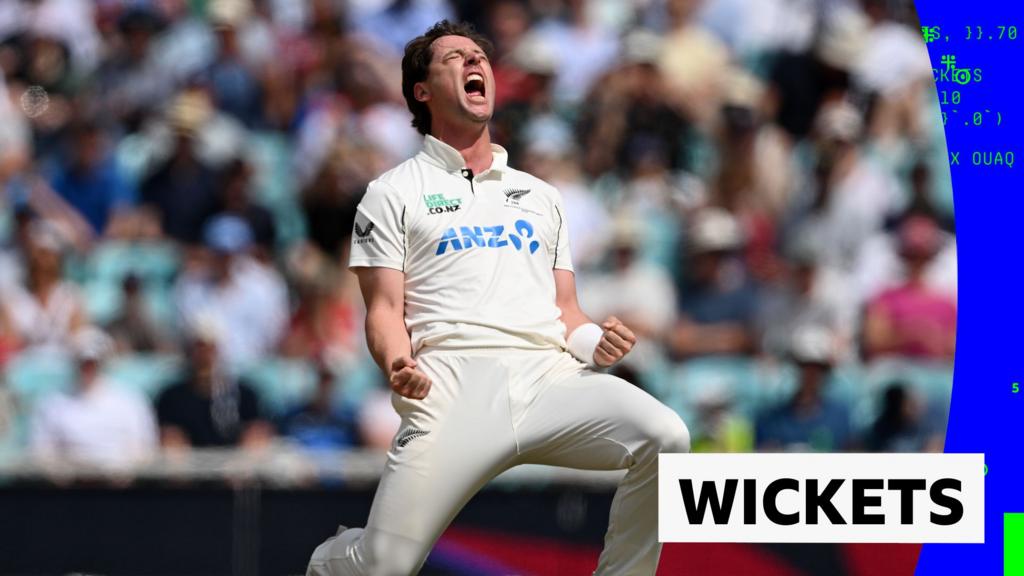
New Zealand took a major step toward victory in the second Test at The Oval after Matt Henry removed Joe Root and Jofra Archer in the same over early on day five. For England, it was the kind of double blow that can quickly drain momentum from a chase or a resistance effort, especially when the opposition attack has already found a rhythm.
The key moment underlined how little margin England had left. Root is usually the batter around whom England’s late-innings hopes are built, while Archer’s dismissal further reduced the depth available to keep the contest alive. When two wickets fall in quick succession, the pressure does not just show on the scoreboard; it changes the shape of the innings, the confidence in the dressing room and the options available to the batting side.
Henry’s spell shifts the balance
Henry’s impact in the same over was the decisive development in the brief update from The Oval. In Test cricket, a double strike from a frontline seamer can be more than a statistical flourish: it can force the batting side into survival mode and allow the fielding team to attack with greater freedom. That is especially true late in a match, when every wicket carries added weight and every over can alter the result.
For New Zealand, the situation is now about maintaining discipline and finishing the job. The visitors have put themselves in a strong position, and the fact that the BBC update described them as “wrapping this up” suggests the game is moving toward a conclusion. That is the sort of position touring sides work hard to create in England, where conditions can often keep a match alive longer than expected.
What it means for England supporters
For England supporters, the concern is not only the loss of two wickets but the timing. Early on day five, there is still a theoretical route back into a Test, but it becomes increasingly narrow once established batters are removed. Root’s dismissal is particularly significant because he is one of England’s most reliable players in pressure situations, while Archer’s wicket removes another layer of resistance.
The broader implication is straightforward: New Zealand are now firmly in control, and England need a substantial response to change the direction of the match. If Henry and the rest of the attack continue to land early blows, the visitors should be able to close out the second Test and secure a result that reflects their control over the final day.
Source note: This article was prepared using publicly available information from BBC Sport and expanded with editorial context.
Share this content: