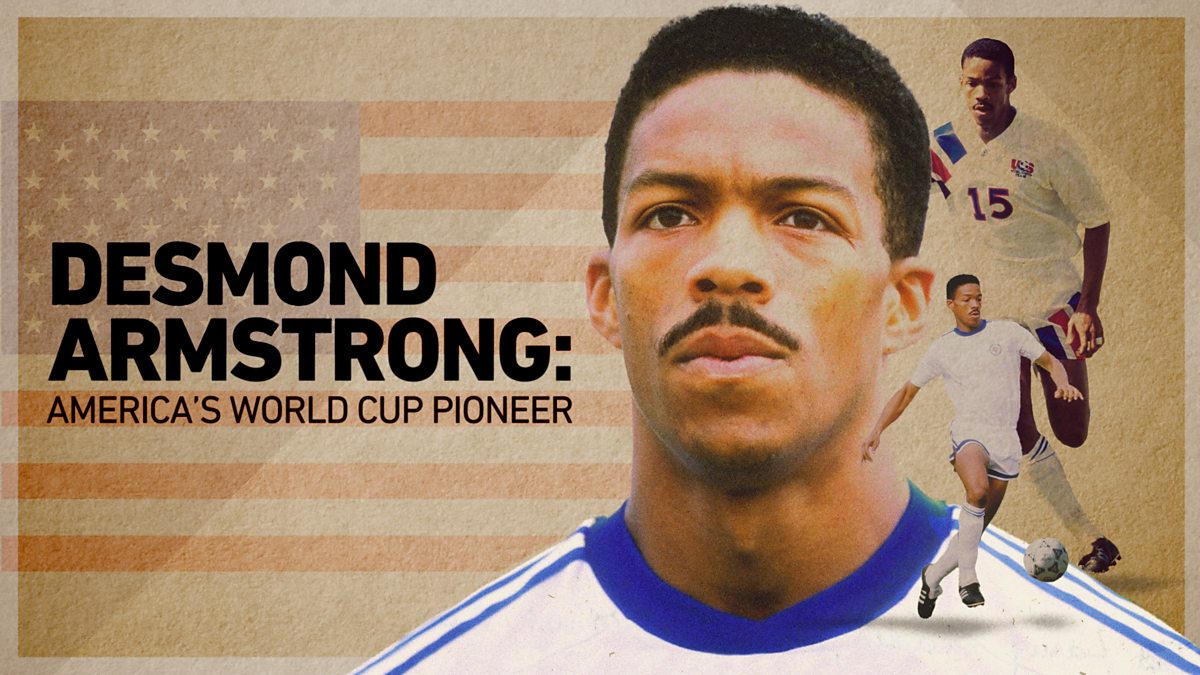
BBC’s latest football profile turns the spotlight on Desmond Armstrong, a figure whose place in United States football history is defined by both sporting achievement and wider significance. The programme, titled Desmond Armstrong: America’s World Cup Pioneer, revisits a player who broke ground as the first US-born Black footballer to represent the men’s national team at a World Cup.
That detail alone gives the story weight beyond a standard retrospective. Armstrong’s career sits at the intersection of international football progress and representation, and the BBC’s decision to feature him reflects the growing appetite for stories that explain how the modern game was shaped by earlier trailblazers. For supporters of the United States, it is a reminder that the country’s football identity was built not only through recent growth, but also through players who helped push the programme into the global conversation long before the current era of expanded visibility.
A landmark figure in US football
The source confirms that Armstrong was part of the squad that achieved what was described as the unthinkable: qualifying for Italia 90. That qualification remains a major reference point in the history of the US men’s team, marking a moment when the national side began to establish itself more firmly on the international stage. For a football audience, that makes Armstrong’s story relevant not just as biography, but as part of the broader development of the American game.
While the source does not provide match-by-match detail, the significance is clear. Being included in a World Cup squad is an achievement in itself; doing so as a pioneer for representation adds another layer. In editorial terms, Armstrong’s story is one of visibility, progress and the long road to recognition for players who opened doors for those who followed.
Why this matters now
There is also a contemporary angle. As football in the United States continues to expand ahead of future major tournaments, stories like Armstrong’s help supporters understand the roots of the national team’s journey. They provide context for how far the programme has come and why certain milestones still resonate. For younger fans, the BBC profile offers a chance to connect the present-day US setup with the players who helped lay the foundations.
The episode is listed as part of BBC’s Icons of Football strand, which suggests a broader editorial aim: to frame individual careers within football’s wider cultural memory. That approach suits Armstrong’s legacy. His name may not be as widely recognised as some of the game’s global superstars, but his place in US football history is secure because of what he represented on and off the pitch.
For supporters, the value of the story is simple. It is a reminder that football history is not only written by trophies and finals, but also by pioneers whose achievements changed who could be seen, who could be selected and who could imagine themselves at the highest level.
Source: BBC iPlayer
Source note: This article was prepared using publicly available information from BBC Sport and expanded with editorial context.
Share this content: