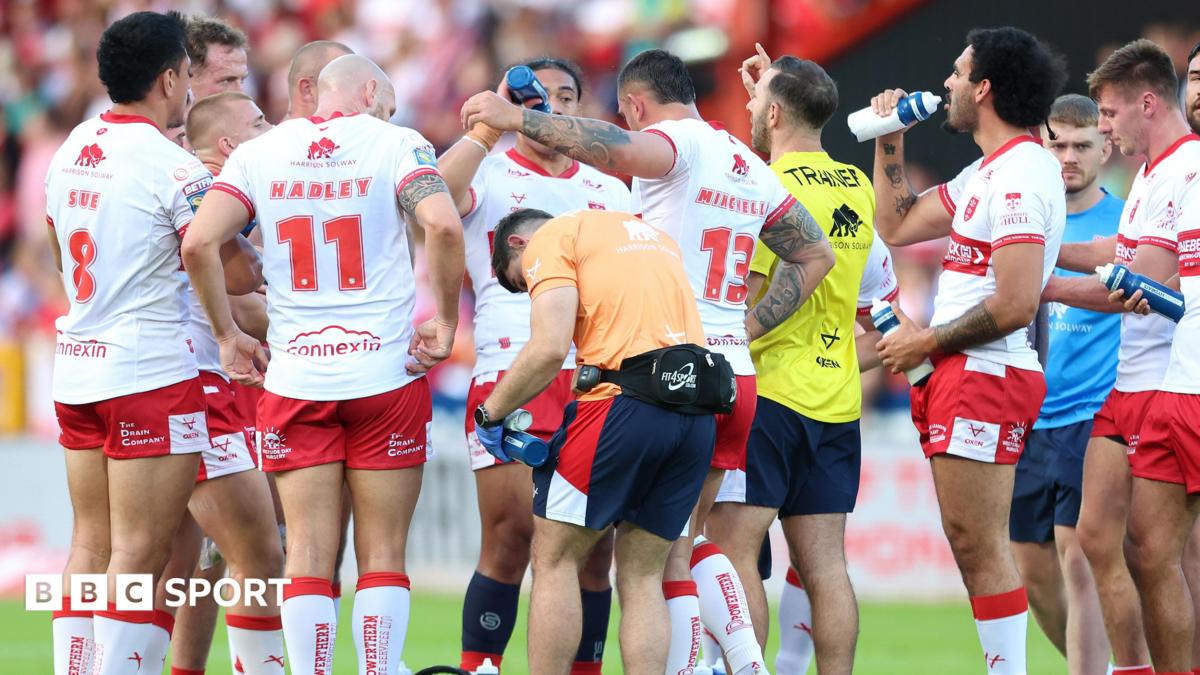
The Rugby Football League’s decision to add hydration breaks to this weekend’s fixtures is a reminder that player welfare is increasingly shaping how matches are managed in extreme conditions. With temperatures rising, the governing body has moved to protect athletes from the strain of playing in intense heat, but the measure has also sparked debate about whether the stoppages are proportionate in every venue.
Why the RFL has acted now
According to the RFL, games this weekend will include two 90-second hydration breaks “to aid players during the extreme weather”. That is a practical response to a genuine safety issue. In high temperatures, fatigue, dehydration and reduced concentration can all affect performance, and in a collision sport such as rugby league, that can quickly become more than a comfort problem.
For supporters, the change means a slightly different match rhythm. Hydration breaks can interrupt momentum, but they also reduce the risk of players being pushed beyond safe limits. In that sense, the RFL is balancing the spectacle of the game against the physical demands placed on those playing it.
Why the decision is already controversial
The criticism is not about the principle of protecting players, but about how the policy applies across different stadium conditions. There have been complaints about the three-minute length of the stoppages, especially in covered grounds where high temperatures are not necessarily an issue. That has created a fair question for administrators: should every venue be treated the same when the environmental conditions are not identical?
That debate matters because rugby league is a sport where tempo, territory and momentum can swing quickly. A break at the wrong moment can alter the flow of a contest, and some coaches and fans will inevitably feel that the competitive impact should be weighed more carefully when the weather is not the same across all venues.
What it means for players and fans
For players, the immediate benefit is obvious: a chance to recover, rehydrate and reset during punishing conditions. For coaches, it creates a brief tactical pause that can be used to settle a team, adjust shape or simply manage energy levels. For fans, it is another example of modern sport adapting to climate realities, even if not everyone will welcome the interruption.
The wider implication is that governing bodies are being forced to make more frequent decisions based on weather rather than tradition alone. As extreme conditions become more common, the question is no longer whether such measures are necessary, but how they should be applied fairly. This weekend’s hydration breaks may be a small operational change, but they underline a much bigger issue: how to keep the game safe without diluting its competitive edge.
For now, the RFL has chosen caution. Whether that approach wins broad acceptance may depend on how disruptive the breaks prove to be once the matches begin.
Source note: This article was prepared using publicly available information from BBC Sport and expanded with editorial context.
Share this content: