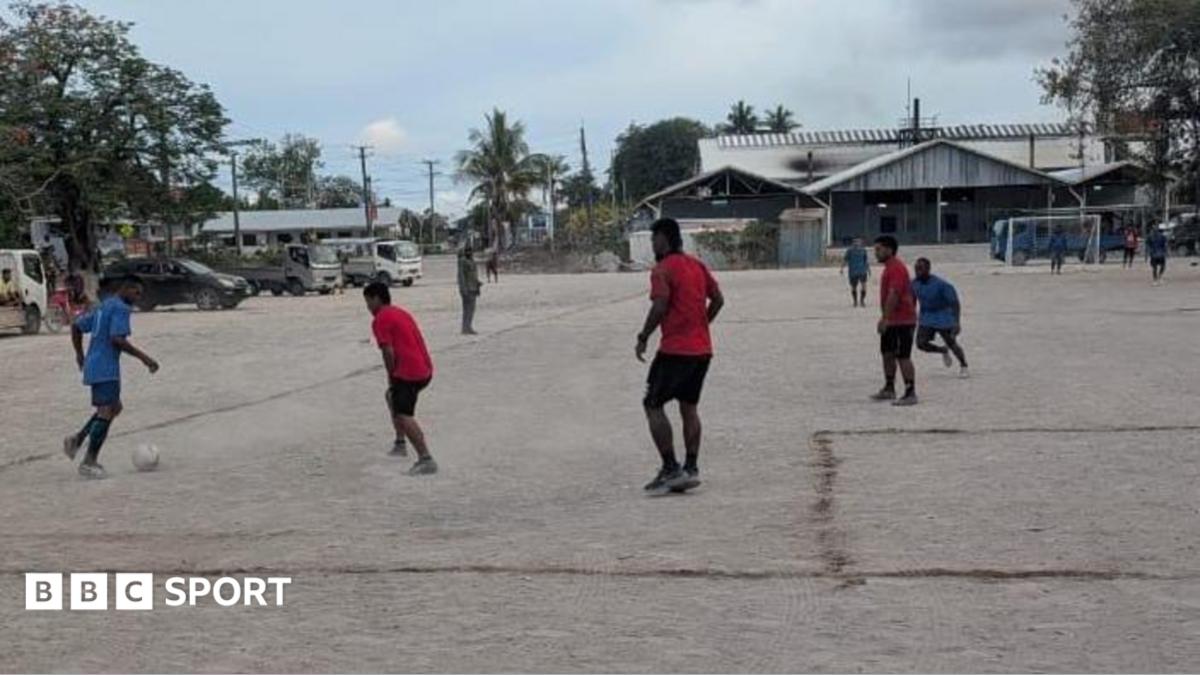
Football’s global reach is often measured by television audiences, transfer fees and packed stadiums, but the BBC’s report from Nauru is a reminder that the game still exists in places where the basic infrastructure is almost absent. On the world’s smallest island nation, the World Cup briefly created a sense of football fever. Once Spain lifted the trophy, that attention quickly disappeared.
That contrast matters. In many countries, the end of a World Cup only resets the cycle of debate about the national team, youth development and the next qualifying campaign. In Nauru, the issue is far more fundamental: whether football can take root at all when there is only one pitch, and that surface is hard sand. For supporters and administrators alike, that is not a romantic detail but a structural barrier.
A game without a pathway
The BBC’s reporting makes clear that Nauru has never fielded a team in an official international match. That fact places the island outside the normal football ladder that most nations take for granted. There is no competitive record to build on, no established international identity, and no obvious route from local participation to the global stage.
For a sport that depends so heavily on repetition, coaching, and access to playable surfaces, the lack of a proper pitch is decisive. A hard-sand field may allow informal games, but it does not provide the same conditions for technique, movement, or structured training. That has implications not just for performance, but for whether children and young players can imagine football as a serious sporting pathway.
What the World Cup moment means
The article also highlights a familiar pattern in football development: major tournaments can inspire interest, but inspiration alone does not create a system. In places with strong leagues and grassroots networks, a World Cup can feed participation for years. In Nauru, the buzz lasted only as long as the tournament itself.
That should matter to anyone interested in the wider health of the game. Football’s growth is not only about elite success or headline-making nations. It is also about access, geography and whether communities have the facilities to keep the sport alive after the cameras move on. Nauru’s situation shows how quickly football can become a temporary event rather than a lasting part of local sporting culture.
For supporters, the story is less about results than possibility. It asks what football looks like when the game’s most basic ingredients are missing, and whether international attention can ever translate into something more durable. On Nauru, the answer remains uncertain, but the challenge is now visible.
Source note: This article was prepared using publicly available information from BBC Sport and expanded with editorial context.
Share this content: