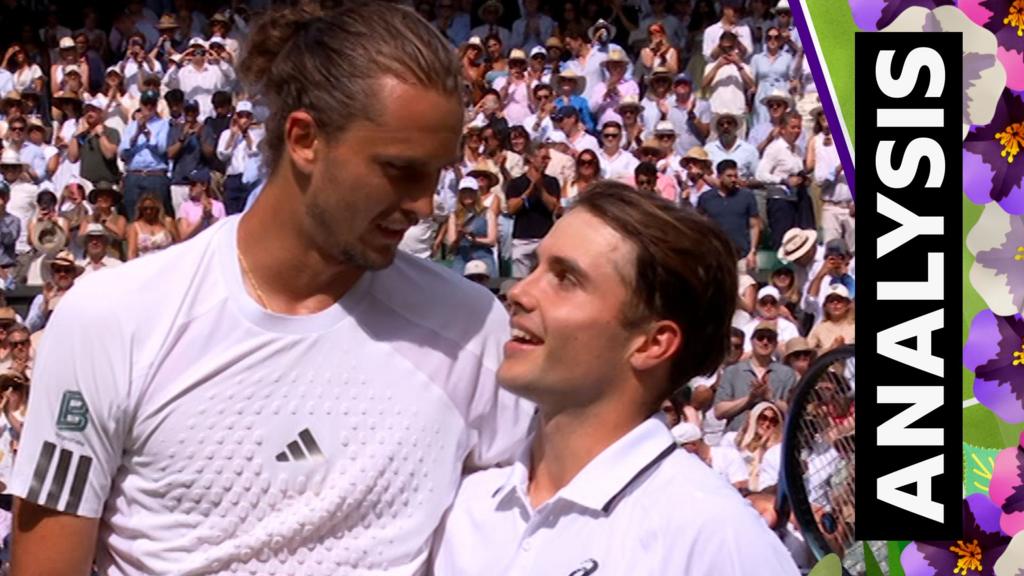
Arthur Fery may have come up short in his semi-final against Alexander Zverev, but the reaction from two high-profile voices in the sport suggests the British wildcard left a far stronger impression than the result alone might indicate. Tim Henman and Andre Agassi both pointed to Zverev’s serving power as the key factor in the contest, while also making clear that Fery’s competitive edge stood out.
For supporters, that combination matters. In tennis, especially at the sharp end of a tournament, a player can lose a match and still strengthen his reputation. That appears to be the case here. Fery’s ability to stay in the fight against a player of Zverev’s calibre is the sort of performance that can accelerate belief around a young or emerging competitor, particularly when respected former champions are publicly praising his mentality.
Zverev’s serve made the difference
Henman and Agassi were aligned in their assessment that Zverev’s serving strength proved decisive. That is no surprise given how much elite tennis is shaped by first-strike pressure, especially in matches where one player can repeatedly protect service games and force the opponent into constant catch-up mode. Against a big server, even a determined and athletic returner can find it difficult to build momentum.
From a tactical perspective, that is the central lesson of the match. Fery’s resilience was not enough to neutralise a weapon that can shorten points and control rhythm. For Zverev, that is the kind of efficiency that often separates top-level contenders from the rest of the field. For Fery, it is a reminder that the margins at this level are unforgiving, but also that he has the physical and mental tools to remain competitive.
Why the praise matters for Fery
The most striking part of the BBC’s reporting is the language used about Fery’s future. Being called a “fighter” and a player who could have “one heck of a career” is not empty flattery; it reflects the way experienced observers often judge a prospect’s long-term ceiling. Talent is one thing, but the willingness to compete under pressure is what often convinces insiders that a player can make the next step.
For British tennis, that kind of endorsement is especially valuable. Wildcard opportunities are often about exposure as much as immediate results, and a performance that earns praise from Henman and Agassi can help build momentum, confidence and public interest. Even in defeat, Fery has added a meaningful line to his developing profile.
The broader implication is simple: Zverev advanced because his serve gave him control, but Fery emerged with something potentially just as important for a young player — validation. If he can combine that fighting spirit with more consistency in future matches, this semi-final may be remembered less as a missed chance and more as an early marker of what he can become.
Source note: This article was prepared using publicly available information from BBC Sport and expanded with editorial context.
Share this content: