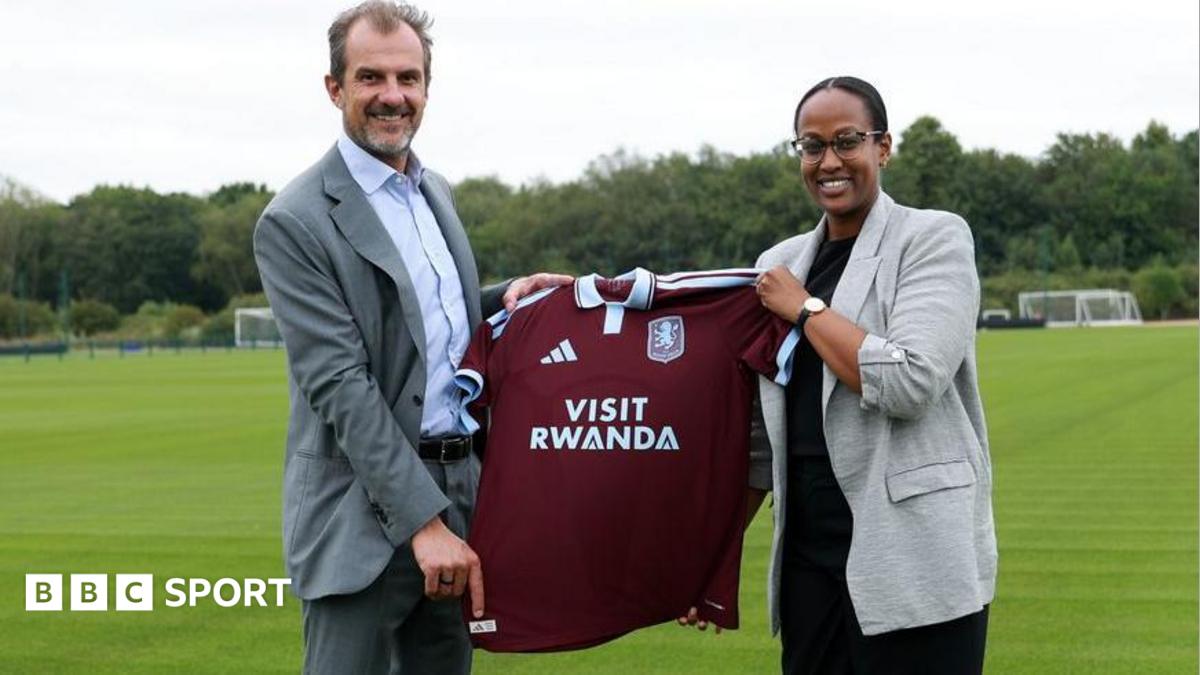
Aston Villa’s new sponsorship agreement with Visit Rwanda has immediately drawn scrutiny, with critics warning that the club could become part of a wider effort to improve the image of a government accused of serious human rights concerns. The reported £20m-a-year deal is significant commercially, but it also places the Premier League club in the middle of a debate that extends far beyond football.
For Villa, the attraction is obvious. In a market where elite clubs are under constant pressure to grow revenue, a deal of this scale strengthens the club’s financial position and underlines its rising commercial profile. But the backlash shows how sponsorships are no longer judged only on value. Supporters, campaigners and observers increasingly ask what a brand stands for, not just what it pays.
Why the deal matters beyond the balance sheet
The criticism centres on the idea of sportswashing: using sport to soften or distract from political controversy. That concern is not new in football, but it has become more prominent as clubs and governing bodies face greater pressure over the ethics of commercial partnerships. In Villa’s case, the issue is especially sensitive because the club is building a bigger global profile and will be judged not only on results, but on the company it keeps.
For supporters, this creates a familiar tension. On one hand, sponsorship income can help fund recruitment, infrastructure and long-term competitiveness. On the other, fans are increasingly aware that commercial growth can come with reputational costs. The reaction to this deal suggests that many will want clearer explanations from the club about how and why the partnership was chosen.
What Bayern’s move tells us
The reference to Bayern is important because it shows how other major European clubs have already adjusted their approach. Bayern announced last August that they were moving away from their commercial sponsorship with Visit Rwanda and instead focusing on expanding their academy in Kigali with Rwanda’s Ministry of Sports. That shift does not resolve the wider debate, but it does show that clubs can choose to reshape their relationship with Rwanda in ways that are less commercially direct.
For Villa, the timing makes the scrutiny even sharper. Any new partnership involving Visit Rwanda will now be measured against the broader conversation already taking place across European football. The club may see the deal as a straightforward commercial step, but the public response suggests it will be interpreted as a statement about values as well as finance.
As the story develops, the key question is whether Villa can defend the partnership on sporting and commercial grounds while also addressing the ethical criticism that comes with it. In modern football, those two conversations are rarely separate for long.
Source note: This article was prepared using publicly available information from BBC Sport and expanded with editorial context.
Share this content: