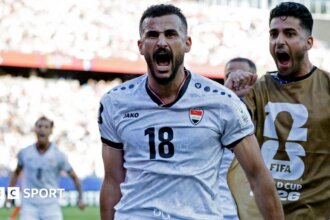
Hydration breaks are no longer a minor scheduling detail at major tournaments; they are becoming part of the tactical and physical conversation around elite football. In a BBC Sport video, pundits Micah Richards, Theo Walcott and Olivier Giroud debate the impact of the pauses on the 2026 World Cup, a competition already expected to test players in demanding conditions.
For supporters, the issue goes beyond a brief stoppage in play. Hydration breaks can alter momentum, interrupt pressing patterns and give coaches a chance to reset shape or deliver instructions. In a tournament where fine margins often decide knockout matches, even a short pause can influence how a game unfolds. That makes the subject relevant not only to players trying to manage energy levels, but also to managers weighing when to push, slow the tempo or protect a lead.
Why hydration breaks matter at the 2026 World Cup
The BBC discussion reflects a wider reality in modern football: match conditions are increasingly shaping strategy. At a World Cup, where fixtures are compressed and recovery time is limited, any measure that helps players cope with heat and fatigue can also affect the rhythm of the contest. That creates a tension between player welfare and the natural flow of the game, especially when teams are trying to sustain pressure or build attacking momentum.
Hydration breaks can also have different effects depending on the style of play. High-intensity teams that rely on pressing may lose some of their edge when the game is paused, while more controlled sides can use the interruption to reorganise. For defenders, the break can be a welcome reset; for attackers, it can be a moment that cools a promising spell. Those are the kinds of trade-offs that make the topic so relevant to tournament football.
What it means for players, coaches and fans
The presence of Richards, Walcott and Giroud in the BBC debate adds perspective from different parts of the game. Their discussion underlines that hydration breaks are not just a medical or logistical issue, but one that touches tactics, concentration and match management. As the 2026 World Cup approaches, teams will need to prepare for the possibility that these pauses become a regular part of how matches are played.
For fans, the change may be judged in two ways at once: as a sensible safeguard in difficult conditions, and as a factor that can reshape the drama of a match. If the breaks are used well, they could help maintain performance levels. If they disrupt rhythm too often, they may become another variable that coaches exploit. Either way, the BBC debate suggests hydration breaks are now part of the modern football conversation, not an afterthought.
That is why the subject matters. The 2026 World Cup will not only be about talent and tactics, but also about how teams adapt to the conditions around them. Hydration breaks may seem small, yet in tournament football, small details often carry real consequences.
Source note: This article was prepared using publicly available information from BBC Sport and expanded with editorial context.
Share this content: