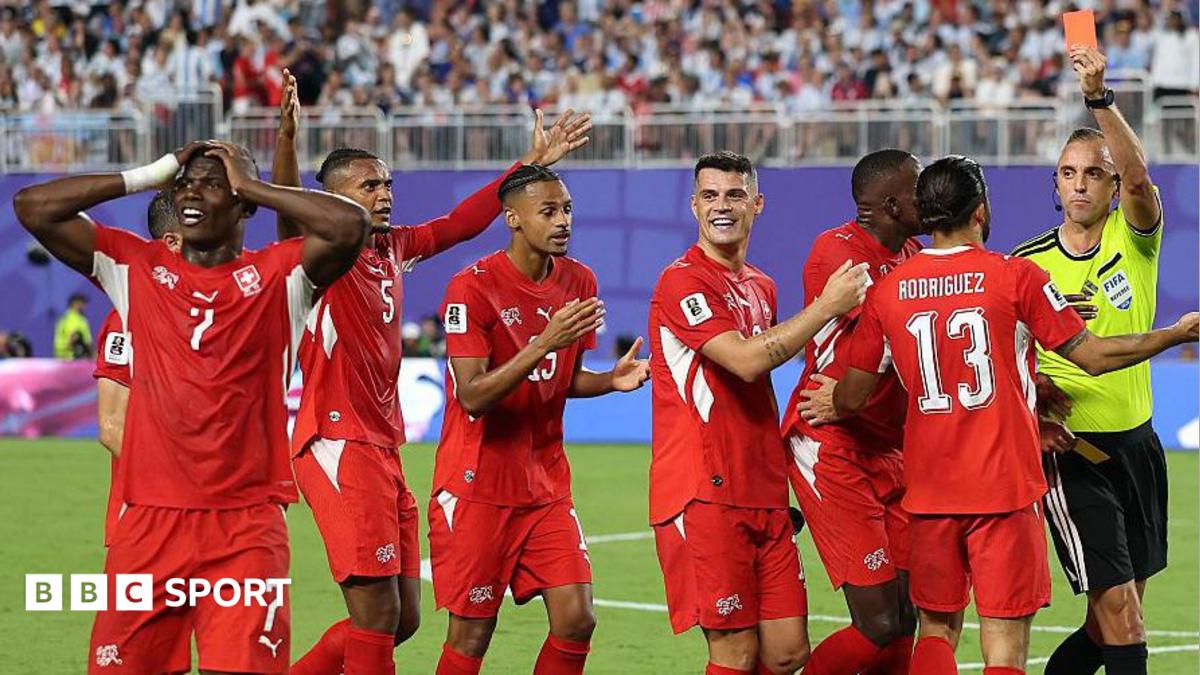
Breel Embolo’s dismissal at this summer’s World Cup has put a spotlight on one of football’s newest and least familiar disciplinary safeguards: the mistaken-identity law. According to the BBC report, the Switzerland forward became the first player at the tournament to be sent off as a result of that rule, a rare but important example of officials correcting an on-field error after the fact.
The incident matters beyond the immediate red card. Mistaken identity cases are unusual, but when they do happen they can alter the course of a match and raise questions about how quickly referees, assistants and the wider officiating team can intervene. In a tournament where margins are often tiny, a dismissal can reshape a game plan, force a tactical reset and leave a side defending with fewer attacking options than intended.
Why the mistaken-identity rule matters
The law exists to prevent the wrong player being punished for an offence committed by someone else. That may sound like a technical detail, but in elite football it is a significant safeguard. A red card affects not only the match in question but also a player’s availability, a team’s selection choices and, in tournament football, the broader momentum of a campaign.
For Switzerland, Embolo’s sending-off is a reminder of how quickly a World Cup game can swing on disciplinary decisions. Even when the correct player is eventually identified, the disruption remains. Managers must react immediately, often changing shape, protecting space in midfield and deciding whether to preserve a result or chase the game with a reduced attacking threat.
What it means for Switzerland and the tournament
For supporters, the story is less about controversy for its own sake and more about the practical reality of modern officiating. Football has increasingly relied on technology and procedural checks to reduce obvious errors, and this case shows that the system is now being used not just to judge incidents, but to assign responsibility accurately.
Embolo’s red card also gives the World Cup an early example of how the law works in practice. These are the kinds of moments that can shape future debates about refereeing standards, the pace of intervention and whether the balance between accuracy and flow is being handled correctly. For Switzerland, it is an unwanted place in the record books; for the competition, it is a notable test case for a rule designed to make the game fairer.
As the tournament continues, the incident will likely be remembered less for the individual booking itself and more for what it says about football’s evolving approach to officiating. In a sport where every decision is scrutinised, the mistaken-identity law is a clear sign that the game is still adjusting its tools to get the big calls right.
Source note: This article was prepared using publicly available information from BBC Sport and expanded with editorial context.
Share this content: