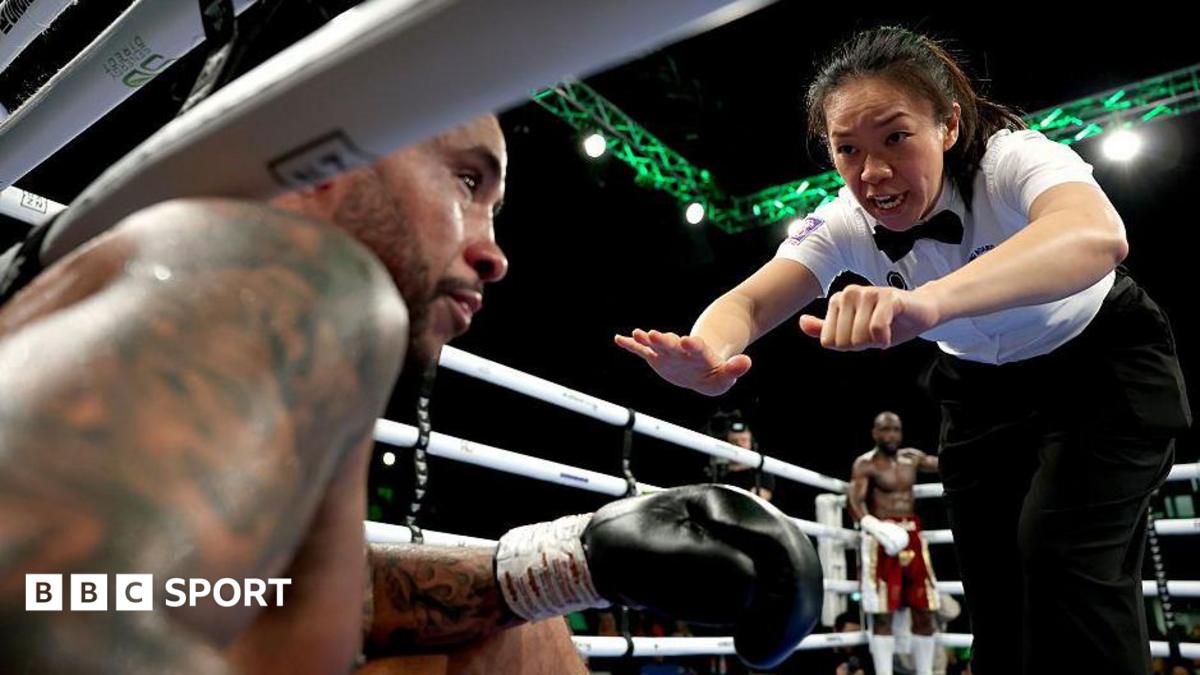
British boxing has long been shaped by tradition, hierarchy and a stubborn resistance to change, so the emergence of the first female professional referee in the country is more than a personal milestone. It is a marker of how slowly, but visibly, the sport is opening up to new voices in roles that have historically been dominated by men.
The BBC Sport profile places her journey in the context of history, pressure and prejudice, which is exactly why the story matters beyond one individual appointment. In a sport where authority in the ring is scrutinised on every card, every count and every stoppage, becoming a referee at the professional level is not simply about passing tests. It is about being trusted in an environment where reputation, composure and credibility are everything.
A breakthrough with wider significance
Her arrival in the role carries significance for supporters, fighters and officials alike. For fans, it is a reminder that boxing’s future does not have to look like its past. For younger women considering a career in the sport, whether inside the ropes or around them, it provides a visible example that barriers can be challenged. And for boxing itself, it is an opportunity to show that merit and professionalism can outweigh old assumptions.
The article’s central quote, “I thought, ‘Why not? Why not me?’”, captures the mindset behind that breakthrough. It is a simple line, but it reflects the confidence required to step into a role where every decision is judged in real time by fighters, corners, officials and audiences. In boxing, referees are rarely the story unless something goes wrong. That makes any first all the more notable, because it places the focus on the person who has to remain calm while the sport around them is anything but calm.
What it means for British boxing
From an editorial perspective, this is also a story about representation and institutional change. British boxing has made progress in visibility and inclusion across the wider sport, but officiating has often lagged behind the headline names in the ring. A first in this area suggests the pathway is widening, even if the culture is still catching up.
For the sport’s governing structures, the challenge now is to ensure this is not treated as a symbolic one-off. Progress in boxing tends to be judged by consistency: more opportunities, more appointments and more women in senior roles across officiating, judging and administration. One breakthrough can inspire attention, but lasting change depends on whether the door stays open.
For supporters, the practical impact may be subtle at first. A referee’s job is to be decisive, fair and largely invisible. Yet the symbolism is powerful. It tells the audience that boxing is capable of evolving without losing its competitive edge. In a sport built on discipline and control, that kind of evolution can be just as important as any result in the ring.
Source note: This article was prepared using publicly available information from BBC Sport and expanded with editorial context.
Share this content: