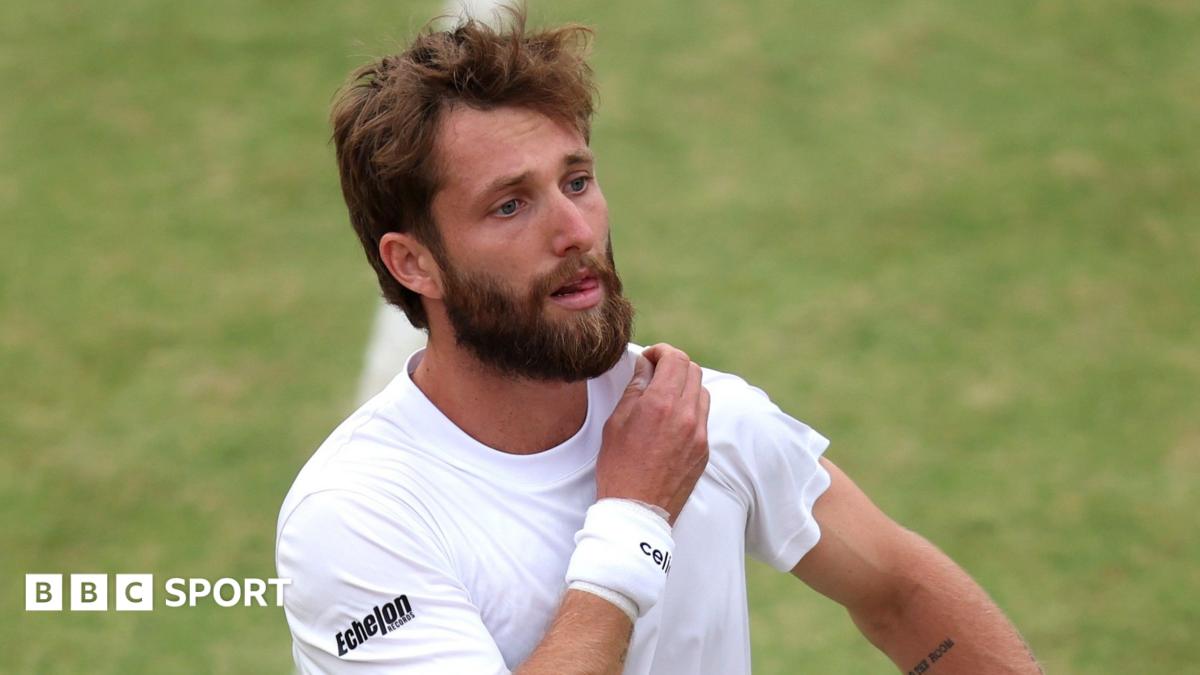
Corentin Moutet’s post-match appearance on the BBC at Queen’s became the talking point rather than the tennis itself after the Frenchman swore seven times in a live television interview. In a sport where players are usually measured and media-trained in the immediate aftermath of a match, the moment stood out for its rawness and its lack of restraint.
Moutet’s line that he “hopes you guys didn’t get offended” captured the tone of the exchange: part apology, part shrug, and entirely in keeping with a player who has often been associated with emotion and unpredictability on court. For broadcasters, it was an awkward live-TV moment. For supporters, it was another reminder that tennis still produces unscripted scenes even in an era of polished interviews and careful messaging.
Why the moment mattered at Queen’s
Queen’s is one of the most watched stops on the grass-court calendar, and anything unusual there tends to travel quickly. The tournament is traditionally a key lead-in to Wimbledon, which means the spotlight is already intense and the audience is broader than at many regular tour events. That makes live interviews especially sensitive: every word is amplified, and every lapse becomes part of the story.
For Moutet, the incident adds another layer to a reputation built as much on temperament as on talent. He is the kind of player who can make matches feel volatile, and that volatility can spill over once the racket is down. While the BBC clip will likely be remembered for the language, it also reflects the pressure and emotion that can surface immediately after competition, particularly on a stage as visible as Queen’s.
What it means for viewers and the tournament
From a supporter’s perspective, the episode is less about scandal than about personality. Tennis often tries to present its stars in controlled, sponsor-friendly terms, but moments like this remind audiences that players are reacting in real time, sometimes before they have fully composed themselves. That can be uncomfortable for broadcasters, but it also gives the sport a human edge.
There is no indication from the source that the interview had wider disciplinary consequences or that it changed anything on the court. Even so, the clip will likely circulate because it combines live television, a recognisable player and a tournament with strong visibility. In that sense, the story is not about a major sporting development, but about the kind of unscripted moment that can briefly define a day at a major event.
For Queen’s, it is another example of how the tournament’s prestige ensures that even a short interview can become a headline. For Moutet, it is a reminder that his performances are often judged not only by results, but by the emotions that accompany them.
Source note: This article was prepared using publicly available information from BBC Sport and expanded with editorial context.
Share this content: