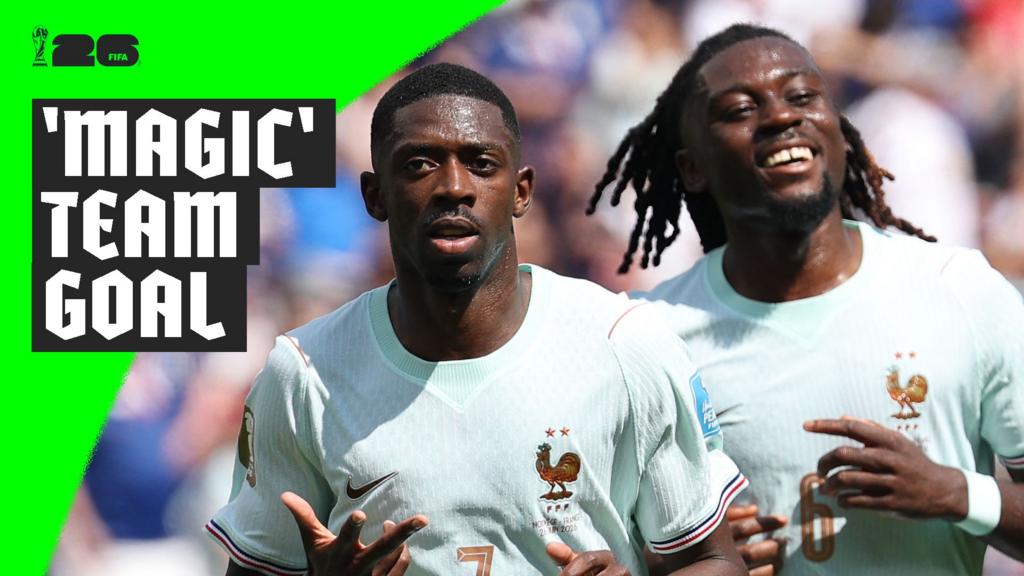
France’s 4-1 win over Norway was not just a result; it was a reminder of how dangerous a well-drilled attacking unit can look when every line of the team is connected. The standout moment came when Ousmane Dembele finished a 17-pass move that involved all 11 France starters, a sequence that summed up the control and fluency of the performance at Boston Stadium.
For supporters, the goal will stand out because it was more than an individual finish. It was the product of collective movement, patience in possession and the kind of positional understanding that turns a good side into a ruthless one. In tournament football, where space is often limited and margins are tight, a move like that can be as psychologically damaging to the opposition as it is pleasing to the eye.
A goal that reflected France’s structure
The fact that every member of the starting XI was involved in the build-up is significant. It suggests France were not relying solely on one creator or one isolated match-winner, but were instead able to progress the ball through multiple phases and multiple players. That kind of shared responsibility is often what separates a team that can dominate a group stage from one that merely survives it.
Dembele’s finish also completed his hat-trick, which adds another layer to the story. A hat-trick in a World Cup match is always notable, but doing it inside a team performance built on a 17-pass sequence gives the achievement a different feel. It was not simply a case of one forward taking over the game; it was a forward benefiting from a system that repeatedly put him in the right areas.
What it means for France and their rivals
France’s final Group I outing suggests a side with both individual quality and collective rhythm. That combination is usually the most worrying for opponents because it leaves little room to focus on one threat alone. If Dembele is finishing moves created by the full team, then defending France becomes a far more complicated task.
For Norway, the match will likely be remembered for the scale of the defeat and the difficulty of containing a France side that moved the ball with confidence. For France supporters, the encouraging part is not only the scoreline but the manner of it: a controlled, emphatic win capped by a goal that looked like a training-ground pattern executed at full speed.
In tournament terms, performances like this matter because they build momentum. A team that can score in this way sends a message to the rest of the field: the threat is not just in one player’s finishing, but in the collective machinery behind it.
Source note: This article was prepared using publicly available information from BBC Sport and expanded with editorial context.
Share this content: