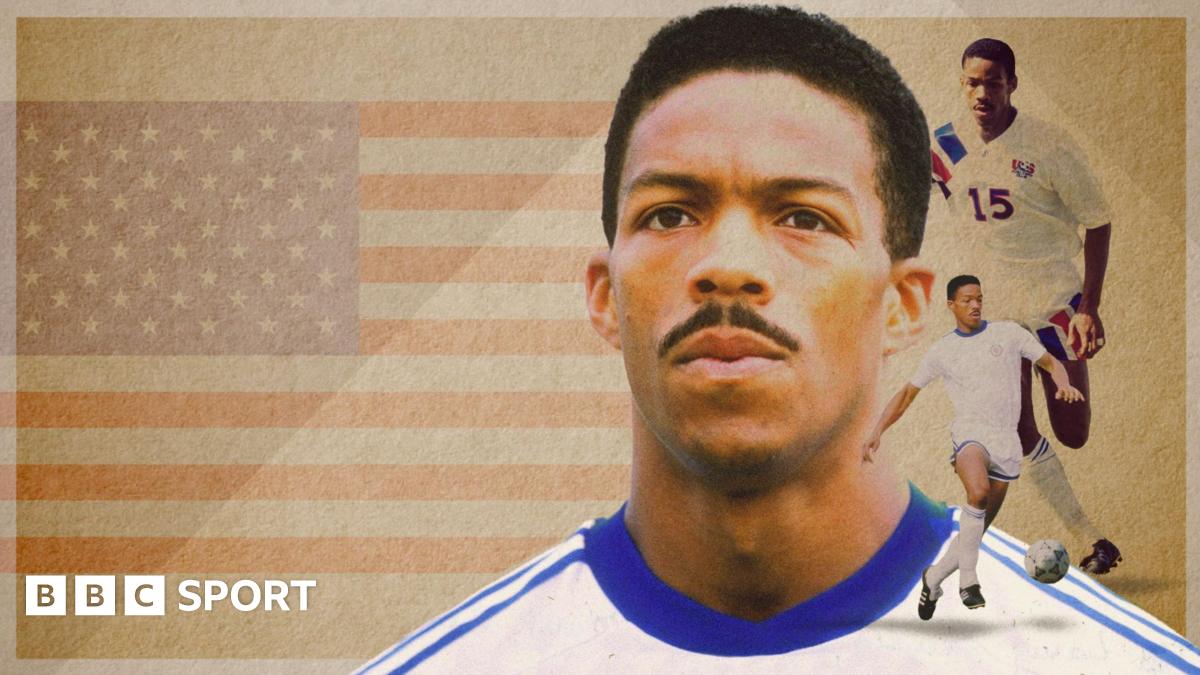
Desmond Armstrong’s place in United States football history is tied to a single tournament, but the significance of that moment has lasted far beyond Italia 90. BBC Sport’s profile revisits the defender’s experience at the 1990 World Cup in Italy, where he became the first US-born Black player to represent the United States on the game’s biggest stage.
The detail that opened the media conference he faced in Italy says as much about the era as it does about Armstrong himself. Instead of being asked about the United States’ return to the World Cup after a 40-year absence, he was met with a question about basketball. That exchange underlines how limited the global perception of American football was at the time, and how much of the country’s soccer identity still had to be built in public.
A landmark for the United States at Italia 90
The 1990 tournament mattered for the United States because qualification alone marked a breakthrough. The team had not reached the World Cup in four decades, and simply being there gave American football a platform it had rarely enjoyed. Armstrong, then 25, was part of that first step back onto the world stage, and his presence carried an added historical weight because of the barrier he broke as the first US-born Black player in World Cup competition for the national team.
That context is important for supporters today because the modern US men’s team is often judged through a very different lens: youth development, dual-national recruitment, European-based talent and expectations of regular World Cup participation. Armstrong’s story reminds fans that those conversations were not always possible. Before the United States could think about competing with established powers, it first had to prove it belonged in the tournament at all.
Why Armstrong’s story still resonates
Armstrong’s profile is not just a historical footnote. It reflects the broader evolution of the sport in the United States, where representation, visibility and opportunity have all played a role in shaping the national team’s identity. For Black players in particular, his appearance at Italia 90 stands as an early marker of progress in a sport that has since become far more diverse at elite level in the country.
For readers and supporters, the story also serves as a reminder that football history is not only written by trophies and scorelines. Sometimes it is shaped by the players who arrive first, carry the burden of being seen, and help open the door for those who follow. Armstrong’s World Cup moment belongs in that category.
BBC Sport’s piece on Armstrong offers a useful reminder that the United States’ football journey has been built through milestones as much as results. Italia 90 was one of those milestones, and Armstrong’s role in it remains a meaningful part of the national team’s story.
Source note: This article was prepared using publicly available information from BBC Sport and expanded with editorial context.
Share this content: