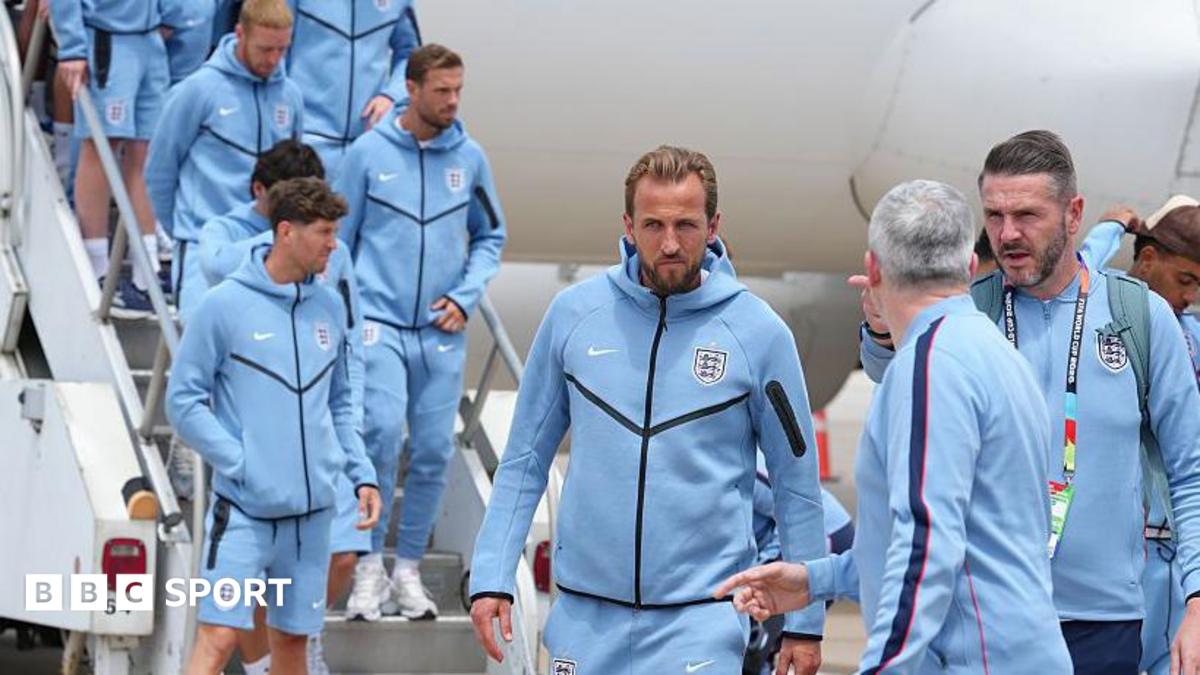
England’s place at the top of the semi-finalists’ air-mile chart adds an unusual layer to the World Cup story: not a tactical tweak, not a selection debate, but the physical cost of simply getting from one venue to the next. In a tournament spread across three countries and 16 host cities, travel has become part of the competitive equation, and BBC Sport’s analysis puts England at the centre of that conversation.
For supporters, the headline is less about vanity statistics and more about what long-haul movement can mean in a knockout campaign. At this stage of a World Cup, recovery windows are already tight, training time is limited and every marginal factor matters. Extra hours in transit can affect sleep patterns, preparation rhythm and the ability to keep players fresh between matches. That does not automatically translate into poorer performances, but it does help explain why travel has become such a talking point.
Why travel matters in a World Cup like this
A tournament staged across such a vast geography is unlike the compact finals many fans are used to. Teams are not just dealing with opponents; they are dealing with climate shifts, time-zone changes and the logistical strain of moving squads, staff and equipment across large distances. In that context, air miles are more than a curiosity. They are a practical measure of how much disruption a team has absorbed before even stepping onto the pitch.
England’s position as the most-travelled semi-finalist invites a broader question: does the extra burden matter when the margins are so fine? The honest answer is that it can matter without being decisive. Elite teams are built to manage travel, and modern sports science is designed to reduce the impact. But the cumulative effect of repeated journeys can still influence how sharp a side looks in the final third, how quickly players recover and how much energy is left for the decisive moments of a knockout tie.
What it means for England and their rivals
For England, the immediate implication is not panic but perspective. If they are to go all the way, they will need to show that organisation, squad depth and conditioning can offset the demands of a punishing travel schedule. That is especially relevant in a tournament where the physical and mental load rises sharply with every round.
Rivals will be watching the same data with interest, because travel can become part of the competitive narrative even if it never appears on the scoresheet. In a World Cup defined by geography as much as football, the most travelled team is not necessarily the most disadvantaged — but it is certainly the team carrying the most obvious logistical burden into the business end of the competition.
BBC Sport’s analysis does not claim that air miles decide matches. What it does do is underline how modern tournament football is shaped by factors far beyond formations and substitutions. For England, and for the supporters following every step, the journey itself has become part of the story.
Source note: This article was prepared using publicly available information from BBC Sport and expanded with editorial context.
Share this content: