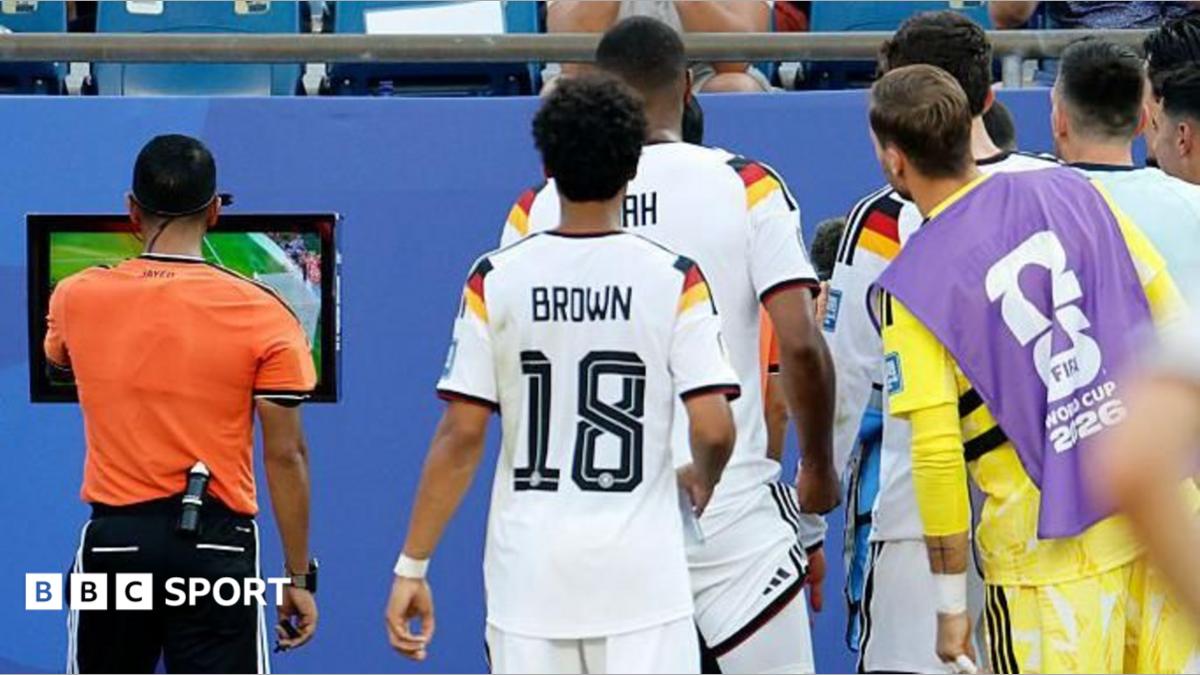
Fifa has moved to clarify why Germany’s extra-time goal against Paraguay was disallowed, saying the match officials were acting in line with instructions given before the World Cup. According to the governing body, coaches and players had already been told that referees would penalise the type of foul that led to the goal being ruled out.
The explanation matters because decisions in the closing stages of knockout football often shape the entire narrative of a tournament. An extra-time goal can swing momentum, alter tactical plans and decide whether a team survives or exits. When such a goal is overturned, the immediate reaction is usually confusion, frustration and debate over consistency. Fifa’s intervention is aimed at showing that the call was not improvised, but based on guidance communicated in advance.
Why the decision matters for Germany and Paraguay
For Germany, the ruling out of an extra-time goal is the kind of moment that can define a match and, in some cases, a campaign. Teams at World Cup level spend months preparing for fine margins, and a disallowed goal in added time can be especially painful because there is so little opportunity to respond. For Paraguay, the decision would have been a major reprieve, preserving their position in a game where one incident could have changed everything.
From a football perspective, Fifa’s explanation also underlines how heavily modern tournaments depend on pre-match and pre-tournament officiating briefings. The message to teams is clear: the laws and their interpretation are not only enforced on the day, but also communicated in advance so that players can adjust their approach. That is particularly relevant in high-pressure matches where physical duels, set pieces and aerial battles often decide outcomes.
What supporters take from the ruling
Supporters of both sides will likely view the incident through different lenses. Germany fans will focus on the frustration of having a decisive moment taken away, while Paraguay supporters may see the ruling as proof that the officials applied the rules as intended. Either way, Fifa’s explanation is designed to reduce the sense that the decision was arbitrary.
In tournament football, clarity is as important as the call itself. Even when fans disagree with an outcome, they want to know that the same standards are being applied consistently. This case is a reminder that the smallest infringement can have the biggest consequences, especially when a World Cup match reaches extra time and every action is magnified.
Source note: This article was prepared using publicly available information from BBC Sport and expanded with editorial context.
Share this content: