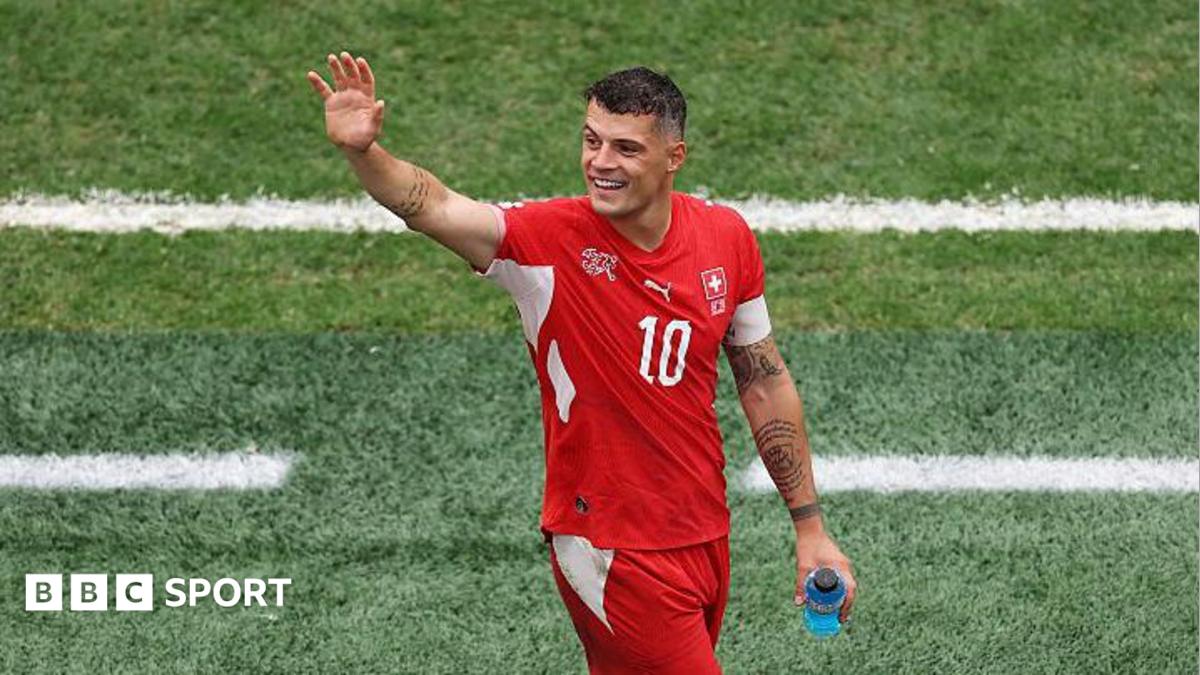
Granit Xhaka’s emotional reaction after Switzerland’s penalty shootout victory over Colombia was more than a celebration. It was a release. The midfielder dropped to his knees and cried tears of joy as Switzerland booked a place in the World Cup quarter-finals, a moment that captured both the pressure of knockout football and the personal significance of the result for one of the national team’s most scrutinised figures.
The BBC’s framing of the story is built around redemption, and that is what gives the episode its wider appeal. Xhaka has long been a player who divides opinion, especially in English football, where his time at Arsenal was marked by criticism, volatility and a strained relationship with sections of the support. For Switzerland, however, he has remained a central figure: a captain-like presence, a midfield organiser and a player whose importance is measured not only by passing range but by emotional leadership.
Why this moment matters for Switzerland
Penalty shootout wins often become defining chapters in a tournament because they reveal a team’s resilience under extreme pressure. For Switzerland, beating Colombia in that manner was not just about advancing; it was about confirming that the squad could survive the most unforgiving stage of the competition. Xhaka’s response reflected how much the result meant to a side that needed composure, belief and collective nerve to get through.
For supporters, moments like this matter because they attach a human face to tournament football. Xhaka’s tears were not simply a personal release; they symbolised the emotional weight carried by senior players who are expected to lead through scrutiny, expectation and the possibility of failure. In knockout football, those pressures are magnified, and the players who absorb them often become the story as much as the result itself.
From club criticism to international affirmation
The contrast between Xhaka’s club reputation and his international standing is central to understanding why this story resonates. At Arsenal, he was often judged through the lens of mistakes and confrontation. With Switzerland, he has repeatedly been asked to provide control, structure and authority in midfield. That duality makes his reaction after the Colombia win especially striking: it suggested not only relief, but vindication.
For Switzerland, the broader implication is clear. A team that can lean on a player with Xhaka’s experience and emotional investment has a stronger foundation for the later stages of a tournament. Even without adding unsupported detail about the match itself, the significance is obvious: advancing to the quarter-finals changes expectations, raises the stakes and places greater responsibility on the squad’s senior figures.
For Xhaka, the image of him on his knees is likely to endure because it tells a complete football story in one frame. It speaks to criticism, perseverance, national pride and the strange way tournament football can transform reputations in a single night. For Switzerland supporters, it was a moment to savour. For Xhaka, it looked like the payoff for years of carrying both pressure and responsibility.
Source note: This article was prepared using publicly available information from BBC Sport and expanded with editorial context.
Share this content: