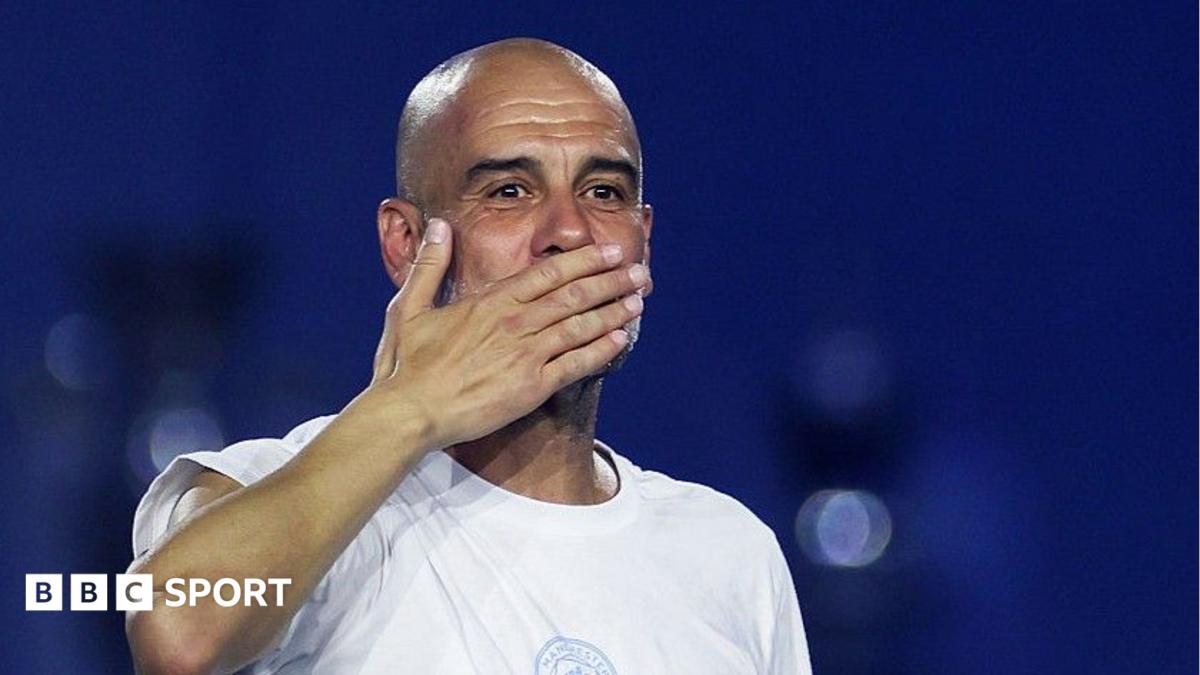
Pep Guardiola has rejected the opportunity to become Italy manager, according to BBC Sport. The brief report does not give details on when the approach was made, how advanced the discussions were, or whether the offer came directly from the Italian Football Federation, but the headline alone is enough to underline how highly Guardiola remains rated in international football.
For Italy, the search for a coach is always more than a routine appointment. The national team carries heavy expectations, and any vacancy immediately becomes a test of ambition as much as footballing fit. A figure such as Guardiola would have represented a statement choice: a coach associated with possession control, positional play and elite-level tactical detail. His rejection therefore leaves the Italians to continue their search elsewhere, while also reminding supporters that even the most prestigious international jobs do not automatically attract every top club manager.
What Guardiola’s decision means
Guardiola’s name inevitably creates headlines whenever a major coaching role becomes available. That is partly because of his record at the top of the club game and partly because his style has influenced a generation of coaches. Yet the fact he has turned down Italy suggests that, for now, he is not moving toward international management. For supporters tracking his future, the key takeaway is not just the refusal itself, but the continued uncertainty around what comes next in his career.
From Italy’s perspective, the decision may also shape the profile of the next appointment. If a coach of Guardiola’s stature is not available, the federation may need to balance prestige with practicality, choosing someone who can quickly impose structure, manage tournament pressure and work within the shorter rhythms of international football. That is a very different challenge from club management, where Guardiola has built his reputation over long cycles of training and squad development.
Why this story matters to supporters
Even with limited detail in the source, the story matters because it shows how managerial decisions can influence the wider football landscape. A refusal from Guardiola does not just close one door; it can alter the market for other coaches, shift expectations among fans and change the tone of speculation around his own future. For readers of News Goal, it is another reminder that the biggest names in football remain central to the sport’s off-pitch drama as well as its tactical evolution.
BBC Sport’s report is short, but its significance is clear: Guardiola will not be taking charge of Italy, and the ripple effects of that decision will be felt both in Rome and across the wider coaching market.
Source: BBC Sport
Source note: This article was prepared using publicly available information from BBC Sport and expanded with editorial context.
Share this content: