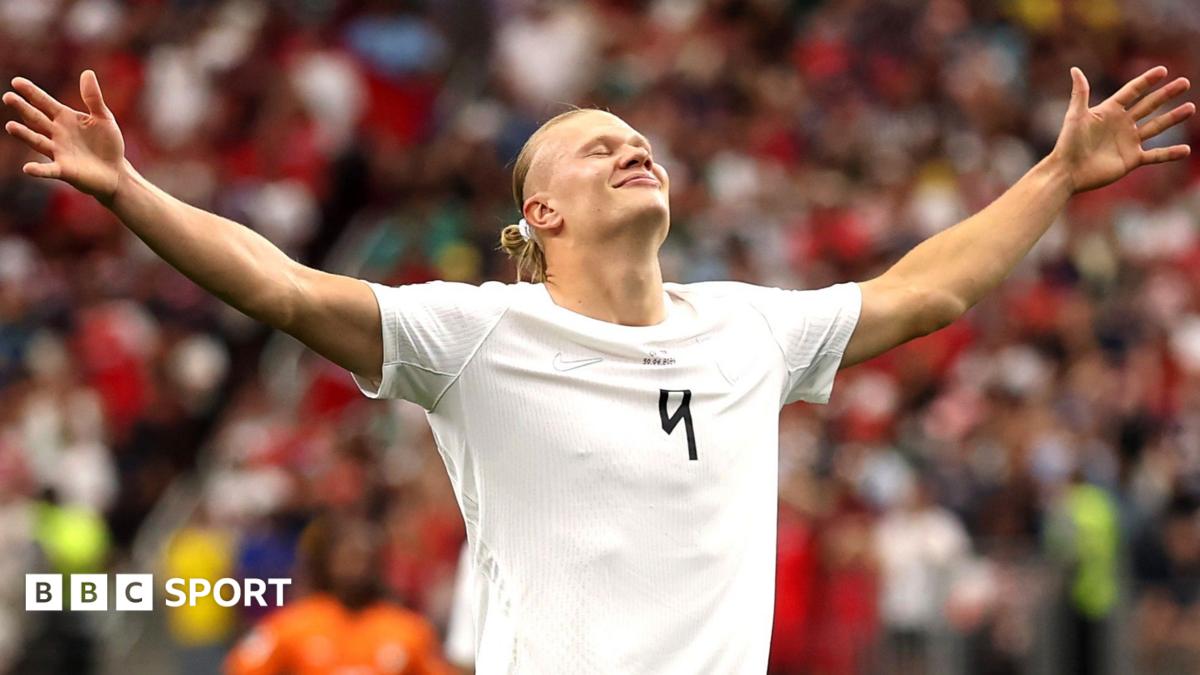
Erling Haaland’s international career is approaching one of its most significant checkpoints. According to the BBC source, Norway are on the verge of a World Cup moment that would connect the striker’s unusual personal journey with the biggest stage in football. The headline detail is simple but powerful: the last time Norway played at a World Cup, Haaland had not yet been born.
That contrast gives the story its edge. Haaland was born in Leeds, but his football identity was shaped in Norway, and the possibility of seeing him lead the national team at a World Cup would feel like the collision of two footballing worlds. For supporters, it is not just about one player’s profile; it is about whether Norway can finally translate a generation of promise into a place at the game’s most watched tournament.
Why this matters for Norway
Norway’s absence from the World Cup has stretched across multiple cycles, which makes any qualification push feel bigger than a single campaign. A player of Haaland’s stature changes the emotional weight of that pursuit. He is already one of the most recognisable forwards in world football, so any Norway qualification bid naturally becomes more than a domestic story. It becomes a global one.
For the national team, Haaland represents both certainty and pressure. His presence gives Norway a focal point that opponents must plan around, but it also raises expectations. When a side has a striker capable of deciding matches, the margin for error narrows. That is especially true in qualification football, where one result can reshape an entire campaign.
Haaland’s background adds to the narrative
The BBC piece highlights the unusual geography of Haaland’s story: born in England, developed in Norway, and now standing at the centre of a potential World Cup breakthrough. That background matters because it reflects how modern international football often crosses borders long before a player reaches senior level. In Haaland’s case, the personal and sporting timelines are now converging.
For neutral fans, the appeal is obvious. World Cups are built on stories that extend beyond tactics and results, and Haaland’s path offers exactly that kind of narrative. For Norway supporters, though, the significance is more immediate. A return to the tournament would validate years of anticipation and give the country a chance to see its most famous player on the sport’s biggest stage.
What the BBC source makes clear is that this is a story about timing as much as talent. Haaland has already established himself at the top level, but the next chapter depends on whether Norway can complete the job. If they do, his worlds will not just collide in a headline — they will meet in the most visible arena football has to offer.
Source note: This article was prepared using publicly available information from BBC Sport and expanded with editorial context.
Share this content: