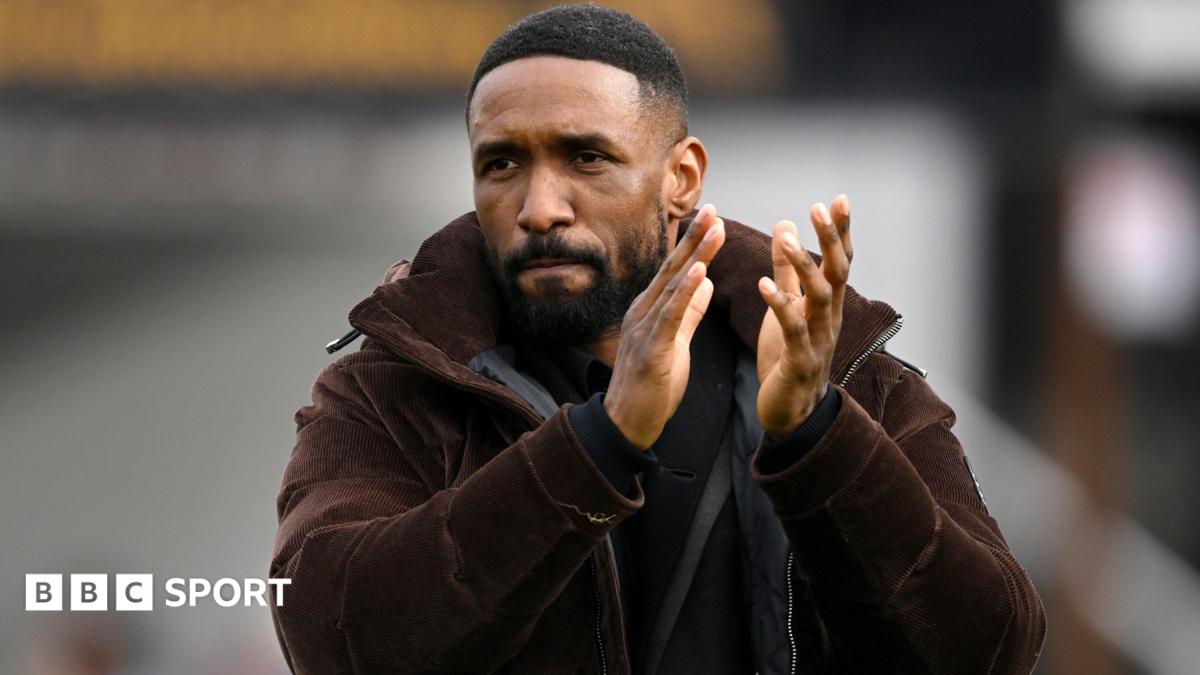
Jermain Defoe’s first step into senior management has ended quickly, with the former England striker leaving Woking after only four months and six league games in charge. For a player whose career was defined by goals, movement and instinct in the final third, the early exit underlines how unforgiving the managerial route can be, especially in the relentless environment of the National League.
Defoe described the spell as an “eye-opening experience”, a phrase that captures both the scale of the challenge and the learning curve that comes with moving from the pitch to the dugout. The transition is rarely straightforward for former elite players, and lower-league management often demands immediate results, rapid adaptation and a constant balancing act between short-term pressure and longer-term planning.
What the exit means for Woking
For Woking, the departure creates another period of uncertainty at a level where stability can matter as much as talent. The National League is a demanding division, with clubs often operating under tight margins and little room for a slow start. Six league games is a very small sample, but it is enough for a board to decide whether a project is moving in the right direction or needs a reset.
Supporters will now be looking for clarity on the club’s next step and whether the appointment was always intended as a long-term development move or a more immediate attempt to change results. In non-league football, managerial changes can quickly alter the mood around a club, but they also bring risk if the underlying issues on the pitch are not addressed.
Defoe’s managerial learning curve
Defoe’s exit also adds to the wider conversation about former players entering management. Reputation and playing pedigree can open doors, but they do not guarantee time, patience or success. The demands of recruitment, preparation, man-management and tactical detail are very different from those of a striker’s career, and the early end to this spell suggests Defoe has already encountered some of those realities first-hand.
That does not close the door on a future coaching or managerial career. If anything, the experience may prove valuable if he chooses to return to the dugout later with a clearer sense of the pressures involved. For now, though, Woking must move on quickly, while Defoe reflects on a brief but revealing first chapter in management.
For supporters, the story is a reminder that football’s transition from player to manager is rarely smooth, and that even high-profile names can find the lower leagues a difficult place to build momentum.
Source note: This article was prepared using publicly available information from BBC Sport and expanded with editorial context.
Share this content: