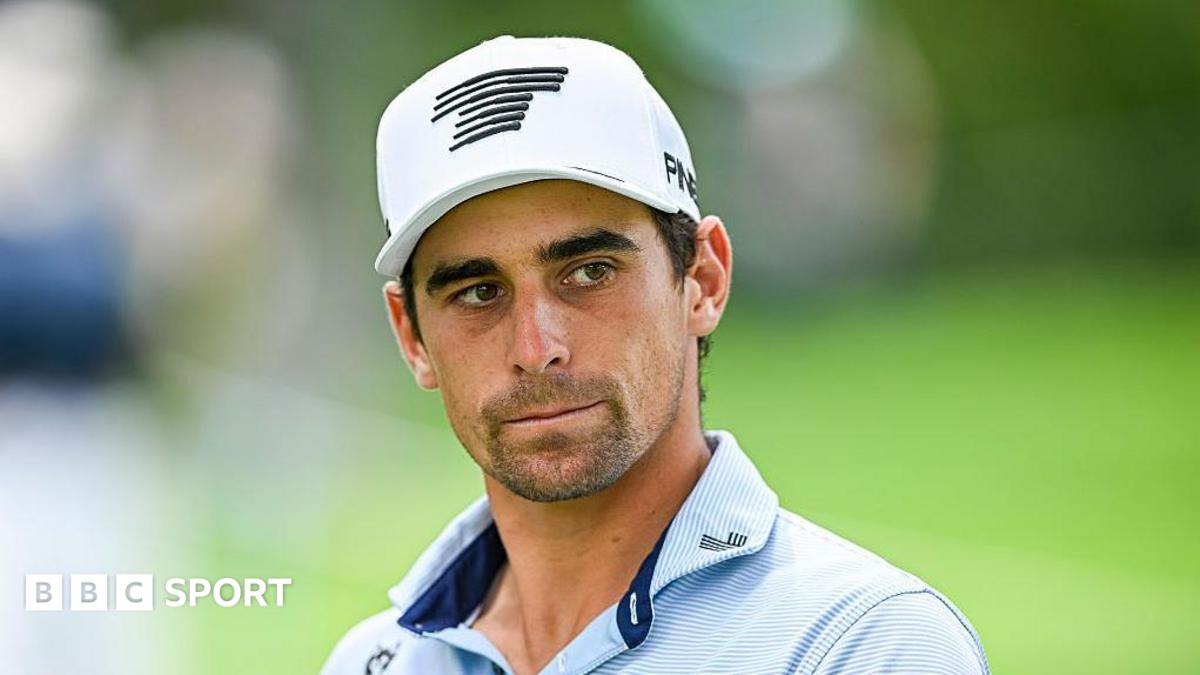
Joaquin Niemann has become the first player to be sanctioned under golf’s new major-championship code of conduct, and his reaction was telling: he says he is “not proud” of the incident. The punishment followed an outburst in which he threw a club, a moment that now carries significance beyond the immediate frustration of one round.
For Niemann, the issue is not only the penalty itself but the symbolism attached to it. Being the first player to fall foul of a new disciplinary framework is rarely a distinction any athlete wants. In golf, where emotional control is part of the sport’s identity, the episode underlines how quickly a single act can become a wider talking point about standards, behaviour and the pressure of elite competition.
What the new code means for major golf
The BBC report says the code of conduct was introduced for major championships in 2026, which makes Niemann’s case an early test of how seriously the sport intends to police on-course behaviour. That matters because major tournaments are not just another stop on the calendar: they are the events where reputations are built, where scrutiny is highest, and where officials are most likely to set a tone for future enforcement.
For supporters and followers of the game, the story is a reminder that golf is increasingly balancing tradition with modern expectations around professionalism. Players are under intense competitive pressure, but the governing message is clear enough: emotional reactions that cross a line can now bring formal consequences. Niemann’s regret suggests he understands that the issue is bigger than a moment of anger.
US Open context adds to the pressure
The timing also matters. The BBC’s wider US Open coverage on day two notes that Rory McIlroy and Scottie Scheffler made solid starts in pursuit of pace-setter Clark. That backdrop reinforces how unforgiving major championships can be: while some players are building momentum, others are dealing with the fallout from mistakes that can derail a round or even a tournament narrative.
For Niemann, the immediate sporting damage may be less important than the reputational one. A player’s response after an incident often shapes how the episode is remembered, and his public regret may help limit the long-term impact. Still, the fact that he is the first to be punished under the new code means this case will likely be referenced whenever officials are asked how strictly the rules will be applied.
In that sense, the story is about more than one thrown club. It is an early marker of how major championships intend to draw boundaries around conduct, and a warning to players that emotional release on the course can now carry a formal cost.
Source note: This article was prepared using publicly available information from BBC Sport and expanded with editorial context.
Share this content: