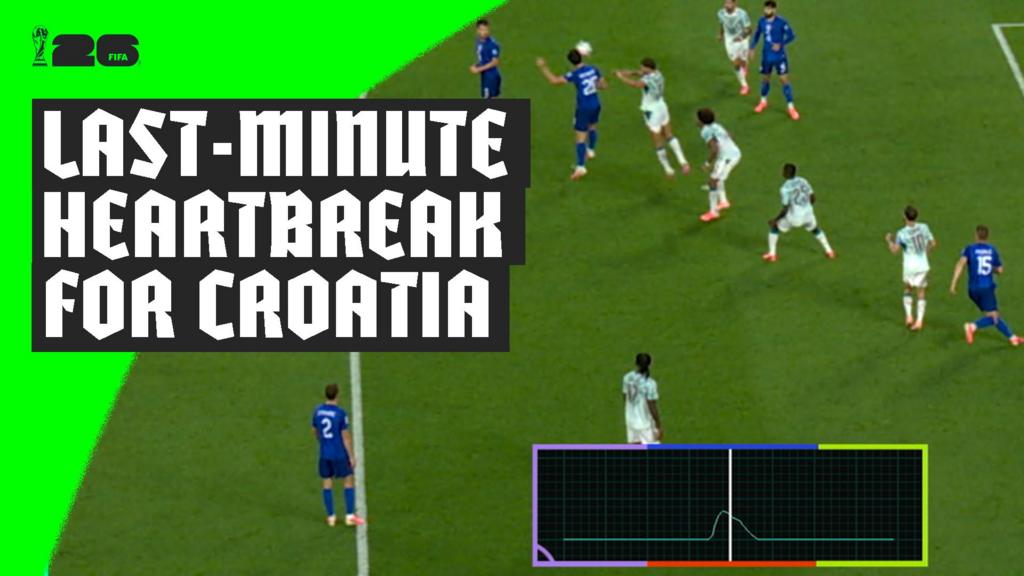
Late VAR intervention decided the closing stages of Croatia’s World Cup knockout tie with Portugal in Toronto, with Josko Gvardiol’s stoppage-time effort ruled out for offside. What looked like a dramatic equaliser instead became a reminder of how fine the margins are at the highest level, especially in knockout football where one moment can end a team’s tournament hopes.
For Croatia, the sequence will feel particularly painful because it came at the point when momentum appeared to be turning. A late goal in a knockout match often changes the emotional balance of the contest, forcing the opposition to defend under pressure and giving the trailing side a lifeline. Instead, the VAR check cut short that surge and left Croatia without the equaliser they believed they had earned.
Why the decision mattered
Offside decisions in the modern game are rarely just technical footnotes. In matches of this magnitude, they shape the entire narrative. Croatia’s late push was not only about one goal; it was about the possibility of dragging Portugal into a tense final phase where one mistake could have changed everything. The review removed that possibility and preserved Portugal’s advantage at the decisive moment.
For supporters, these are the moments that define the emotional extremes of tournament football. Croatia fans were given the briefest glimpse of a comeback before the ruling went against them, while Portugal’s side of the story was one of relief and control under pressure. The use of VAR has become part of the competitive landscape, but it still produces the same raw reaction when a goal is taken away in stoppage time.
What it means for Croatia and Portugal
From Croatia’s perspective, the episode underlines both their resilience and their frustration. Reaching the knockout stage and staying alive deep into the match shows a team capable of competing in high-pressure situations, but failing to convert a late chance leaves little room for consolation. In tournament football, teams are often judged not just by performance but by whether they can seize the defining moments.
Portugal, meanwhile, will see the incident as evidence of the discipline required to survive knockout matches. Even when a game appears to be drifting toward a dramatic finish, maintaining structure and concentration can be enough to see a result through. That is often the difference between progress and elimination in World Cup football.
For both sets of supporters, the match will be remembered less for the broader pattern of play than for the single VAR review that changed the outcome in the final seconds. In a tournament setting, that is often how legacies are shaped: by one decision, one run, one offside line, and one moment that never quite became a goal.
Source note: This article was prepared using publicly available information from BBC Sport and expanded with editorial context.
Share this content: