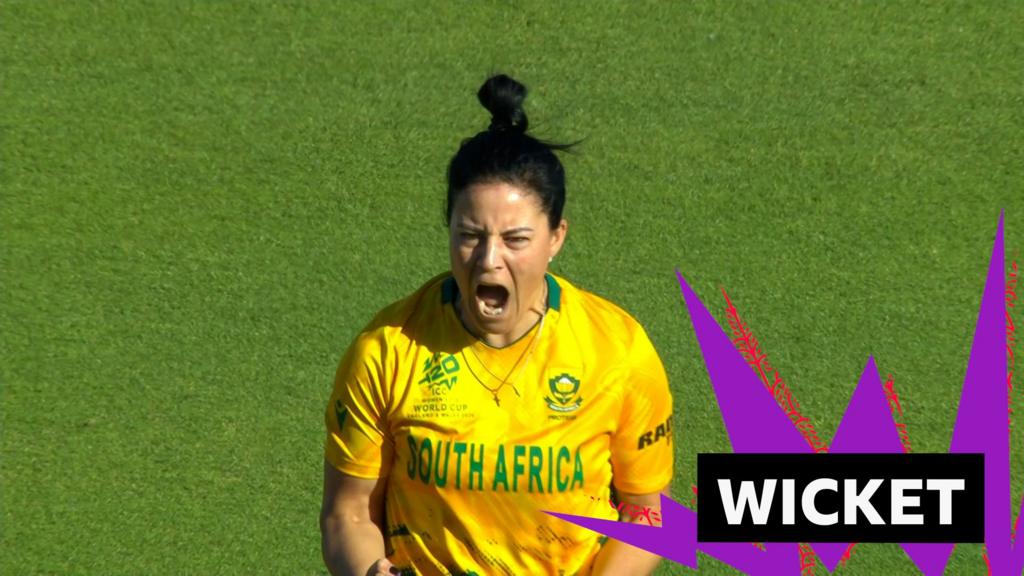
South Africa made the kind of start that can shape a knockout match, with Marizanne Kapp striking early to remove England opener Danni Wyatt-Hodge for 12 in the ICC Women’s T20 World Cup semi-final. England were left at 20-2, a position that immediately handed the initiative to South Africa and forced England into recovery mode from the outset.
The wicket mattered not just because it came early, but because it came from one of South Africa’s most reliable big-match players. Kapp has long been central to South Africa’s white-ball plans, and in a semi-final her ability to land a decisive blow with the new ball is exactly the sort of moment that can tilt momentum. For England, losing an established batter so quickly meant the innings had to be rebuilt under pressure rather than developed on their own terms.
Why the early wicket changed the tone
At 20-2, England were already in a delicate position. In T20 cricket, especially in a semi-final, a slow or shaky start can have a knock-on effect on the rest of the innings: batters become more cautious, boundary options narrow, and the opposition’s bowlers can attack with greater freedom. South Africa’s early success would have allowed them to set fields more aggressively and keep England from settling into a rhythm.
Wyatt-Hodge’s dismissal also mattered because England needed experienced top-order runs to absorb the pressure of a knockout game. When an opener falls early, the burden shifts to the middle order to stabilise the innings while still maintaining scoring tempo. That is a difficult balance in a high-stakes match where every over can change the outlook.
What it means for both sides
For South Africa, the early breakthrough was the ideal semi-final script: disciplined bowling, immediate reward, and a chance to dictate the match before England could build a platform. It also underlined the value of strike bowlers who can deliver in the first few overs, when the ball is hardest to control and the margin for error is smallest.
For England supporters, the start would have been a warning sign rather than a decisive setback. A semi-final is rarely decided by one wicket alone, but a collapse to 20-2 puts enormous emphasis on the next partnership. England still had time to recover, yet the early damage meant they were already chasing the game in a contest where composure and shot selection were likely to be as important as raw scoring rate.
In a match of this magnitude, the opening exchanges often reveal which side is better prepared for the pressure. South Africa’s early strike suggested they were ready to seize the moment, while England were left needing a measured response to avoid letting the semi-final slip away before the innings had properly begun.
Source note: This article was prepared using publicly available information from BBC Sport and expanded with editorial context.
Share this content: