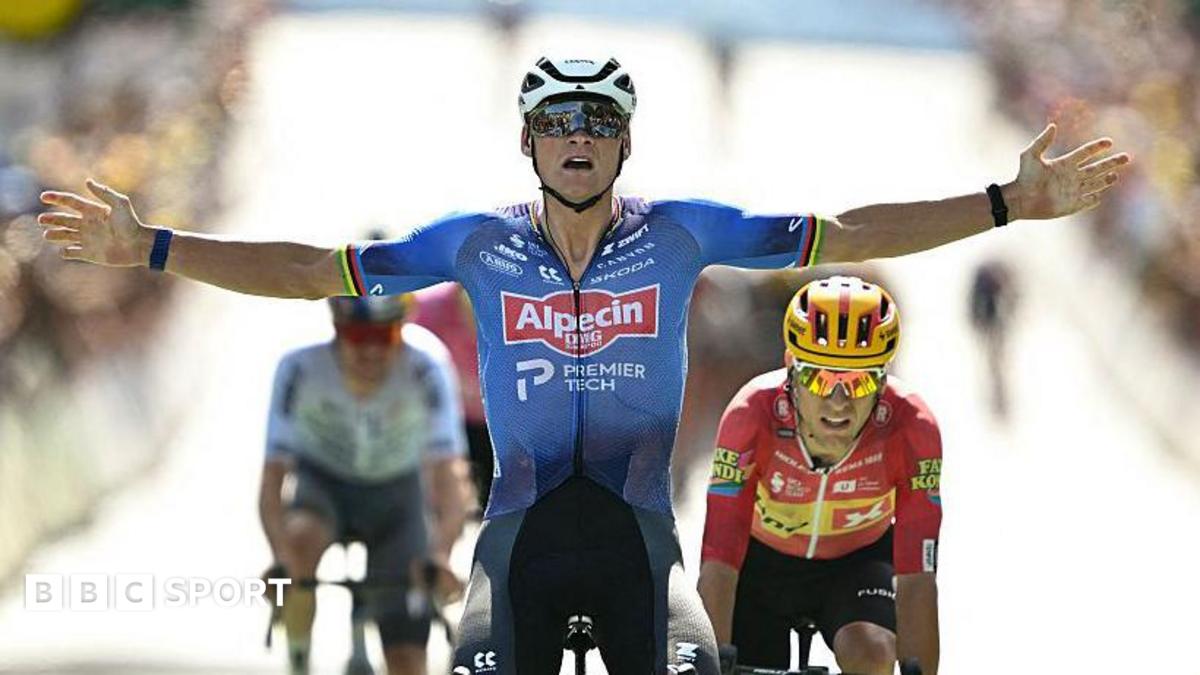
Mathieu van der Poel added another landmark result to his Tour de France record on stage nine, winning a sprint finish in punishing heat as temperatures climbed towards 40C. The Dutch rider’s third career stage victory at the race came in a day shaped as much by the weather as by the racing itself, with organisers forced to shorten the stage for safety reasons.
For supporters following the Tour, the result underlines van der Poel’s continued ability to deliver on the biggest stage when the race opens up. He is not a pure general classification rider, but his combination of power, timing and race instinct makes him one of the most dangerous riders in reduced, selective finishes. In conditions like these, positioning and resilience matter as much as raw speed, and van der Poel handled both better than his rivals.
Heat reshapes the race
Stage nine was not only a test of legs but a test of adaptation. With the route shortened because of extreme temperatures, the day became more compressed and tactical, leaving less room for long-range attacks and more emphasis on surviving the heat before the finale. That kind of disruption often changes the balance of a stage, particularly when riders are already managing fatigue across the first week of a Grand Tour.
Van der Poel’s victory also matters because it came in a Tour where every stage win can influence momentum, team morale and the wider narrative of the race. For a rider with his profile, these are the kinds of wins that reinforce his reputation as a rider who can seize opportunities when the race becomes chaotic.
What it means for the Tour
While stage wins do not decide the yellow jersey on their own, they can shape the tone of a race and the confidence of the teams involved. A shortened stage in extreme heat is a reminder that Grand Tours are not only about tactics and climbing ability, but also about endurance, recovery and managing conditions that can alter plans in an instant.
For van der Poel, the result adds another significant line to an already impressive Tour résumé. For the rest of the peloton, it is a warning that even in difficult conditions, he remains a rider capable of turning a reduced stage into a winning opportunity.
Egan Bernal was also named in the source, finishing 9:41 behind the stage winner, a gap that reflects how demanding the day became for riders further down the road.
Source note: This article was prepared using publicly available information from BBC Sport and expanded with editorial context.
Share this content: