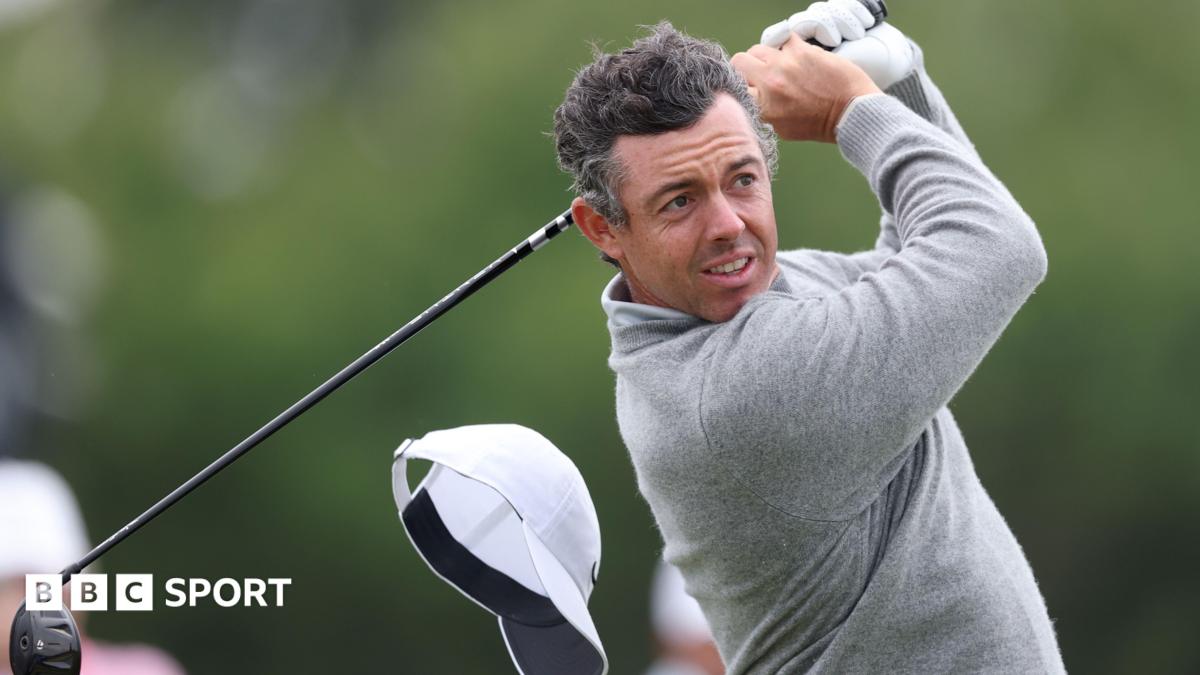
Shinnecock Hills wasted little time in underlining its reputation as one of golf’s most demanding major venues, with the opening day of the US Open shaped by a fog delay and a course that quickly began to punish any lapse in control. In that context, Rory McIlroy’s strong start stood out as a significant early marker, especially on a layout where patience and precision often matter as much as power.
McIlroy’s position near the top of the early leaderboard matters not only because of the conditions, but because Shinnecock has a long history of exposing even the best players when the wind picks up and the greens firm up. For a player of McIlroy’s calibre, a fast start at a venue like this can do more than build momentum; it can also reduce the pressure that tends to build as the week progresses and the course becomes increasingly difficult to manage.
Shinnecock quickly separates the field
The early scoring already suggested that this would not be a low-number shootout. England’s Tyrrell Hatton was one shot behind McIlroy, keeping himself firmly in touch, while J.J. Spaun endured a punishing round without a single birdie and finished on seven-over 77. That contrast captures the central challenge of a US Open at Shinnecock: staying disciplined enough to avoid the kind of big numbers that can end a challenge before it begins.
For supporters following the tournament, the early signs are encouraging if they are backing McIlroy, but the broader picture is just as important. Major championships at this level are rarely decided by one good round alone. They are usually shaped by how players respond when the course hardens, when the weather shifts, and when the margin for error disappears. Shinnecock’s opening day already hinted at all three.
Why McIlroy’s start matters
McIlroy has often been at his best when he can impose himself early and avoid chasing the field. At a US Open venue that demands control off the tee and careful decision-making into the greens, that kind of start can be especially valuable. It also places pressure on the rest of the field to keep pace on a course that is unlikely to offer many chances for recovery.
Hatton’s proximity to the lead ensures there is still a competitive edge to the leaderboard, while Spaun’s difficult round serves as a reminder of how quickly Shinnecock can turn a promising day into a survival exercise. For now, McIlroy has given himself a platform, but the real test will be whether he can maintain that standard as the course continues to bite back.
Source note: This article was prepared using publicly available information from BBC Sport and expanded with editorial context.
Share this content: