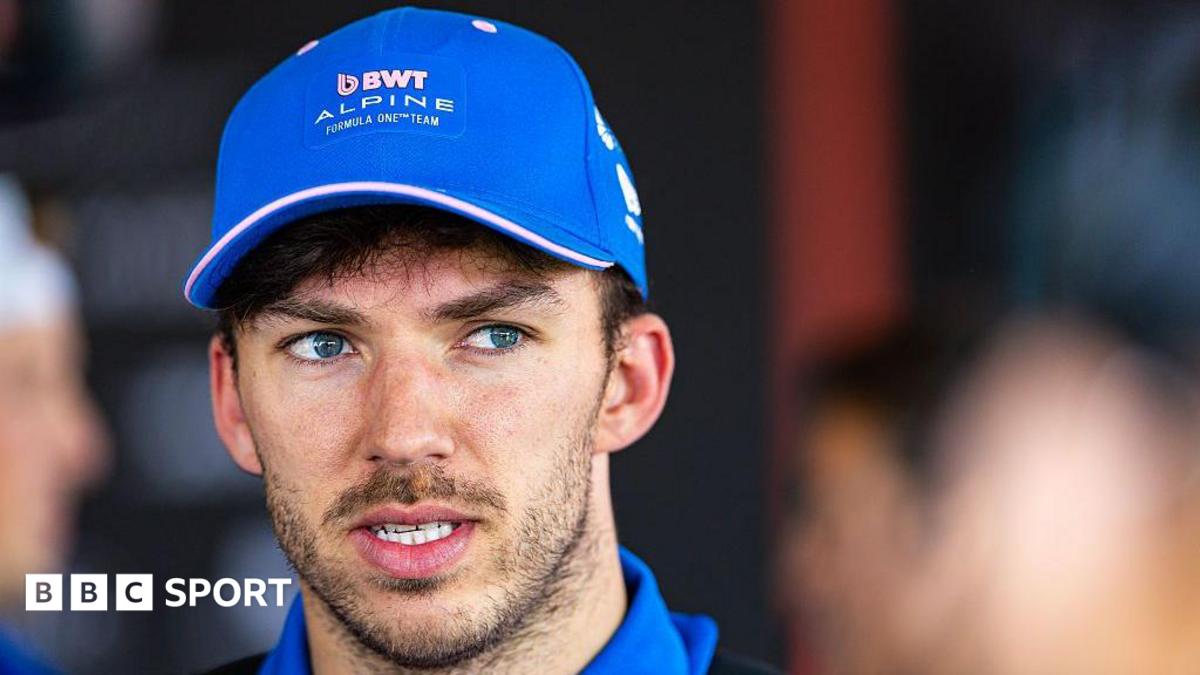
McLaren have formally appealed against the decision to overturn Pierre Gasly’s pit-lane speeding penalty at the Monaco Grand Prix, adding another layer of uncertainty to a result that could still be altered off the track. The move keeps the focus on how tightly Formula 1 stewards and race officials interpret procedural breaches, especially in a race like Monaco where track position is notoriously difficult to recover.
Gasly, who drives for Alpine, had his penalty reversed, but the matter is not settled. Red Bull have not yet handed over the third-place trophy while they consider whether to launch their own appeal. That detail matters because it suggests the podium order remains under review, even after the chequered flag has long since fallen.
Why the appeal matters
In modern Formula 1, penalties are rarely just about the immediate time loss. They can affect championship points, team momentum and the public perception of fairness. A pit-lane speeding infringement is one of the clearest types of rule breach, but the decision to overturn such a penalty can be just as contentious if teams believe the process or interpretation was flawed.
For McLaren, the appeal signals a willingness to challenge a ruling that may have influenced the final classification. For Red Bull, the hesitation over the trophy underlines how sensitive the outcome remains. Even without a full explanation in the source, the fact that two leading teams are involved tells you this is not a minor administrative dispute; it is a result with sporting and reputational consequences.
What it means for Alpine and the wider paddock
For Alpine, the situation is straightforward in one sense and complicated in another. Gasly’s position is being defended through the reversal, but the uncertainty around appeals means the team cannot yet treat the matter as closed. In a season where every point can matter, even a single place on the podium can carry major value for morale, prize money and momentum.
For supporters, this is the kind of post-race controversy that can be frustrating but also revealing. It shows how much of Formula 1 is decided not only by speed on Sunday, but by the interpretation of regulations in the hours and days after the race. Monaco, with its narrow margins and strategic pressure, often magnifies these disputes.
The next step now depends on whether Red Bull decide to escalate the case further. Until then, the third-place finish remains in limbo, and the Monaco Grand Prix continues to generate headlines well beyond the circuit walls.
Source note: This article was prepared using publicly available information from BBC Sport and expanded with editorial context.
Share this content: