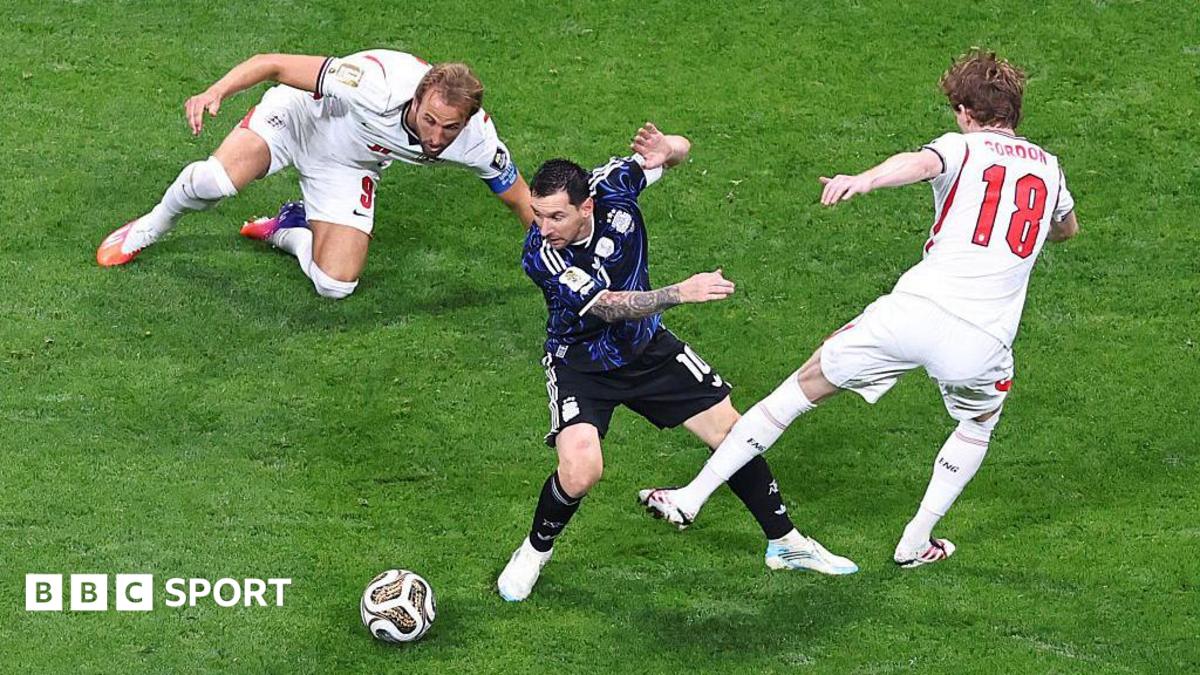
BBC analysis of Lionel Messi’s influence has once again highlighted a familiar truth in elite football: the game is not always won by the fastest or the most physical side, but by the player who can read and reshape it in real time. The article’s central point is simple enough, yet it carries broader significance for how teams prepare for opponents who can alter a match without needing to dominate it athletically.
Why England’s physical edge was not enough
England have long been associated with intensity, power and direct physical duels, qualities that often serve them well against opponents who want a more open contest. But the BBC piece suggests that those strengths were not enough when faced with Messi’s ability to manage space, tempo and decision-making on the fly. That matters because it speaks to a recurring issue in international football: tactical plans can look sound on paper, but they can be undone by one player who understands where the next weakness will appear before anyone else does.
The source also underlines the contrast between perception and reality. Messi is described as 39 and as someone who spends much of his time walking, a detail that can mislead casual observers into underestimating his impact. In practice, that economy of movement is part of his value. By conserving energy and choosing his moments, he can stay available for the decisive action rather than wasting effort on low-value running. For supporters, that is a reminder that football intelligence can be as disruptive as pace or pressing.
What Messi’s role says about modern elite football
The phrase “coach-on-pitch” is especially revealing. It suggests not just technical brilliance, but a player capable of making in-game adjustments that influence teammates and opponents alike. In modern football, where pressing structures and compact defensive blocks are increasingly sophisticated, the ability to improvise within a system is priceless. Messi’s reputation has always rested on more than goals and assists; it is also built on his capacity to identify the exact moment when a match can be bent in his team’s favour.
For England, the lesson is less about one isolated matchup and more about the limits of any approach that relies too heavily on physical superiority. Against the very best, tactical discipline must be matched by adaptability. If a player of Messi’s calibre can “undo” a plan on the fly, then the margin for error becomes tiny. That is why teams at the top level spend so much time on in-possession structure, defensive spacing and transitional control: one moment of hesitation is often enough.
For readers and supporters, the story reinforces why Messi remains such a compelling figure even late in his career. He may no longer be the relentless runner of his younger years, but the source argues that his influence has evolved rather than diminished. In a sport increasingly shaped by systems, he remains one of the rare players capable of overruling them.
Source note: This article was prepared using publicly available information from BBC Sport and expanded with editorial context.
Share this content: