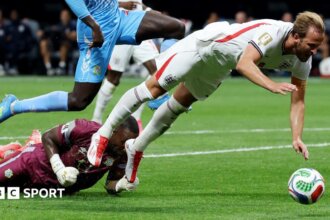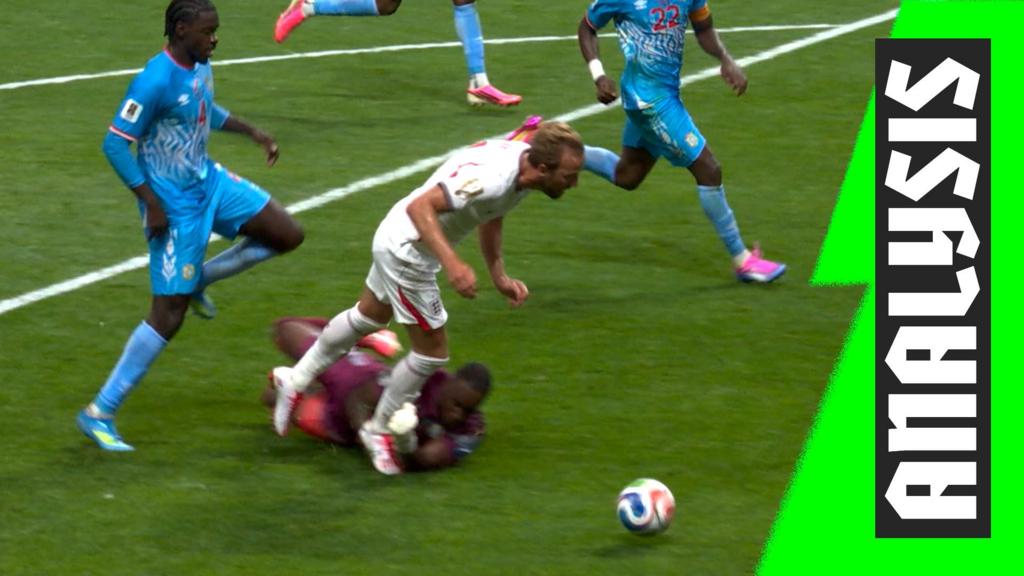
England’s penalty claims are once again under the microscope after BBC Sport’s panel of Micah Richards, Joe Hart, Wayne Rooney and former referee Darren Cann debated whether Harry Kane should have been awarded a spot-kick after going down under a challenge from DR Congo goalkeeper Lionel Mpasi-Nzau.
The discussion matters because Kane remains one of England’s most influential attacking figures and, in tight international matches, decisions in the penalty area can shape the entire tone of a game. When a striker with Kane’s reputation for drawing contact is involved, the line between a legitimate challenge and a foul often becomes a major talking point, especially when the incident is reviewed by former players and officials with different perspectives.
Why the incident drew attention
Penalty incidents involving England tend to attract immediate scrutiny because they can swing momentum and provoke debate over interpretation rather than clear-cut error. In this case, the key question was whether Mpasi-Nzau’s challenge was enough to justify a penalty, or whether Kane’s fall was part of the natural contact that comes with a crowded box. That kind of split opinion is exactly why panels like this are valuable for supporters: they expose the different ways ex-players and referees read the same moment.
For England fans, the bigger issue is consistency. Supporters want to know what level of contact will be punished in international football, particularly when a team relies on a central striker like Kane to convert half-chances and win decisive moments. If officials are reluctant to award penalties in these situations, attacking sides may need to create clearer openings rather than depend on borderline calls.
What it means for England and Kane
For Kane, these moments are part of the wider story of his role for club and country: he is not only a finisher but also a player who often operates in traffic, absorbs contact and forces defenders into difficult decisions. That makes him central to England’s attacking structure, but it also means he is frequently at the heart of contentious incidents.
From a tactical point of view, the debate underlines how important box presence remains in modern football. Teams that can get their centre-forward into dangerous areas increase the chance of winning penalties, free-kicks and second balls. England’s ability to turn those situations into goals can be decisive in tournament football, where margins are usually thin and one decision can define a result.
BBC Sport’s panel did not just revisit one incident; it highlighted the broader tension between physical defending and the protection attackers receive in the penalty area. For supporters, that is the real takeaway: the laws may be clear in theory, but in practice these calls often depend on interpretation, angle and the referee’s threshold for contact.
Source note: This article was prepared using publicly available information from BBC Sport and expanded with editorial context.
Share this content: