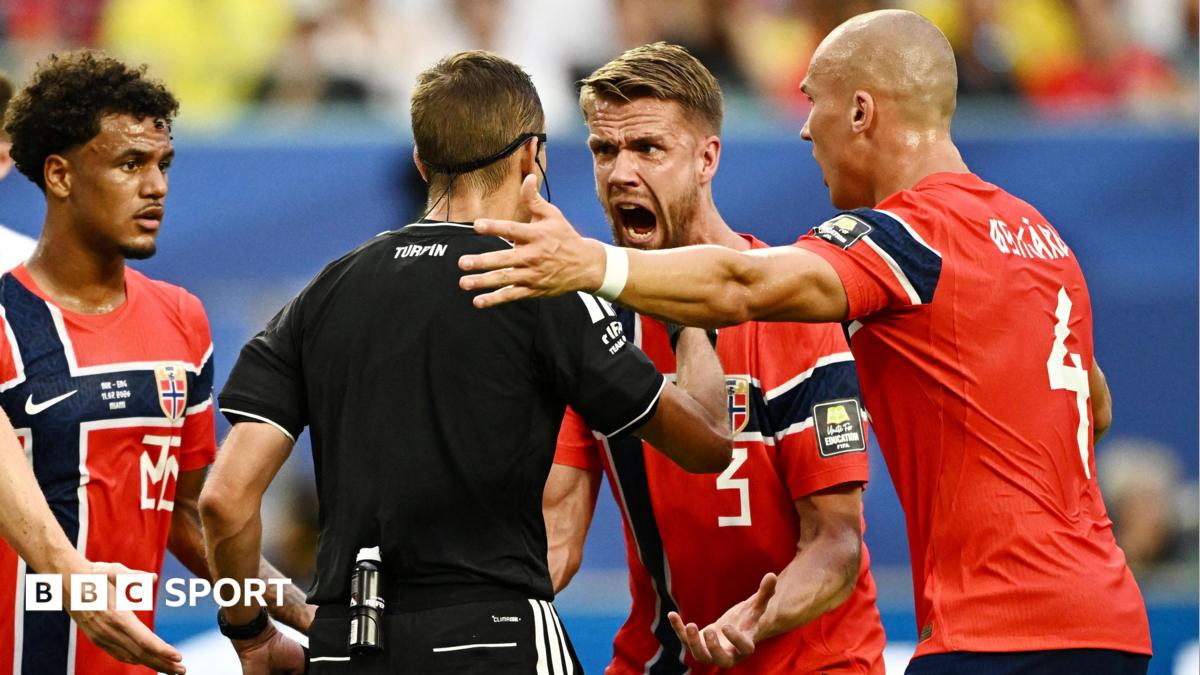
Norway’s impressive World Cup run ended in a 2-1 quarter-final defeat to England, but the match has not been remembered only for the scoreline. The closing stages were marked by a dispute over whether Jude Bellingham’s equaliser should have counted, with Norway convinced the ball may have struck the spidercam before the goal.
That detail matters because it goes to the heart of how modern football handles unusual interference. In a game where technology is increasingly used to remove doubt, a potential contact with camera equipment creates a different kind of uncertainty: not a tactical debate, but a question of whether the laws of the game were applied correctly in a decisive moment.
Why the incident matters
For Norway, the frustration is understandable. A quarter-final exit is painful enough, but it becomes harder to accept when a key equaliser is viewed as potentially avoidable. If the ball did touch the spidercam, the argument would be that England’s goal should have been ruled out, changing the momentum of the match and possibly the outcome of the tie.
From England’s perspective, the goal stood and helped shape a comeback in a knockout match that demanded composure under pressure. Bellingham’s involvement underlines why he is such a significant figure for England: he is the kind of midfielder who can influence major tournament games in moments that alter the emotional balance of a contest.
What supporters are left debating
For supporters, the episode is another reminder that football controversies are no longer limited to offside lines or penalty calls. As broadcast technology becomes more visible, so too do the rare incidents that can affect the legitimacy of a goal. Even when there is no immediate on-field certainty, the perception of interference can dominate the post-match conversation.
Norway’s campaign should still be viewed through the wider lens of progress. Reaching the last eight of a World Cup is a significant achievement, and their frustration at the manner of elimination suggests a team that believed it had the quality to go further. England, meanwhile, move on with a victory that will be remembered not only for the result, but for the debate it left behind.
What the Snicko reading appears to suggest is that the ball did not hit the spidercam before the equaliser. Even so, Norway’s uncertainty shows how quickly a single incident can become the defining talking point of a knockout match, especially when the stakes are as high as a place in the semi-finals.
Source note: This article was prepared using publicly available information from BBC Sport and expanded with editorial context.
Share this content: