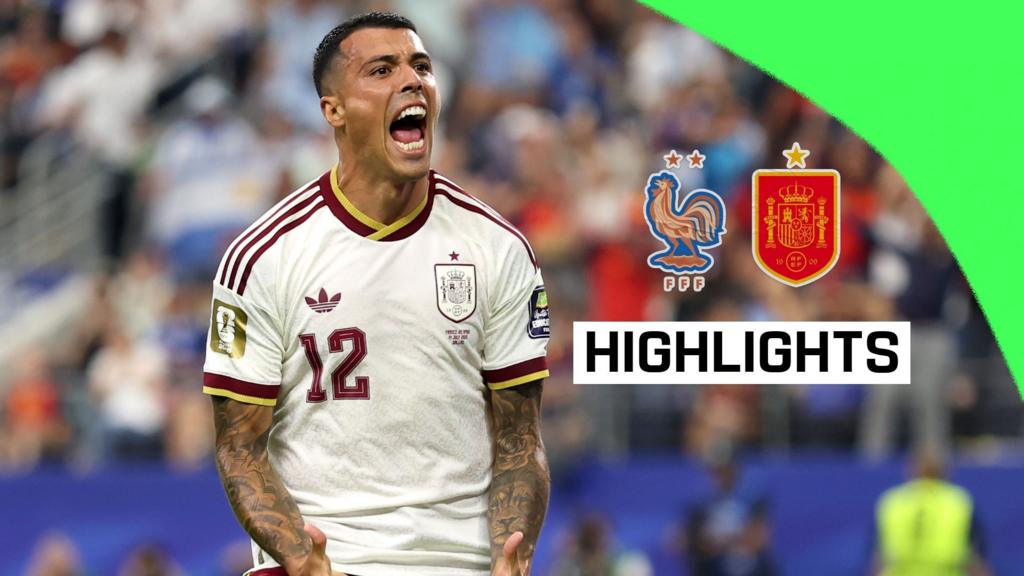
Spain are through to the 2026 World Cup final after a convincing 2-0 semi-final victory over France in Dallas, a result that underlines both their efficiency in front of goal and their ability to control a high-pressure knockout tie. Goals from Mikel Oyarzabal and Pedro Porro settled the contest and sent Spain one step away from lifting football’s biggest prize.
For Spain, this was the kind of performance that supporters will see as a statement rather than just a result. Semi-finals are often decided by fine margins, but Spain made the game look more comfortable than that, turning a meeting with one of the tournament’s most powerful sides into a controlled and disciplined win. In a World Cup setting, that matters as much as individual brilliance: the best teams do not only survive difficult moments, they impose their own rhythm when the stakes are highest.
Spain’s balance pays off in knockout football
The goalscorers tell part of the story. Oyarzabal has long been associated with composure and intelligent movement in the final third, while Porro’s contribution from a wider area reflects the value of full-backs and advanced defenders in modern international football. When a team can find goals from different zones of the pitch, it becomes harder to predict and harder to stop.
That variety is especially important in knockout football, where opponents often prepare to shut down the obvious threats. Spain’s ability to score twice against France suggests a side with more than one route to victory, and that is a major reason they now have a chance to finish the tournament as champions. For supporters, it also offers reassurance that the team is not relying on a single star to carry the attack.
What the result means for Spain and France
Reaching the final changes the mood around a tournament immediately. For Spain, it creates momentum, belief and the possibility of a defining night in the country’s football history. It also raises the pressure, because the final is where control, nerve and tactical discipline are tested to the limit.
For France, the defeat ends a run that fell short at the semi-final stage, and the margin of the loss will prompt questions about how they were managed and where the game slipped away. Against elite opposition, small details usually decide everything, and Spain were the side that handled those details better in Dallas.
From a broader football perspective, the result adds another chapter to Spain’s reputation as a team capable of combining technical quality with tournament maturity. If they can carry that level into the final, they will arrive with both confidence and a clear sense of purpose.
Source note: This article was prepared using publicly available information from BBC Sport and expanded with editorial context.
Share this content: