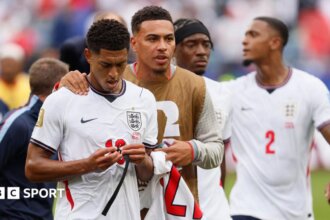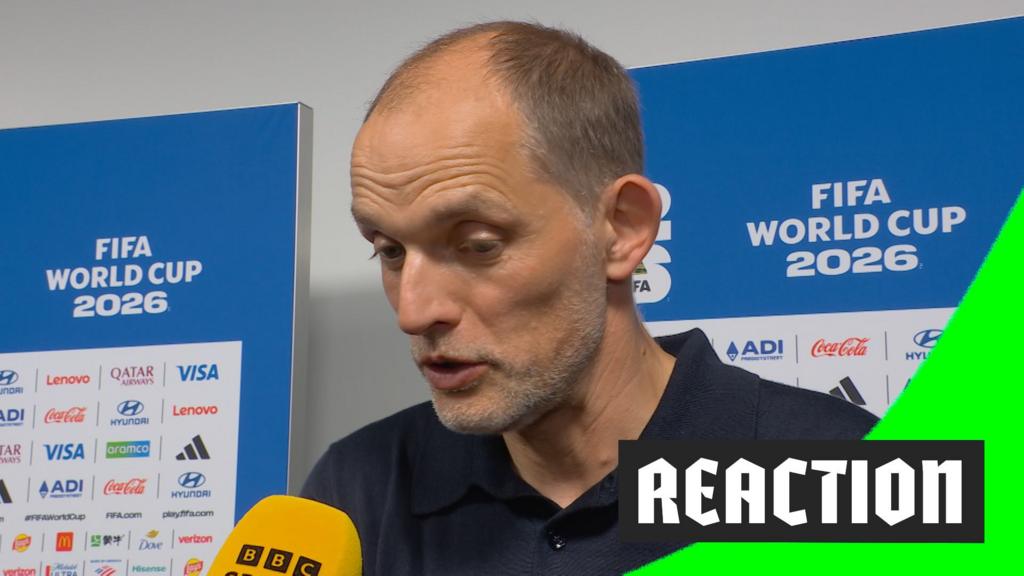
Thomas Tuchel’s assessment after England’s goalless draw with Ghana was clear: the opposition made life hard by staying organised, disciplined and committed without the ball. For England, a 0-0 result at the 2026 World Cup is the kind of outcome that can feel both reassuring and frustrating — reassuring because the team avoided defeat, frustrating because control of a match does not always translate into a breakthrough.
England run into a compact Ghana block
Tuchel said England found it difficult to break down Ghana’s defence, and that detail matters. In tournament football, especially in matches where one side is expected to dominate possession, the ability to resist pressure and deny space can decide the result as much as attacking quality. Ghana’s approach, as described by Tuchel, suggests a side that stayed compact and worked hard to protect central areas, forcing England to look for openings that never fully appeared.
For supporters, that kind of stalemate often raises familiar questions. Was England patient enough? Did they move the ball quickly enough to stretch the back line? Or did Ghana simply execute a defensive plan that limited the spaces England wanted to exploit? Tuchel’s comments point toward the latter, and that is an important distinction. A team can be criticised for lacking invention, but it can also be acknowledged when the opponent’s structure leaves very little room to operate.
What the draw means for England and Ghana
From England’s perspective, a draw in a World Cup setting is rarely disastrous on its own, but it can shape the tone of a campaign. Matches like this often become reference points later in the tournament: if chances are not converted, pressure builds quickly in the next fixture. The challenge for England is not just creating more, but turning territorial control into clear chances against opponents prepared to defend deep and in numbers.
For Ghana, the result will likely be viewed as evidence that a disciplined defensive performance can frustrate a stronger or more established opponent. That kind of display can be especially valuable in a World Cup, where margins are thin and every point matters. A committed defensive showing does not guarantee progress, but it can provide a platform for belief, particularly if the team can build on it in the matches that follow.
Tuchel’s remarks also underline a broader truth about international football: tactical patience is often tested most severely against teams willing to sacrifice possession for structure. England may have expected to find more space, but Ghana’s organisation ensured the game stayed tight. In that sense, the draw was not just a scoreline — it was a reminder that tournament football often rewards the side that is most difficult to break down.
Source note: This article was prepared using publicly available information from BBC Sport and expanded with editorial context.
Share this content: