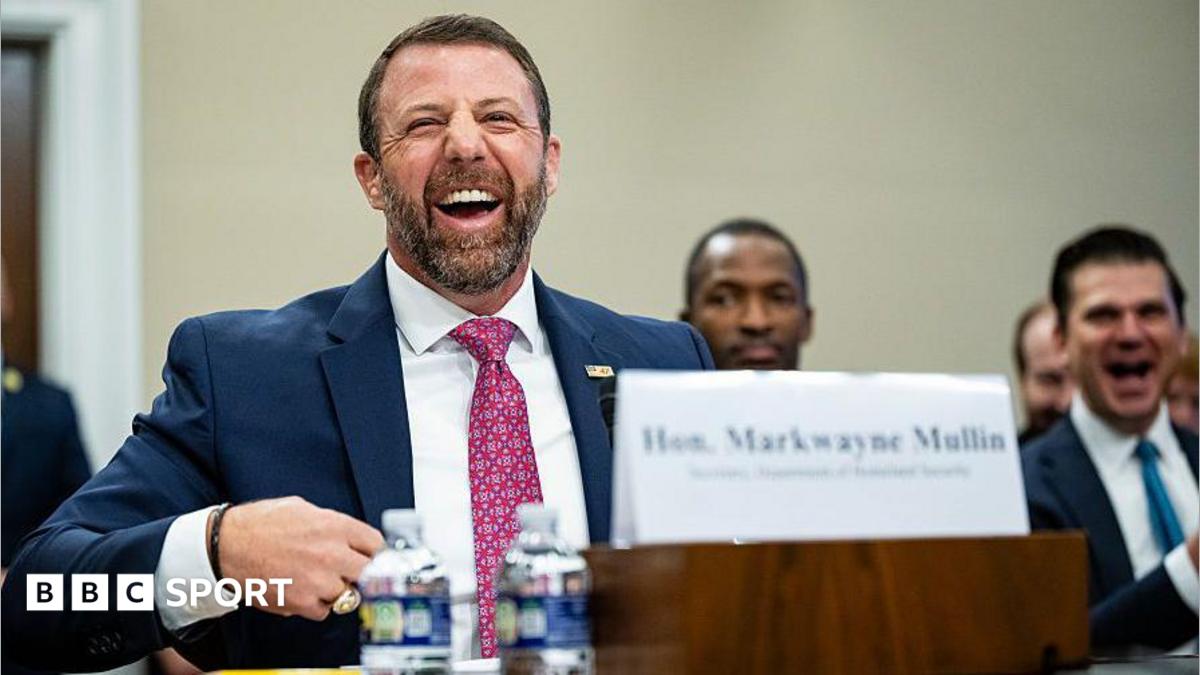
The World Cup is usually judged by what happens on the pitch, but this story has landed in the wider political and security conversation. The United States’ head of homeland security said he “danced a happy dance” after Iran were eliminated from the tournament, a comment that immediately gives the episode a significance beyond routine sporting reaction.
For Iran, the exit was decided in the narrowest possible fashion. They missed out on progression from the group stage on goal difference, and the margin was made even more painful by a stoppage-time winner against Egypt being ruled out for a marginal offside. That kind of finish is the sort that lingers with supporters, because it turns a tournament campaign into a sequence of what-ifs rather than a clean sporting verdict.
Why the remark matters beyond football
In football terms, the headline is simple: Iran went out, and the United States’ security chief celebrated that outcome. But the language used matters. When a senior government figure publicly frames an opponent’s elimination in celebratory terms, it can be read as more than casual fandom. It places a sporting result inside a broader political context, which is especially sensitive when the nation involved is Iran.
That is why the reaction has attracted attention. World Cup exits are often analysed through tactics, missed chances or refereeing decisions, but here the focus shifts to how a political figure chooses to respond. For supporters, it is a reminder that international football can carry meanings far beyond the scoreboard, particularly when national identity and geopolitics are already part of the backdrop.
What Iran’s exit means for supporters
For Iran’s fans, the disappointment is likely to be rooted in the detail of the elimination itself. Going out on goal difference is always brutal, because it suggests the team was close enough to survive but not quite efficient enough over the full group stage. Add a disallowed stoppage-time winner and the sense of injustice becomes even sharper.
From a football perspective, those are the moments that define tournament narratives. A team can spend weeks building momentum, only to see everything hinge on a single offside call or one extra goal elsewhere in the group. That is what makes the World Cup so unforgiving: fine margins decide who stays and who goes home.
For News Goal readers, the key takeaway is that this is not just a quirky quote. It is a reminder that football’s biggest stage still intersects with politics, public language and national sentiment. Iran’s exit was already a painful sporting story; the reaction from a senior US official has ensured it will be discussed well beyond the final whistle.
Source note: This article was prepared using publicly available information from BBC Sport and expanded with editorial context.
Share this content: