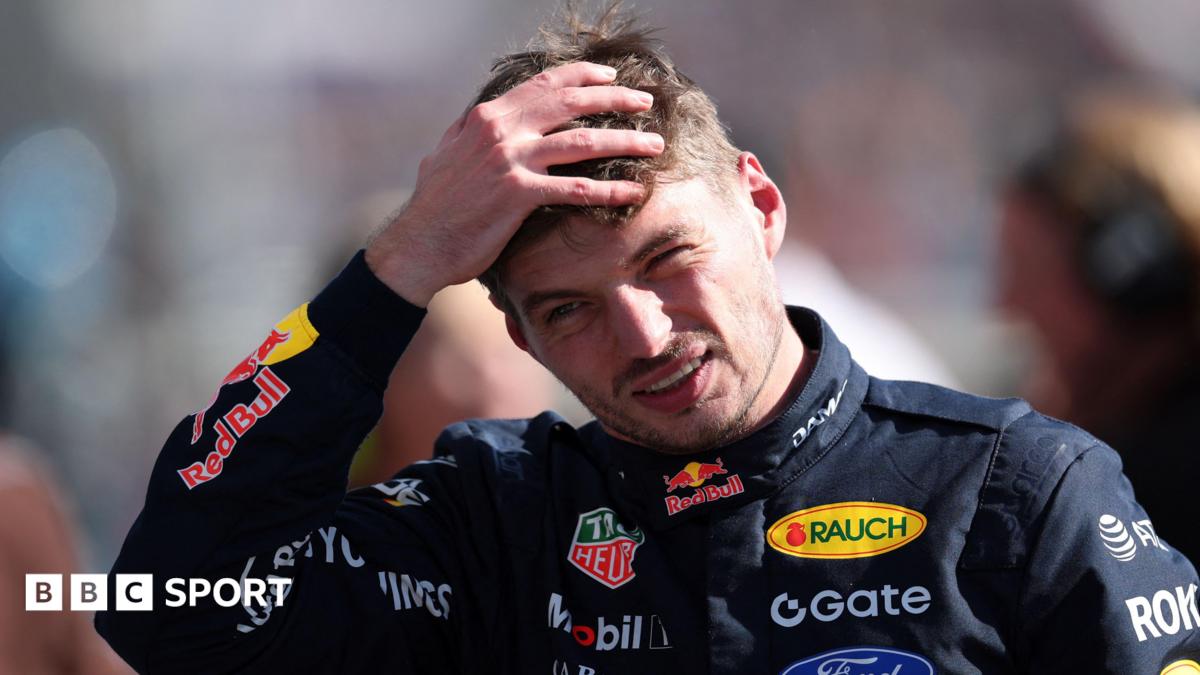
Max Verstappen has raised serious concerns over a rear wing failure on his Red Bull, describing the problem as “super-dangerous” after it contributed to crashes at two consecutive grands prix. For a driver operating at the very limit of grip, speed and downforce, any structural issue in the rear of the car is not just a performance problem but a direct safety risk.
The BBC report is brief, but the implication is clear: this was not a minor setup issue or a one-off mechanical glitch. A rear wing failure can destabilise a car instantly, especially under high-speed load, and the fact that it was linked to crashes in back-to-back races will inevitably sharpen scrutiny on Red Bull’s reliability checks. In Formula 1, where margins are measured in thousandths of a second, the difference between a fast car and a dangerous one can be a single component behaving unpredictably.
Safety concerns move to the foreground
Verstappen’s language matters because drivers rarely use that kind of phrasing lightly. Calling the failure “super-dangerous” suggests the issue went beyond lost performance and into the realm of immediate hazard. That will resonate with teams, governing officials and supporters alike, because modern F1 cars are designed around extreme aerodynamic loads, and rear-wing integrity is central to both balance and braking stability.
For Red Bull, the episode also carries reputational weight. The team has built its recent success on precision, technical excellence and race-day control. When a car suffers a failure severe enough to contribute to crashes in consecutive events, it forces questions about whether the problem was isolated, whether it was detected early enough, and how quickly the team can respond before it affects championship momentum.
What it means for Verstappen and Red Bull
For Verstappen, the immediate concern is confidence. Drivers need absolute trust in the car’s aero platform, particularly when attacking in traffic or pushing through high-speed corners. If that trust is shaken, it can alter how aggressively a driver commits to a lap or a battle on track. For supporters, the story is a reminder that even the most dominant-looking Formula 1 operation is vulnerable when reliability slips.
There is also a broader competitive angle. In a title fight, any crash that stems from a technical failure can have consequences beyond the lost points from a single race. It can affect car preparation, spare parts availability and the strategic risk a team is willing to take in the next round. With Verstappen already flagging the issue in such stark terms, Red Bull will be under pressure to show that the problem is understood and contained.
BBC Sport’s report does not provide further technical detail, but the headline alone is enough to underline the seriousness of the matter. In Formula 1, safety and speed are always intertwined, and Verstappen’s warning suggests Red Bull now has a reliability issue that cannot be brushed aside.
Source note: This article was prepared using publicly available information from BBC Sport and expanded with editorial context.
Share this content: