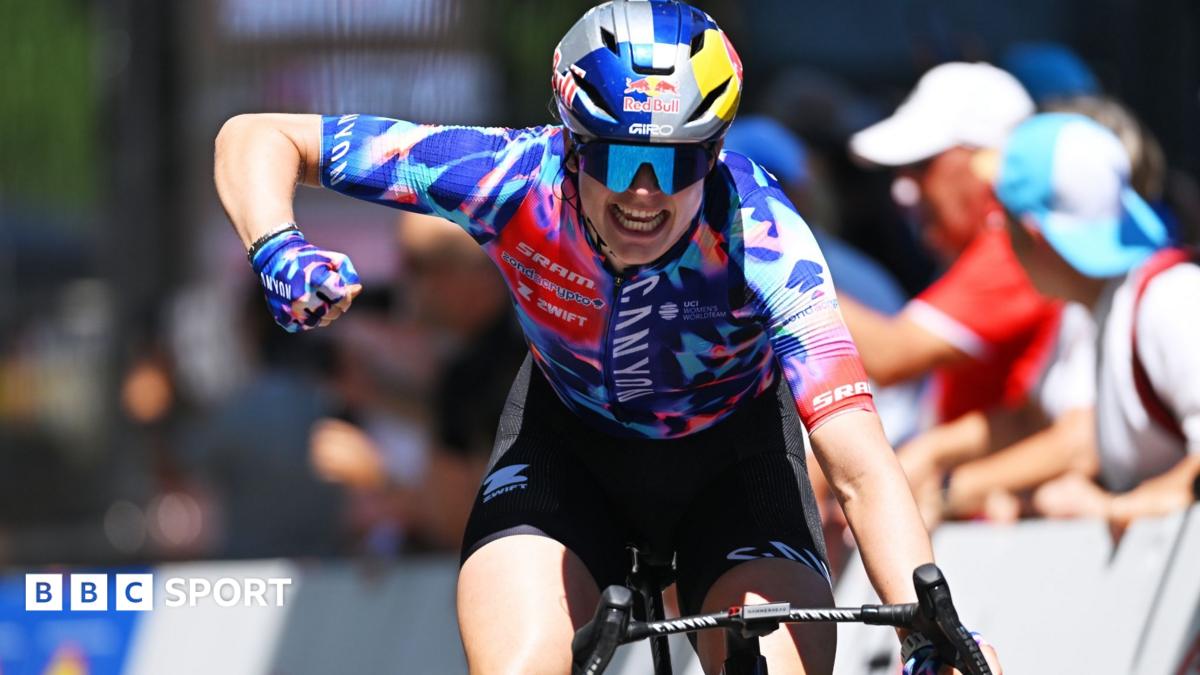
Zoe Backstedt underlined her speed and race awareness with a stage three victory at the Tour de Suisse Femmes, taking a bunch sprint in Bad Ragaz to give Britain another notable result on the women’s WorldTour calendar.
The win matters not only as a stage success, but also because it came in a race that is now moving toward its decisive terrain. With the five-stage event ending on Sunday in a mountain loop around Villars-sur-Ollon, the profile of the race changes sharply from sprint-friendly roads to climbing-heavy racing. That shift often reshapes the general classification picture and reduces the chances for pure fast-finisher opportunities.
Backstedt delivers in the sprint
According to the BBC report, Backstedt produced a commanding finish in the final dash to the line. In a bunch sprint, positioning, timing and confidence are often as important as raw speed, and a result like this suggests she judged the finale well. For a rider from Britain, a stage win in a race of this level is a strong marker of form and a reminder of the depth emerging in the country’s women’s peloton.
While the source does not provide the full stage profile or the names of the riders she beat, the fact that the victory came from a bunch sprint is still significant. It indicates that the stage stayed together long enough for the fast finishers to decide it, rather than being broken apart by late attacks or climbing pressure.
What it means for the race
For supporters following the Tour de Suisse Femmes, Backstedt’s win adds a clear British highlight before the race heads into its final and likely most selective day. The mountain loop in Villars-sur-Ollon should place a very different set of demands on the peloton, with climbing ability and recovery now likely to matter more than sprint speed.
That makes stage three a valuable opportunity seized. In stage racing, especially over only five days, winning when the chance appears can define a rider’s week. Backstedt has now taken that chance, and the result gives her team momentum heading into the closing stage, where the race may be decided by the strongest climbers rather than the fastest sprinters.
For a British audience, the result is also a useful reminder of how competitive the women’s calendar has become. A stage win in Switzerland is not just a line in the results sheet; it is evidence of a rider capable of finishing under pressure in an international field. With the race concluding on a mountainous circuit, Backstedt’s victory may stand as the headline sprint moment of the event.
Source note: This article was prepared using publicly available information from BBC Sport and expanded with editorial context.
Share this content: