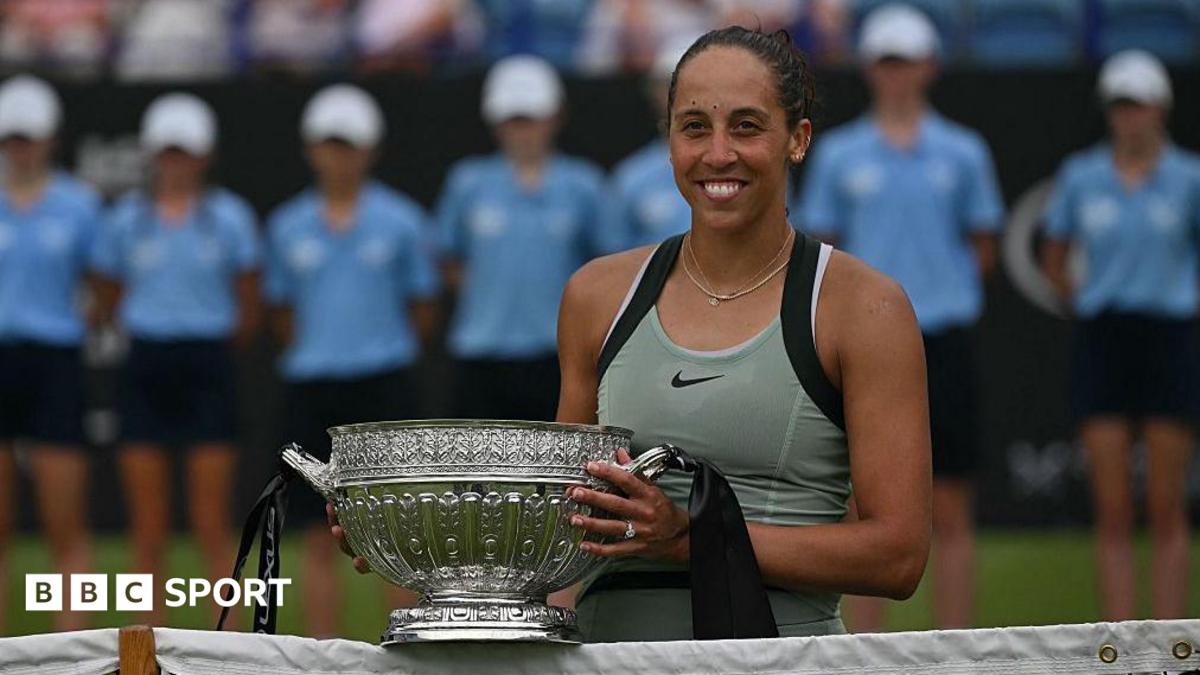
Madison Keys added another Eastbourne crown to her record on the grass by beating Tatjana Maria in straight sets, a result that reinforces her status as one of the most dangerous players on the surface heading into the heart of the summer swing.
The American’s third title at the event is more than a line on a honours list. Eastbourne has long been one of the key tune-up tournaments before Wimbledon, and repeated success there usually points to a player who is comfortable with the pace, bounce and tactical demands of grass-court tennis. For Keys, it is a timely reminder that her game remains well suited to the surface where first-strike tennis and confidence on serve can decide tight matches quickly.
Why this matters before Wimbledon
Keys’ win will matter to supporters because it suggests form, rhythm and belief are all building at the right time. Grass courts reward players who can take time away from opponents, and Keys has the kind of power game that can do exactly that when she is timing the ball cleanly. A straight-sets final also matters psychologically: it removes the need for a draining three-set battle and leaves her with momentum rather than fatigue.
For Maria, the result still underlines her value as a grass-court specialist and a difficult opponent in any draw. Reaching a final at this stage of the season is itself a sign of strong form, and her style often makes matches awkward for more aggressive hitters. That Keys was able to solve the challenge in straight sets speaks to the quality of her performance on the day.
Grass-court form and tournament context
Eastbourne has often been used by top players to sharpen their games before Wimbledon, and titles there can carry real significance even if they do not always dominate the headlines. For Keys, a third triumph at the venue suggests a strong fit between player and tournament conditions. It also gives her a platform to carry into the next event, where expectations and scrutiny rise sharply.
From a broader perspective, results like this help shape the early narrative of the grass-court season. A player who wins convincingly at Eastbourne does not automatically become a Wimbledon favourite, but she does become a name that rivals will want to avoid in the draw. For fans, that is exactly the sort of form update that can change the mood around a player’s prospects in a major tournament run.
With Wimbledon approaching, Keys has given herself a useful boost: a title, a clean final, and proof that her game is already translating well to grass.
Source note: This article was prepared using publicly available information from BBC Sport and expanded with editorial context.
Share this content: