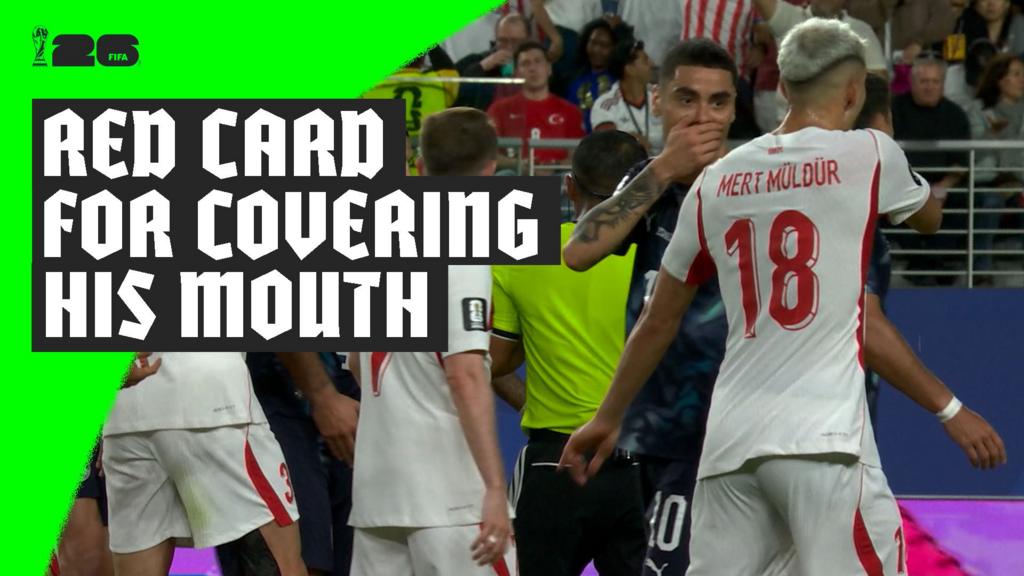
Miguel Almiron has entered an unusual slice of World Cup history after becoming the first player to be sent off under the tournament’s new rule preventing players from covering their mouths during a game. The Paraguay midfielder was shown a red card in a win over Turkey, turning what should have been a routine tournament moment into a notable disciplinary landmark.
A new rule, an immediate precedent
The incident matters because it is not just about one player’s dismissal. It is the first visible enforcement of a rule designed to stop players from hiding their mouths during matches, a measure that has already created debate around transparency, communication and the limits of on-field privacy. In practical terms, the rule gives officials a clearer basis for intervention when players attempt to shield conversations from cameras and opponents.
For supporters, the key takeaway is that the 2026 World Cup is already producing moments that go beyond the scoreline. Tournament football often becomes a testing ground for new regulations, and Almiron’s red card will now be referenced whenever this law is discussed. It is the kind of incident that can shape how players adapt, how referees apply the rule and how quickly teams learn to avoid unnecessary risk.
What it means for Paraguay and Turkey
Paraguay still came through the match with a win over Turkey, but the sending-off will naturally draw attention away from the result and toward the broader disciplinary implications. For Paraguay, the immediate concern is how they manage Almiron’s availability and whether the dismissal affects momentum in the rest of the tournament. For Turkey, the episode is a reminder that even in defeat, opponents can be pulled into the wider conversation when a new rule is enforced in such a high-profile way.
Almiron is one of Paraguay’s most recognisable attacking players, so any red card involving him will resonate beyond the match itself. The fact that it came under a brand-new rule makes the story even more significant, because it adds a layer of uncertainty for players and coaches who now have to interpret how strictly the law will be applied in future games.
As the World Cup continues, this will likely become one of those early tournament incidents that supporters and analysts revisit when discussing how the competition is being officiated. Whether the rule becomes a regular talking point or remains a one-off headline will depend on how consistently it is enforced from here.
Source: BBC Sport
Source note: This article was prepared using publicly available information from BBC Sport and expanded with editorial context.
Share this content: