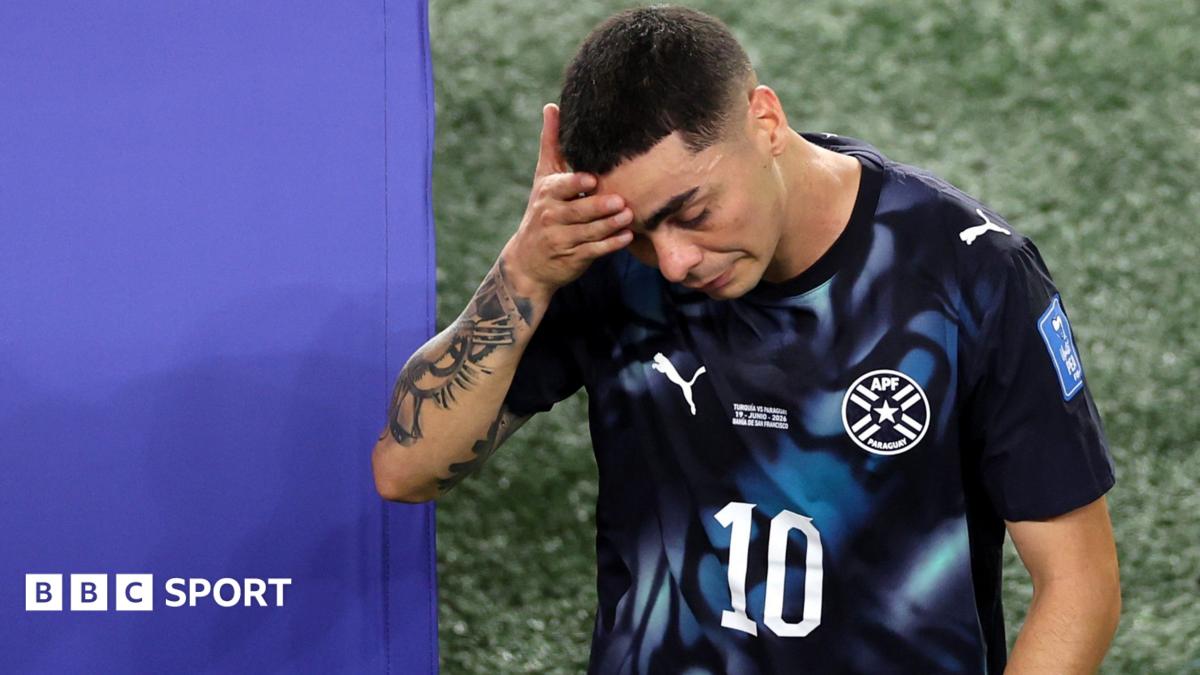
Miguel Almiron has entered World Cup history for a reason no player wants attached to their name. The Paraguay midfielder was sent off during his side’s group match against Turkey in San Francisco after an incident in which he was shown a red card for covering his mouth while speaking to an opponent.
The BBC report says Almiron became the first player to be dismissed for that specific action, turning an otherwise routine group-stage fixture into a notable disciplinary moment. In tournament football, where margins are often tight and emotions run high, even a brief exchange can carry major consequences. For Paraguay, the dismissal is more than a personal setback for one of their most recognisable players; it can alter the rhythm of a match and force the team to reorganise under pressure.
Why the dismissal matters
Red cards in World Cup matches are always significant because they affect not only the game in front of the crowd but also the wider tournament picture. A sending-off can leave a team short-handed, disrupt tactical shape and place extra defensive responsibility on the remaining players. For Paraguay, losing Almiron in a group match against Turkey is the kind of moment that can change the balance of a contest in seconds.
Almiron is a familiar name to football supporters and one of Paraguay’s key attacking figures, which makes the incident especially damaging from a sporting perspective. When a player of that profile is removed from the pitch, it can force a manager to sacrifice attacking intent in order to stabilise the team. That is particularly important in World Cup group play, where every point can shape qualification hopes.
What supporters will take from it
For Paraguay fans, the immediate concern is the impact on the match itself and any possible knock-on effect for the rest of the group stage. Supporters will also be aware that disciplinary incidents can become talking points beyond the final whistle, especially when they involve unusual circumstances. This was not a conventional challenge or a second-bookable offence; it was a rare and highly specific red card that will likely be remembered as much for its uniqueness as for its consequences.
For Turkey, the dismissal may have offered a major advantage in a match that had already become tense and emotionally charged. For the wider World Cup audience, the incident adds another unusual chapter to tournament history and underlines how football’s laws can produce outcomes that are both strict and unexpected.
As the competition continues, Paraguay will need to move on quickly. But Almiron’s red card will stand out as one of the more unusual disciplinary moments of the tournament, and one that could have real implications for his team’s campaign.
Source note: This article was prepared using publicly available information from BBC Sport and expanded with editorial context.
Share this content: