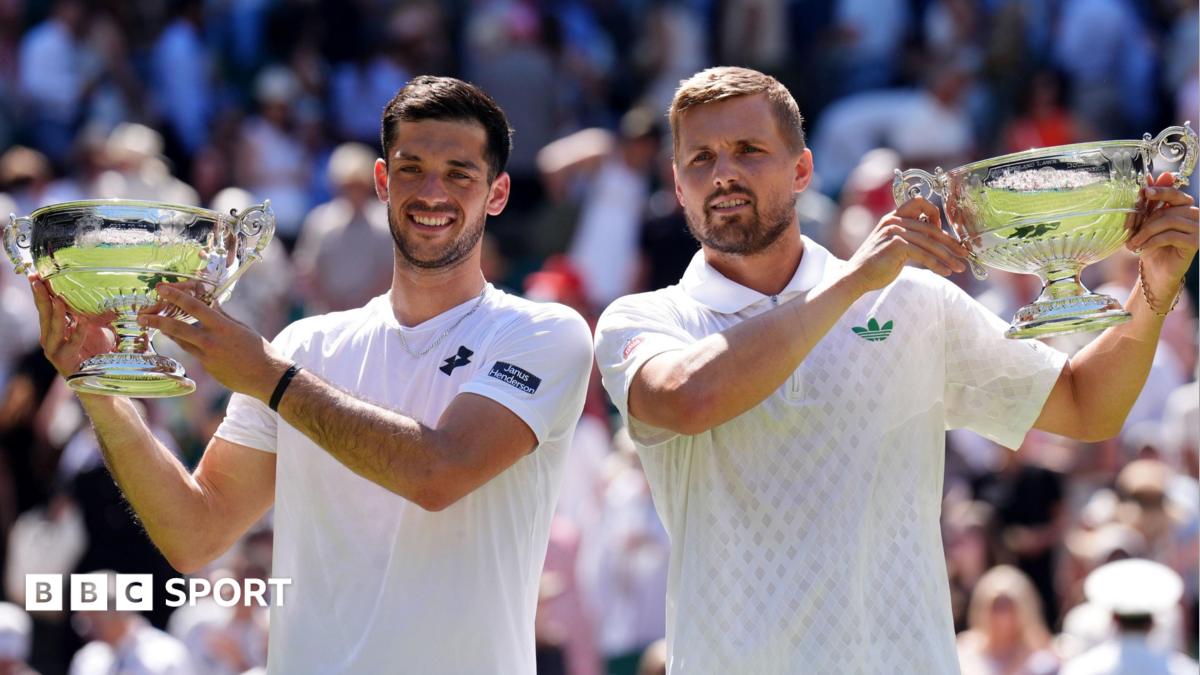
Leading doubles players have raised the alarm over what they see as a direct threat to the future of their discipline, accusing the men’s ATP Tour of trying to make doubles less sustainable as a professional career. The BBC Sport report frames the dispute as more than a routine scheduling or commercial debate: for the players involved, it is about whether doubles remains a meaningful part of the men’s game or becomes increasingly marginalised.
The concern matters because doubles has long occupied an awkward place in tennis’s business model. It is valued by purists, important to many tournaments, and central to the sport’s team identity in events such as the Davis Cup and the Olympics, yet it often struggles for visibility compared with singles. Any move that reduces opportunities, prize money, or exposure would therefore have a disproportionate impact on players whose careers depend on the format.
Why the row matters for doubles specialists
For doubles specialists, the issue is not simply prestige. It is about the economics of the tour. A viable professional pathway depends on enough events, enough ranking points, and enough financial return to support travel, coaching, and the constant movement required across a global calendar. If those foundations weaken, the pool of full-time doubles players could shrink, and the competitive depth of the format could suffer.
The BBC’s reporting suggests the players believe the ATP’s direction risks doing exactly that. Their language is unusually stark, reflecting a fear that doubles is being treated as a secondary product rather than a legitimate branch of the sport. That tension has existed for years, but public criticism of this kind indicates the relationship between the tour and its doubles players may be entering a more fragile phase.
What it could mean for the men’s game
Any reduction in doubles viability would have wider consequences than the specialists themselves. Tournaments use doubles to fill schedules, offer variety to spectators, and provide a different tactical spectacle built around reflexes, net play, and coordination. For supporters, the format often delivers fast-paced matches and a distinct style of tennis that contrasts sharply with singles.
There is also a development angle. Doubles can extend careers, provide opportunities for players whose singles ranking has plateaued, and offer a route into the professional game for athletes with strong all-court skills. If the pathway narrows, the sport risks losing some of that diversity.
At this stage, the key takeaway is that the argument is not about whether doubles matters to the players who specialise in it — it clearly does — but about whether the ATP Tour is prepared to protect that value in practical terms. For supporters of doubles, the warning signs are serious. For the tour, the challenge is to prove that the format still has a future as a viable profession, not just a supporting act.
Source note: This article was prepared using publicly available information from BBC Sport and expanded with editorial context.
Share this content: