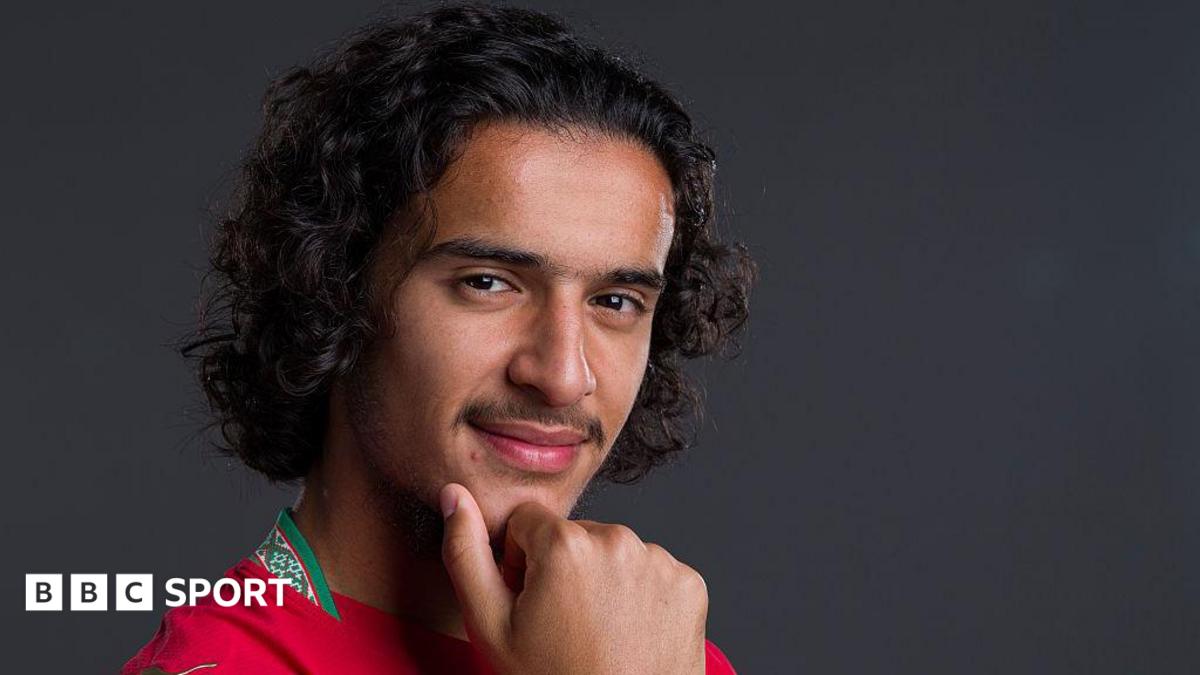
Ayyoub Bouaddi is the kind of young footballer who immediately forces a conversation about ceiling, identity and timing. BBC Sport’s profile of the teenager centres on two things that matter in modern football: exceptional talent and a major international choice. The headline detail is his decision to represent Morocco rather than France, a call that carries sporting, emotional and symbolic weight for a player being discussed in the same breath as some of Europe’s most gifted young attackers.
Why Bouaddi’s choice matters
In international football, the decision between two strong national pathways is never just administrative. For a player like Bouaddi, it shapes the early arc of his career, the expectations placed on him and the audience watching his development. Morocco’s recent rise on the world stage has made the national team an attractive destination for elite dual-eligible talent, while France remains one of the deepest talent pools in world football. Choosing Morocco suggests both conviction and opportunity: a chance to become central to a project with real momentum.
The BBC piece also leans on a striking endorsement from Olivier Giroud, who said he had the same feeling with Bouaddi that he had with Kylian Mbappe when the forward was 18. That comparison is significant not because it guarantees a similar career path, but because it speaks to a rare blend of maturity and readiness. In top-level football, technical ability alone is not enough; the players who accelerate fastest are usually the ones who process the game quickly, stay composed under pressure and adapt to senior football without looking overwhelmed.
What the comparison tells supporters
For supporters, the appeal is obvious. A teenager described in such terms becomes more than a prospect; he becomes a marker of ambition for both club and country. If Bouaddi can translate that early promise into consistent performances, Morocco gain not just a talented player but a potential long-term reference point for the next generation. For France, meanwhile, the story is another reminder that elite talent identification is only part of the battle when dual-nationality players are involved.
The broader football context matters too. Modern international recruitment has become increasingly competitive, and players with multiple options often make decisions based on pathway, trust and identity as much as on pure sporting logic. Bouaddi’s choice fits that pattern. It also underlines how national teams now compete for influence well before a player reaches his peak years.
BBC Sport’s framing suggests a player whose reputation is already outpacing his age. That can be a burden as much as a compliment, but it is also the sort of attention reserved for footballers who look capable of shaping the future rather than merely filling it.
What happens next
The key question is whether Bouaddi can turn early praise into sustained senior impact. Comparisons with Mbappe are inevitably heavy, and the history of football is full of teenagers who were talked up too soon. But the fact that a seasoned figure like Giroud is publicly highlighting Bouaddi’s maturity gives the story real credibility. For Morocco, that is encouraging. For neutral observers, it is a reminder to keep watching.
Source note: This article was prepared using publicly available information from BBC Sport and expanded with editorial context.
Share this content: