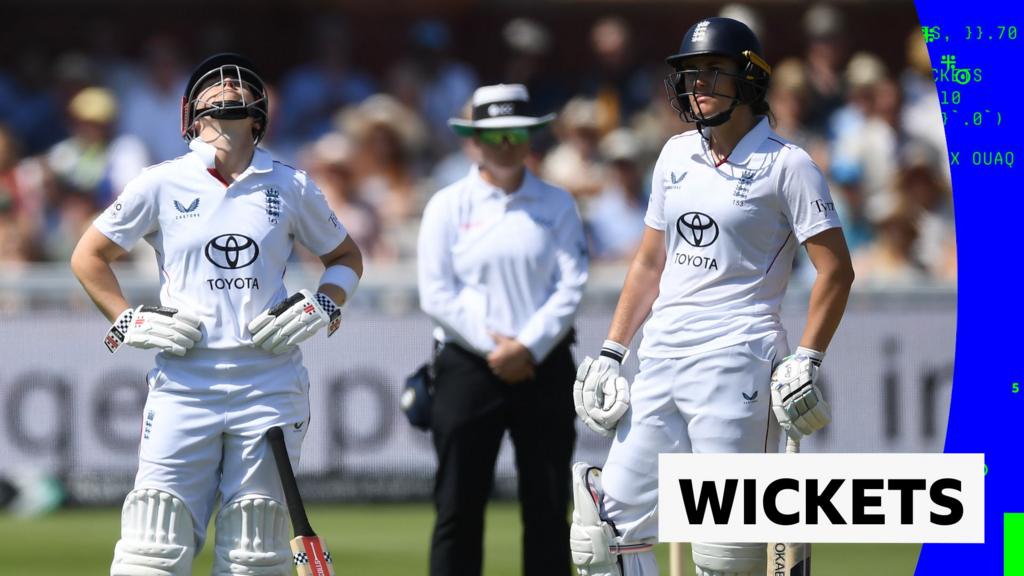
England’s start to day two at Lord’s could hardly have been more damaging. After beginning the morning in a relatively stable position at 31-1, the hosts were quickly reduced to 32-3, losing two wickets in four balls and handing India the kind of opening that can reshape a Test match in a matter of minutes.
Maia Bouchier was caught before Heather Knight was trapped lbw, and the collapse immediately shifted the pressure back onto England’s middle order. In a one-off Test, where there is no series cushion and every session carries extra weight, that kind of early wobble is especially costly. It not only removes set batters from the crease, but also changes the rhythm of the innings and forces the batting side into damage limitation far earlier than planned.
Why the early wickets matter
For England, the concern is not just the scoreline but the manner of the dismissals. Losing two wickets in four balls at the start of a day suggests a lapse in control at precisely the point when a batting side wants to settle, absorb pressure and build partnerships. Against a disciplined India attack, that sort of opening can quickly become a broader collapse if the next batters are forced to defend under immediate scrutiny.
Heather Knight’s dismissal is particularly significant because of her role as one of England’s most experienced players. When a senior batter goes early, the burden on the rest of the lineup increases, especially in a Test environment where patience and shot selection are often the difference between a competitive total and a chase for survival. Bouchier’s wicket also matters because it removed another opportunity for England to establish a platform after the overnight position.
India gain the upper hand at Lord’s
From India’s perspective, the morning represented exactly the kind of start that can tilt a Test in their favour. Early wickets at Lord’s do more than dent the scoreboard; they alter the mood in the ground and force the opposition to play catch-up. If India can sustain that pressure, England may be left relying on lower-order resistance rather than the kind of controlled batting passage they would have wanted from the outset.
For supporters, the message is clear: this Test has already moved into a tense phase. England still have time to recover, but the margin for error has narrowed sharply. In a match where momentum can swing quickly, the next partnership could determine whether this becomes a fightback or the beginning of a long day for the home side.
Source note: This article was prepared using publicly available information from BBC Sport and expanded with editorial context.
Share this content: