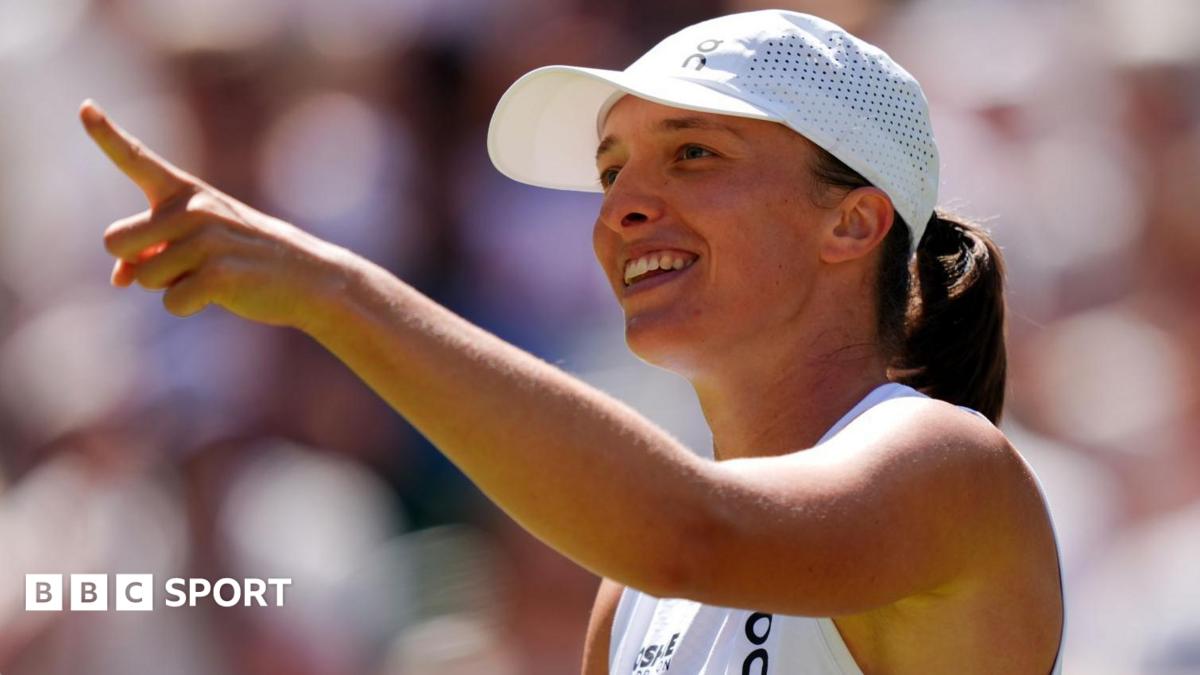
Iga Swiatek’s Wimbledon campaign took another confident step forward as the defending champion produced a commanding straight-set win over former finalist Karolina Pliskova to reach the third round. For a player whose grass-court reputation has often been judged through the lens of adaptation rather than dominance, this was the kind of performance that strengthens the sense that her title defence is building momentum at the right time.
Swiatek’s control matters as the draw tightens
Against an opponent with proven Wimbledon pedigree, Swiatek did what top champions are expected to do: she removed uncertainty early and kept the match on her terms. That is especially important at the All England Club, where confidence on grass can shift quickly from one round to the next. A straight-set win over a former finalist is not just a result; it is a statement that the defending champion is handling the pressure of expectation with authority.
For supporters, the significance goes beyond the scoreline. Wimbledon title defences are often shaped by how efficiently a player navigates the opening rounds, and Swiatek’s progress suggests she is avoiding the kind of early turbulence that can drain energy before the tournament reaches its decisive stages. The third round is where the field begins to narrow and the physical and tactical demands rise, so a clean passage there is valuable in itself.
What this means for Wimbledon and for Swiatek
Pliskova’s presence in the draw made this a meaningful test. As a former finalist, she brings the sort of big-match experience that can expose any hesitation on grass. Swiatek’s ability to win in straight sets therefore carries tactical weight: it suggests she was able to dictate rallies, stay composed under pressure, and prevent the match from becoming the sort of prolonged contest that can unsettle even the best players.
There is also a broader tournament implication. When the defending champion looks settled early, the rest of the draw has to adjust. Opponents can no longer assume that grass will be the surface where Swiatek is most vulnerable. Even without overreading one result, this is the kind of win that can alter the mood around a championship run, especially at a venue where rhythm and belief are often as important as raw shot-making.
BBC Sport’s report also noted that Swiatek earned an “A+ verdict” from Martina Navratilova, a reminder that her performance was viewed positively by one of the sport’s most respected voices. While the match itself is the key fact, the reaction underlines how convincing the display appeared from the outside. For Swiatek, the challenge now is to turn this early authority into sustained control as Wimbledon moves into its more demanding rounds.
Source note: This article was prepared using publicly available information from BBC Sport and expanded with editorial context.
Share this content: