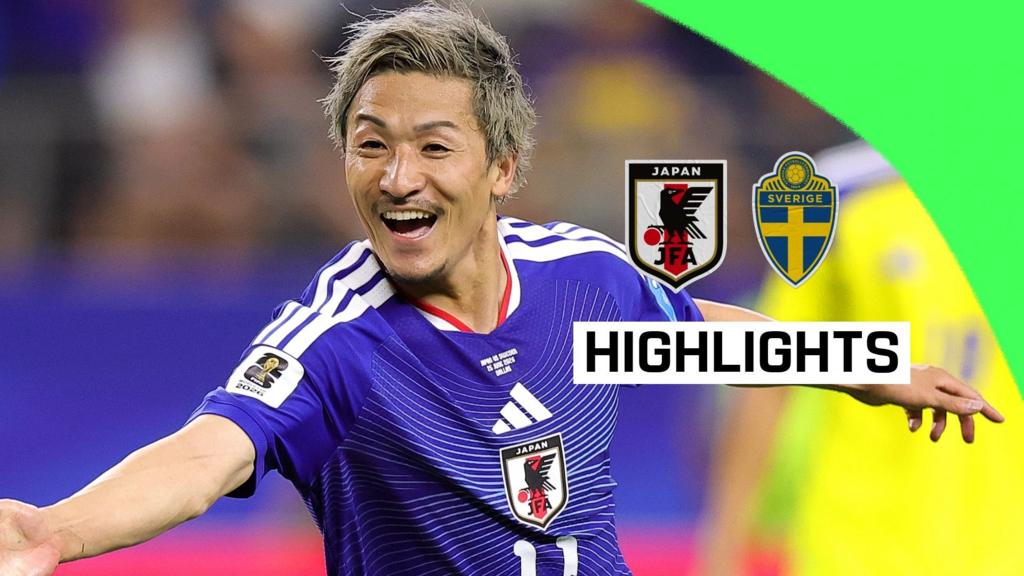
Japan and Sweden both booked their places in the World Cup knockout stages after a 1-1 draw that balanced quality, resilience and just enough caution to satisfy both camps. For supporters, the result carried the kind of tension that often defines tournament football: one side showing the sharper collective pattern, the other finding a way back through individual quality.
Japan’s team move underlined their attacking identity
Daizen Maeda’s finish came at the end of a smart team goal, a reminder of why Japan are increasingly respected for their structure and coordination in possession. Rather than relying only on moments of improvisation, Japan have built a reputation for quick combinations, intelligent movement and disciplined spacing. That approach paid off here, with Maeda applying the final touch to a move that reflected the side’s broader tactical coherence.
For Japan, the draw will feel like confirmation that their game model can stand up in tournament conditions. Even when opponents respond with pressure or a change of rhythm, Japan’s ability to create through collective patterns remains a major strength. That matters in knockout football, where control in the middle third and efficiency in the final pass often decide whether a team survives.
Elanga’s strike gave Sweden a route back
Sweden’s response came through Anthony Elanga, whose long-range strike levelled the contest and shifted the mood of the game. In a match where margins were tight, that moment offered Sweden a reminder of the value of direct threat from distance. When structured attacks are difficult to sustain, a clean strike from outside the box can change the entire shape of a tie.
The equaliser also showed Sweden’s competitive edge. Even when Japan’s team play appeared to have the upper hand, Sweden stayed in the contest and found a way to recover. That kind of mental resistance is often as important as tactical organisation in a short tournament, especially when progression is on the line.
What the draw means for both teams
Because the result sent both sides into the last 32, neither camp leaves with the frustration of elimination. Instead, the draw becomes a useful checkpoint: Japan can take confidence from the quality of their build-up play, while Sweden can point to their ability to respond under pressure and stay alive in the competition.
For supporters, the bigger picture is encouraging. Japan’s progress suggests a side capable of imposing a clear football identity on the tournament. Sweden’s route through shows a team with enough experience and individual quality to punish mistakes and stay competitive when the game becomes stretched. In knockout football, those are two different but equally valuable strengths.
The next stage will demand more precision from both teams. Japan will want to keep turning good possession into decisive chances, while Sweden will look to combine defensive discipline with the kind of long-range threat that Elanga provided. The draw may have been enough to advance, but the real test begins now.
Source note: This article was prepared using publicly available information from BBC Sport and expanded with editorial context.
Share this content: