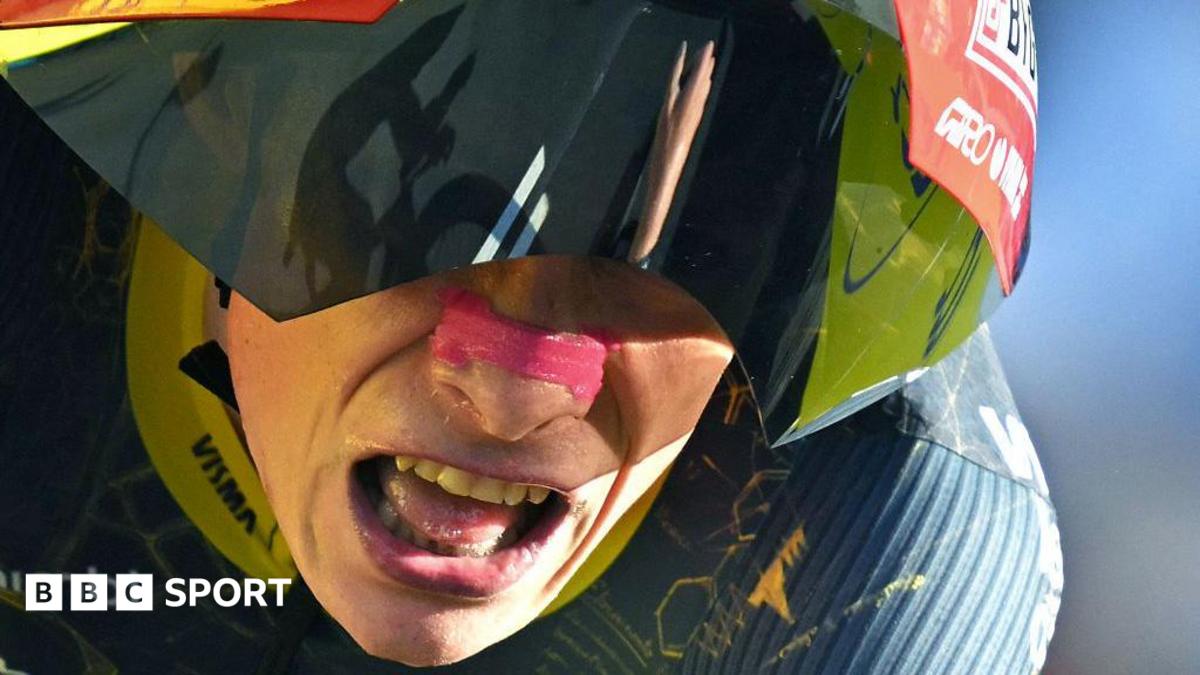
Jonas Vingegaard made the strongest possible start to the Tour de France by taking the yellow jersey on the opening stage, a result that immediately shifts the early narrative of the race. In a sport where every second matters, beginning the Tour in the leader’s jersey is more than a symbolic gain: it is a statement of control, confidence and team strength.
The BBC reports that the stage was decided by a tense team time trial, with Vingegaard denying Tadej Pogacar on day one. That matters because the Tour is often shaped as much by collective organisation as by individual brilliance, especially in the opening days when teams are still settling into the rhythm of a three-week race. A strong time trial performance can create early separation, force rivals onto the back foot and reduce the margin for error in the mountains to come.
Early advantage in a race built on margins
For Vingegaard, the yellow jersey offers both reward and responsibility. It gives his team a platform, but it also means they now have to defend the race lead while managing energy carefully across the opening week. The psychological effect should not be underestimated either. When a rider like Pogacar is denied an early advantage, the pressure shifts quickly to the chasing side, and every subsequent stage becomes a test of whether the leader can hold position rather than chase it.
That dynamic is especially important in a Tour de France that is likely to be decided by consistency as much as explosive moments. Opening-stage gains can influence tactics for days, with rival teams forced to decide whether to attack early or wait for the high mountains and individual time trials later in the race. Vingegaard’s result suggests his team arrived prepared to race from the first kilometre, not merely survive the opening phase.
What it means for Pogacar and the peloton
Pogacar remains one of the central figures in the race, and the fact that he was denied on stage one does not change the broader picture: the Tour is still long, and the strongest climbers usually have multiple chances to reshape the standings. But losing the opening battle can alter momentum. It means Pogacar and his team must now respond rather than dictate, while other contenders will be watching closely for signs of weakness or overextension.
The BBC also notes Paul Seixas of Decathlon-CMA CGM, who finished 10th at +39 seconds, a reminder that the opening stage already created meaningful gaps across the field. For supporters, that is exactly the kind of start that makes the Tour compelling: immediate tension, early hierarchy and a yellow jersey that already carries real significance. Vingegaard’s opening success does not decide the race, but it does establish him as the rider everyone else must now chase.
Source note: This article was prepared using publicly available information from BBC Sport and expanded with editorial context.
Share this content: