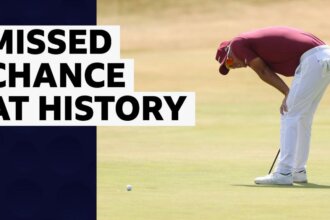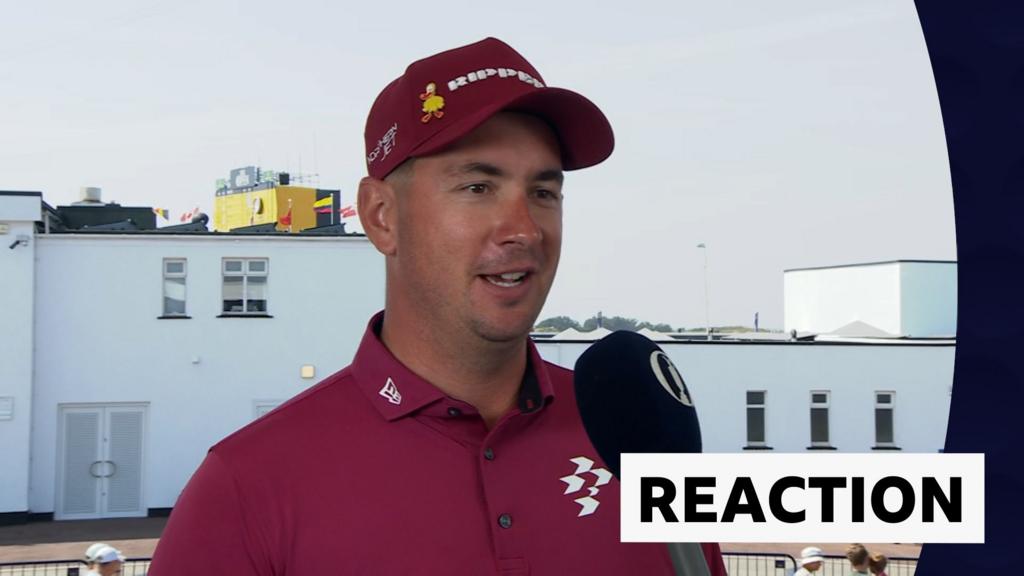
Lucas Herbert’s eight-under-par 62 at Royal Birkdale was the kind of round that instantly changes the tone of a major championship. In a sport where the margins are tiny and the pressure is relentless, the Australian came within one shot of making history, only to see a closing bogey deny him the first 61 in a men’s major.
The score still carries real weight. A 62 in a major is rare enough on its own; to match the men’s major championship scoring record is a statement about both form and temperament. Herbert’s round was not just a hot streak on the greens or a lucky run of birdies. It was sustained scoring under the most demanding conditions the game can offer, with Royal Birkdale providing the kind of stage that amplifies every shot.
A round that briefly pointed toward history
Herbert reached nine under through 17 holes, putting himself on the edge of a landmark that would have stood out even in the long history of The Open. That he fell short by one stroke does not diminish the achievement; if anything, it sharpens the sense of what was at stake. One bogey at the end turned a potential record-breaking 61 into a still-impressive 62, but the broader picture remains the same: Herbert produced one of the standout rounds of the championship.
For supporters, especially those following Australian golf, the performance is a reminder of Herbert’s ceiling when everything clicks. Major championships often expose players who can dominate weaker fields but struggle when the pressure rises. Herbert’s round suggests the opposite: he has the scoring ability to contend with the best when the moment demands it.
What it means for The Open and beyond
In tournament terms, a round like this can transform momentum. Even without the historic 61, Herbert has put himself firmly into the conversation and forced the rest of the field to take notice. In a major, one exceptional round can reshape expectations, and this was the sort of scorecard that can carry a player into contention if the rest of the week holds together.
There is also a wider significance for Herbert’s reputation. Record-equalling rounds in majors are remembered because they combine skill, nerve and timing. They do not guarantee a title, but they do confirm that a player belongs on the biggest stage. For Herbert, the message is clear: he has shown he can produce elite scoring at The Open, and that will matter both for the rest of this championship and for how rivals view him in future majors.
The emotions he described are easy to understand. A near-historic round brings exhilaration, frustration and pride all at once. For Herbert, the scoreline may have ended one shot shy of golf’s rarest number, but the performance itself was still a major statement.
Source note: This article was prepared using publicly available information from BBC Sport and expanded with editorial context.
Share this content: