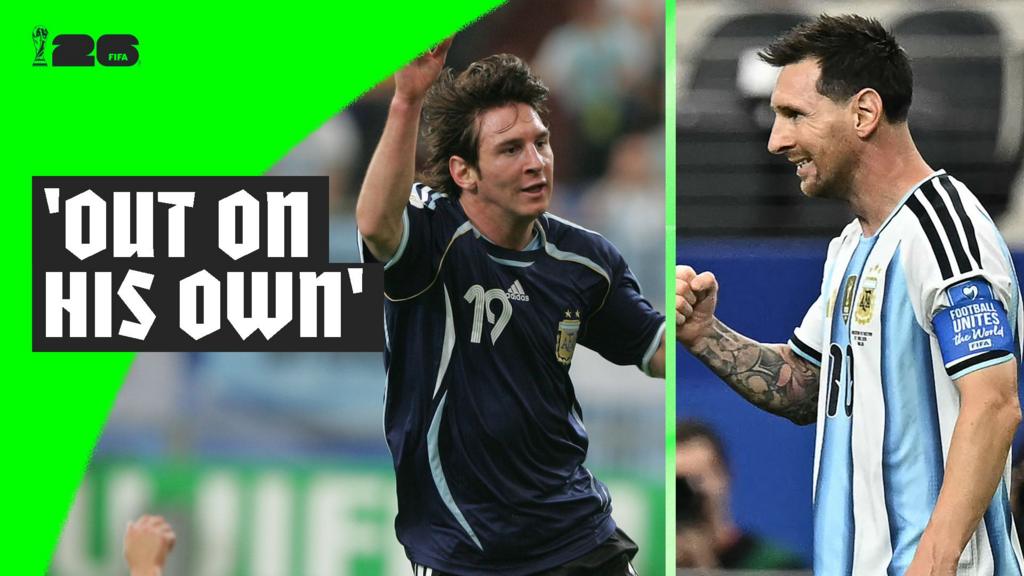
Lionel Messi’s World Cup scoring record remains one of the clearest markers of his place in football history. BBC’s video package revisits all of his tournament goals and highlights the moment he moved beyond Miroslav Klose’s previous benchmark, reaching 17 World Cup goals in Argentina’s group-stage match against Austria.
For Argentina supporters, the significance goes beyond a single number. World Cup goals are not accumulated in the same way as club goals, where players can build totals across long domestic seasons. At international level, opportunities are limited, the pressure is higher, and the margin for error is far smaller. That is what makes Messi’s record so notable: it reflects not just talent, but longevity, consistency and the ability to deliver repeatedly on football’s biggest stage.
Why the record stands out
Klose’s name had long been associated with World Cup efficiency, and overtaking that mark placed Messi in a category of his own among tournament scorers. The fact that the record was set in a group-stage match also matters. It underlines how Messi’s influence has not been confined to knockout drama or final-day moments; he has been a constant source of goals across multiple editions of the competition.
That broader context is important for understanding Messi’s international legacy. For much of his career, comparisons with other all-time greats have often focused on club trophies, individual awards and style of play. The World Cup record adds another layer: it is a measurable, competition-specific achievement that speaks directly to performance under the most intense scrutiny.
What it means for Argentina
For Argentina, Messi’s record is also a reminder of how central he has been to the team’s identity for more than a decade. When he scores at a World Cup, it is rarely just a statistical footnote. It often shapes the emotional tone of a tournament campaign, giving supporters a sense that their captain can still decide matches when the stakes are highest.
From a tactical perspective, a player who can score repeatedly across different World Cups changes how opponents prepare. Defenders cannot treat him as a creator alone; they must account for his finishing threat, his movement into dangerous areas and his ability to turn limited space into decisive moments. That dual threat is part of why his World Cup record carries such weight.
BBC’s video compilation is therefore more than a highlight reel. It is a record of how one player has repeatedly influenced football’s most watched tournament, and why his name now sits at the top of a list that once seemed difficult to move. For supporters, it is another reminder that Messi’s legacy is built not only on brilliance, but on sustained output when the world is watching.
Source note: This article was prepared using publicly available information from BBC Sport and expanded with editorial context.
Share this content: